Nicaragua Real Estate: The 2026 Guide to Buying Beachfront in San Juan del Sur, Rancho Santana, Gigante and the Emerald Coast
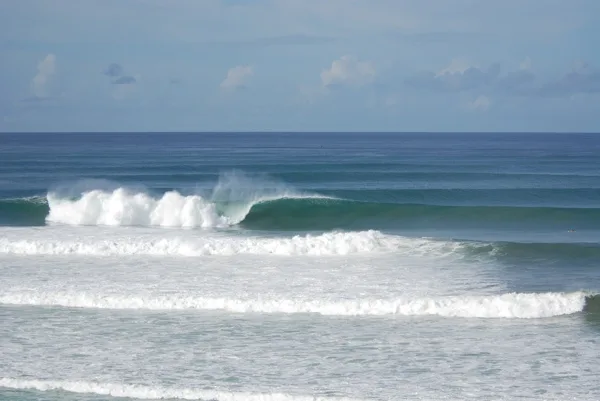
Nicaragua real estate has a simple pitch for surfers: offshore winds most of the year, a short coast packed with reefs and beach breaks, and beachfront land that still costs a fraction of what similar frontage costs across the border in Costa Rica. Foreigners can own property in their own name, without a bank trust, and the market runs in US dollars.
It also has a harder side that every buyer needs to understand before sending a deposit. Nicaragua's title history runs through the land confiscations of the 1980s. A 2009 coastal law makes the first 50 meters above high tide public and regulates the next 200. A 2025 border law turned a 15 km strip along the country's borders into state property. And since 2018 the political climate has been tense enough that the US State Department rates the country Level 3, "Reconsider Travel."
This guide is the country-level overview. It explains how ownership, the coastal law, title checks, the buying process, taxes and residency work in 2026, reports the political and legal climate as plainly as we can, and then walks through the main beachfront markets: San Juan del Sur and its bays, the Tola coast (marketed as the Emerald Coast) from Gigante and Rancho Santana up to Playa Colorado, Hacienda Iguana, Guasacate and El Astillero, plus short notes on Gran Pacifica, the north and the Caribbean. For the Popoyo strip in detail, see our separate Popoyo, Nicaragua real estate guide.
Quick answer: Yes, Americans and other foreigners can buy beachfront property in Nicaragua with essentially the same rights as citizens. Nobody can own the beach or the first 50 meters above the average high-tide mark, the next 200 meters are regulated, and land within 15 km of the borders is now declared state property. Title must be traced back through the 1980s confiscation era. In 2026, indicative asking prices run from under $50,000 for small lots near the surf to $700,000 and up for homes in gated communities such as Rancho Santana, and several million dollars for prime beachfront. Use an independent lawyer and escrow, budget for 1% to 7% transfer tax plus fees, and size the purchase to the country's real political risk.
Not legal or tax advice. This article is general information only. Nicaraguan property, tax and immigration rules change, sometimes with little notice, and they apply differently to each buyer. Before you sign anything or send money, hire an independent Nicaraguan real estate attorney and a tax adviser who handles cross-border clients, and confirm every figure here with them and with the relevant government office.
Table of contents
- Why surfers buy beachfront in Nicaragua
- Can Americans buy property in Nicaragua?
- The coastal law: 50 meters public, 200 meters restricted
- Title risk: confiscations, the registry and the cadastre
- Is Nicaragua safe? The political and legal climate since 2018
- How to buy, step by step
- Closing costs, property tax and rental tax
- Financing, banking and currency
- Residency and living in Nicaragua as an American
- Surf seasons and the offshore wind
- Nicaragua beachfront property for sale: the regions and 2026 prices
- Surf towns compared
- Rental market and the tourism recovery
- Due-diligence checklist
- Frequently asked questions
- The bottom line
- Sources
Why surfers buy beachfront in Nicaragua
The first reason is the wind. Lake Nicaragua sits just inland of the Pacific along the narrow Rivas isthmus, and the prevailing easterly trade winds blow across it and out to sea. Surf guides describe offshore conditions on more than 300 days a year along the southwest coast. Few places in the region groom their waves that reliably, and it is the single biggest reason surfers have bought around San Juan del Sur and Tola for two decades.
The second reason is density. From El Astillero in the north to the bays south of San Juan del Sur, the coast packs reef passes, river-mouth sandbars, points and beginner beach breaks into a drive of a couple of hours. A surf house in Gigante or at Playa Colorado can reach a dozen different waves.
The third is price. Nicaragua beachfront property for sale is still priced well below comparable land in Guanacaste, partly because of distance and infrastructure, and partly because of the political risk covered below. In 2026, ocean-view lots inside established communities are listed from around $70,000, and modest homes near San Juan del Sur from around $200,000. Our guide to buying property in Costa Rica is useful if you want to compare.
If you are still choosing between countries, our list of the best surf towns to live and buy property puts Nicaragua next to Mexico, Costa Rica, El Salvador and others.
[JIM TO ADD: a firsthand note on your own time surfing in Nicaragua (for example a session at Colorados, Maderas or Popoyo with offshore wind), and what you see drawing ISP buyers to this coast despite the risks.]
Can Americans buy property in Nicaragua?
Yes. Articles 27 and 40 of Nicaragua's Constitution give foreigners the same rights and duties as citizens, apart from political rights, and Article 40 guarantees private property, with expropriation allowed only for public utility and with prior just compensation. In practice, Americans and other foreigners buy, sell, mortgage and inherit Nicaraguan real estate the same way nationals do. There is no bank-trust requirement like Mexico's fideicomiso, no local-partner rule and no minimum investment. You do not need residency to buy, and buying does not give you a right to live in the country.
You can hold title personally or through a Nicaraguan company (sociedad anónima), which is common for rental homes, hotels and surf camps.
The limits that exist apply to everyone, but a few of them matter far more on the coast:
- The coastal public zone. No one can own the beach or the first 50 meters above the average high-tide mark. See the next section.
- The 15 km border zone. Law 1258, the Border Territory Law, approved on August 5, 2025, declares land within 15 km of Nicaragua's borders to be property of the state. It replaced Law 749 of 2010, under which only the first 5 km were inalienable state property and private and communal property was recognized in the rest of the strip. Lawyers quoted in regional coverage say the new law sets out no compensation procedure for existing owners, and it puts the zone under army supervision. Popoyo, Playa Colorado, Hacienda Iguana, Rancho Santana and Gigante are far from the line. By our rough map measurement, San Juan del Sur town and the bays immediately south of it also sit more than 15 km from the Costa Rican border, but beaches further south toward El Coco, La Flor and Ostional may fall inside the strip. Have a licensed surveyor measure the straight-line distance for any parcel south of San Juan del Sur before you go further.
- Communal and Indigenous land. On the Caribbean coast, Law 445 governs communal land of Indigenous peoples and ethnic communities, which cannot be taxed, seized or sold. That affects the Corn Islands and the mainland Caribbean coast (more below).
The coastal law: 50 meters public, 200 meters restricted
Nicaragua's Law 690, the Law for the Development of Coastal Zones (Ley para el Desarrollo de las Zonas Costeras), was approved on June 4, 2009 and published in La Gaceta on July 29, 2009. A consolidated text incorporating amendments to November 2020 was published in 2021. Article 19 creates two bands on the ocean coast.
| Zone | Where it runs | What it means for a buyer |
|---|---|---|
| Public-use zone (zona costera de uso público) | The beach between low and high tide, plus 50 meters inland from the average maximum high-tide mark | State property. Homes and residences are prohibited, as are roads, high-voltage lines and permanent advertising. Uses are limited to beach tourism, removable sports facilities, rescue and public passage |
| Restricted-use zone (zona costera de uso restringido) | The next 200 meters inland | The state exercises control, subject to legally acquired rights. Permitted uses include permanent tourism buildings, recreational and family homes, and small-scale crops, all following the coastal development plan |
| Beyond 250 meters | Everything further inland | Ordinary private land, subject to municipal and environmental permits |
Rights acquired before 2009 are respected. Article 19 says legally acquired rights, land-use certificates and environmental approvals granted before the law took effect are respected in the public zone. A properly registered pre-2009 beachfront title does not vanish, but new residential building in the first 50 meters is off the table, and expansions will face scrutiny.
Access must stay open. Article 24 guarantees free access to coastal public areas for nationals and foreigners alike, and Article 25 prohibits fences, walls or works that block access or free passage along the beach. Where public access is needed, the law provides for access routes at least 10 meters wide.
Concessions are a right of use, not ownership. Use of public coastal areas for tourism works runs through municipal concessions. Under Articles 34 and 35 they last 20 years, renewable, or up to 59 years for large tourism projects approved by the national coastal commission, and they carry an annual fee set by the municipal council. Article 37 says only Nicaraguan individuals or companies, or foreigners resident in Nicaragua, can apply. A listing that says "beach concession" is selling a time-limited permit, not land. Our marketplace has some of these, such as concession land at Guasacate, so read the term and renewal conditions carefully.
Before agreeing a price on any beachfront lot, ask your surveyor to plot the high-tide mark and the 50 m and 250 m lines. Two lots both described as "beachfront" can have very different buildable areas.
Title risk: confiscations, the registry and the cadastre
Title is the most important property-specific risk in Nicaragua. During the 1980s the Sandinista government confiscated and redistributed a very large number of properties. The US Embassy in Managua has put the figure at about 28,000 properties confiscated between 1979 and 1990, many of them still disputed. A string of laws tried to sort out who owns what, among them Laws 85, 86 and 88 of 1990, Law 209 of 1995 and Law 278 of 1997 on reformed urban and agrarian property. Former owners who did not get their land back were often compensated with government bonds through the Office for Quantification of Indemnities (OCI), created by Decree 51-92 in 1992.
For a buyer, this history means a title can look clean today and still carry a reform-era origin that someone could challenge. A competent Nicaraguan lawyer checks the following:
- Registry history (historia registral) from the Registro Público de la Propiedad Inmueble, governed by Law 698 of 2009, going back at least to 1979, to see whether the land was ever confiscated, assigned under agrarian reform, returned or indemnified.
- A certificate of liens and encumbrances (certificado de libertad de gravamen) showing mortgages, attachments and pending annotations.
- The cadastral certificate (certificado catastral) from the national cadastre, confirming boundaries and area, and the cadastral value used for taxes.
- For any parcel with a 1980s confiscation or reform history, evidence that the former owner's claim was resolved, either by return of the property or by an indemnification settlement through the OCI and the Attorney General's office (Procuraduría General de la República). Ask your lawyer which certificates apply to the specific chain.
- Municipal tax solvency (solvencia municipal) showing property tax is paid up.
- A new survey walked on the ground and compared with the cadastral map and the neighbors' deeds.
- Occupancy and litigation checks, because squatter invasions and possession claims on undeveloped land are a periodic problem.
Walk away from, or price very differently, any seller offering "possession rights" (derechos posesorios) instead of a registered title, a deed that was never recorded, an agrarian-reform title with no clean chain since, or a supplementary title issued by court order without a clear history. Possession rights are also common in parts of the Corn Islands and rural areas, and they give far less security than a registered title.
Title insurance is offered for some Nicaraguan properties by international insurers and is worth getting, especially on land. Read the exclusions closely. Political seizure is usually outside what title insurance covers.
[JIM TO ADD: the title problems ISP sees most often in Nicaraguan listings, or a practical rule you give buyers before they sign a promesa de venta.]
Is Nicaragua safe? The political and legal climate since 2018
This section sticks to dated facts from cited sources so you can judge the risk yourself.
2018. Protests that began in April 2018 were met with a violent crackdown in which roughly 350 people were killed, according to McClatchy reporting that August. Tourism collapsed: the National Tourism Chamber (Canatur) said arrivals fell from about 1.7 million in 2017 to 975,000 in 2018. Surf towns were hit less than the rest of the country because surfers kept coming, but roadblocks stretched the 2.5-hour drive from Managua to the Tola beaches to six or seven hours for several weeks.
Closures, confiscations and banishments. Since 2018 the government has closed thousands of NGOs and other organizations and media outlets and transferred many of their buildings, land and equipment to the state. In August 2023 it seized the Jesuit-run Central American University (UCA) in Managua, including its buildings and bank accounts, after a court order called it a "center of terrorism." In October 2024 the Attorney General's office declared 43 properties in two days to be of "public utility," and authorities said 452 Nicaraguans had been stripped of nationality and property over the previous two years. Amnesty International reported in April 2026 that confiscations from NGOs, media and exiled or stateless people continued through 2025, and that a UN group of experts had documented 318 entry bans between 2018 and 2025, affecting Nicaraguans and foreigners including journalists and international staff.
Constitutional changes. Congress gave final approval to a constitutional reform on January 30, 2025 that made Daniel Ortega and Rosario Murillo "co-presidents," extended the presidential term from five to six years, and gave the presidency power to coordinate the legislative, judicial and electoral branches. A further change effective January 16, 2026 bars dual nationality in most cases, and some Nicaraguan-Americans have reportedly lost their Nicaraguan citizenship. A September 2026 amendment that would extend terms to seven years needs a second vote in January 2027.
US policy. The US State Department reissued its Level 3 "Reconsider Travel" advisory on May 14, 2026. It cites crime, limited healthcare, a serious risk of wrongful detention and arbitrary enforcement of laws, warns that authorities may seize property, including land, homes, cash and financial assets, without warning or legal justification, and says US citizens may be denied entry or prevented from leaving without explanation. The Treasury Department continues to sanction Nicaraguan officials (most recently five on February 26, 2026). In December 2025 the US Trade Representative announced Section 301 tariffs on Nicaraguan goods that do not qualify under CAFTA-DR, phased in at 0% in 2026, 10% from January 2027 and 15% from January 2028, citing labor rights, human rights and the dismantling of the rule of law.
What this means for a private buyer. The high-profile seizures have mostly targeted government critics, NGOs, churches, universities and exiles rather than foreign holiday-home owners, and foreign owners on the Tola and San Juan del Sur coast have continued to live, rent and sell. But there is little legal recourse when the state is the other party, and three practical risks follow directly:
- Political risk. Keep out of local politics, including on social media, keep tax and immigration paperwork current, and enroll in the State Department's STEP program.
- Resale liquidity. The buyer pool is smaller than in Costa Rica or Mexico, and it shrinks when headlines turn bad. Plan to hold for years, not months.
- Financing scarcity. Few lenders will finance foreign buyers here, so most deals are cash or seller-financed, which also limits how quickly a buyer can be found when you sell.
Part of the price gap with Costa Rica is exactly this risk. Size the purchase to money you can afford to have tied up in an illiquid, higher-risk market.
How to buy, step by step
- Hire your own lawyer. Nicaraguan lawyers are usually also notaries. Use one who works only for you, not for the seller or developer.
- Check your agent. Real estate brokers and agents must be licensed and registered. Law 1129 of 2022 regulates brokerage, and supervision of the broker and agent registry has been assigned to INVUR, the housing and urban institute. Ask for the license number.
- Sign a promise to sell (promesa de venta, or promesa de compraventa) setting the price, deposit, deadline, conditions (clean title, survey, permits) and who pays which taxes and fees.
- Put the deposit in escrow with a bonded escrow agent, never in a seller's personal account.
- Title due diligence: registry history to 1979, liens certificate, cadastral certificate, survey, municipal solvency and occupancy checks, as above.
- Coastal and border checks: plot the Law 690 lines on beachfront land and confirm the parcel is outside the 15 km border strip.
- Permits and utilities: legal road access, water source, power, and what you are allowed to build.
- Sign the public deed (escritura pública) before the notary, settle the transfer tax with the DGI (registration can't proceed without proof of payment), then record the deed in the Public Registry and update the cadastre and municipal tax rolls.
Registration itself typically takes one to three weeks, and the full transaction one to three months. Keep the final payment in escrow until the deed is registered in your name.
Closing costs, property tax and rental tax
These are typical figures for 2026, not quotes. Get a written estimate from your lawyer.
| Cost | Typical figure | Notes |
|---|---|---|
| Transfer tax (a final income-tax withholding on the transfer) | 1% to 7% on a sliding scale: 1% up to $50,000, 2% to $100,000, 3% to $200,000, 4% to $300,000, 5% to $400,000, 6% to $500,000, 7% above $500,000 | Set by Article 87 of the Tax Concertation Law (Law 822), as reformed in 2019. The base is the higher of the deed price or the cadastral value. It is legally a tax on the seller's gain, but contracts often assign it to the buyer, so negotiate it. Some lawyers argue the rate should apply to the gain rather than the full value; in practice the tax office often applies it to the value |
| Notary fee | About 1% to 2% of the price | For drafting and formalizing the deed |
| Buyer's lawyer | About 0.5% to 1.5%, or a flat fee | Agree a flat fee where possible |
| Registry and cadastral fees, stamps | Set by official tariff; varies with value | Ask your lawyer to confirm the current figure |
| Survey, certificates, escrow, title insurance | A few hundred to a few thousand dollars | Recommended on every purchase |
| Agent commission | Commonly 5% to 10% | Usually paid by the seller |
On a $300,000 purchase where the buyer takes on the transfer tax, that line alone is $12,000. Many buyers budget roughly 3% to 4% of the price in fees on top of whatever share of the transfer tax they agree to pay.
Annual property tax (IBI). The municipal property tax, the Impuesto sobre Bienes Inmuebles, is set by Decree 3-95. The rate is 1% of a taxable base equal to 80% of the cadastral value, so roughly 0.8% of the cadastral value each year. Cadastral values are usually well below market prices, but municipalities have raised valuations sharply in some years since 2018, so check the current assessment and payment history. The tax is declared and paid in the first months of the year, and it can be split into installments.
Rental income tax. Rent from letting a property is taxed as capital income. After a flat 20% deduction from gross rent, a 15% rate applies, which works out to about 12% of gross rent. US owners must also report rental income to the IRS.
Tourism incentives. Older guides describe tax breaks for tourism projects under Law 306. In August 2024, the new General Tourism Law (Law 1210) and a separate incentives law (Law 1211) took effect, and Law 306 was repealed. If a hotel or surf camp's numbers depend on tax exemptions, ask your lawyer whether they survive under the new regime.
Financing, banking and currency
Most Nicaraguan homes for sale are priced and sold in US dollars. Bank mortgages for non-residents are hard to find, so most foreign buyers pay cash, use seller financing (several San Juan del Sur and Gigante listings advertise it), or borrow against assets at home. Seller financing should be documented by your lawyer with a registered mortgage or a clear title-transfer condition.
The local currency is the córdoba. The Central Bank set the 2026 official rate at 36.6243 córdobas per dollar, with an annual crawl of zero, so the córdoba is effectively pegged to the dollar for now. Taxes and municipal fees are calculated in córdobas, but most property contracts are in dollars. Because of sanctions on Nicaraguan officials and entities, US and international banks apply strict source-of-funds and compliance checks to transfers. Allow extra time for wires and keep clean documentation of where your money came from.
Residency and living in Nicaragua as an American
You can own property in Nicaragua as a tourist. Living there full time means applying for residency, and the rules changed significantly in 2024.
The old pensionado and rentista law is gone. For years, Law 694 of 2009 gave retirees (pensionados) and people living on passive income (rentistas) permanent residency and duty-free import of household goods and a car. It was repealed by the General Tourism Law (Law 1210), which took effect on August 2, 2024. Applications moved from the tourism institute (INTUR) to the migration directorate (DGME). Then Law 1228, published on November 29, 2024, reformed the general migration law (Law 761), ended permanent status for pensioners and rentistas, and removed the old route from three years of temporary residence to permanent residence.
What applies now. As reported in September 2026, retirees and rentistas apply in person for one-year temporary residence that must be renewed every year. Approval takes roughly six to eight months, and applicants need an apostilled birth certificate with a Spanish translation, a police record, a health certificate and proof of pension or foreign income. No official income schedule is published. The old Law 694 minimums of $600 a month for pensioners and $750 for rentistas, and the later $1,000 and $1,250, are historical. One law firm quoted a referential pension minimum of $1,200 a month in January 2026. An investor route is commonly described with a minimum investment of about $30,000 in real estate, farming or a business, but ask your lawyer to confirm the current rules and amount before you rely on it. Customs exemptions for retirees ended with Law 694.
Taxes. You become tax resident after more than 180 days in a calendar year. Resident income-tax rates start at zero on income up to 100,000 córdobas a year (about $2,730) and rise to 30%. Nicaragua taxes Nicaraguan-source income, and US citizens keep filing US returns.
Cost of living in Nicaragua. Living costs are low by US standards. Numbeo data cited in July 2026 put a single person's monthly spending at about $610 excluding rent, a city-center one-bedroom apartment at about $349, basic utilities at about $96, broadband at about $38 and a mobile plan at about $17. Beach towns cost more than these national averages, especially for imported food, generator or solar setups and private healthcare.
Healthcare. Comprehensive, high-quality care is concentrated in Managua, and most hospitals require payment up front. Most US health plans, including Medicare, do not pay abroad, so expats in Nicaragua usually carry international health insurance and evacuation cover.
Retire in Nicaragua? It can work, but go in clear-eyed: residency is now temporary and renewed annually, dual nationality is restricted, foreigners may not take part in political activity (residence can be lost over conduct deemed political), and the State Department warns of entry and exit denials. Many owners split the year rather than moving full time.
Surf seasons and the offshore wind
Nicaragua's Pacific coast has two seasons that both work for surf:
- Wet season (roughly April or May to October). Long-period south and southwest swells from the Southern Hemisphere arrive almost daily from March to October. This is when the reefs around Popoyo, the barrels at Playa Colorado and Panga Drops, and the outer breaks come alive. The bays around San Juan del Sur, including Maderas, offer more shelter on bigger days.
- Dry season (roughly November to April). Swells ease to mid-sized, offshore winds are at their strongest (February is the windiest month and can be too strong in exposed spots), and cold upwelling can drop the water temperature. Beginners and improvers often prefer October to March.
Wave types range widely. Playa Maderas is a consistent A-frame beach break that suits intermediates and gets crowded. Playa Remanso has softer mid-tide rights for learners. Playa Gigante has friendly lefts near town. Colorados is a fast, hollow beach break for advanced surfers, and Popoyo's main reef is an A-frame over shallow rock, with the Outer Reef becoming a big-wave spot. Crowds are thinner than in Tamarindo or Santa Teresa, though Maderas, Colorados and Popoyo get busy in peak season.
Our surf break pages cover the waves in more detail, including Playa Colorados and its hollow beach break.
Nicaragua beachfront property for sale: the regions and 2026 prices
Browse current Nicaragua surf properties for sale, or narrow your search to lots and land. The figures below are indicative 2026 asking prices taken from agency sites and listing portals (see Sources). They are not appraisals or sale prices. One market analysis estimates that closed sales in Nicaragua typically land about 7% to 12% below asking, and there is no official national price index.
San Juan del Sur town and bays
San Juan del Sur, Nicaragua is the region's town: a bay with a waterfront of restaurants and bars, supermarkets, clinics and the most year-round foreign residents on the coast. It sits about 131 km from Managua, roughly a two-hour drive in good conditions. San Juan del Sur real estate has the deepest resale market in the country, with condos, town homes, hillside view homes and gated communities, and it is where most expats in Nicaragua live.
Indicative 2026 asking prices in and around town: a two-bedroom condo at Plaza La Talanguera at $159,000 and an ocean-view two-bedroom condo three blocks from the bay at $280,000; a three-bedroom town-view home with a pool at $274,000 and a five-bedroom home in town at $365,000; a four-bedroom ocean-view villa in El Encanto del Sur at $330,000; a bay-view home in the Pacific Marlin community at $795,000; and a beachfront home at $1,790,000. A 2,333 m² oceanfront lot was listed at $499,000.
North of town: Playa Marsella and Playa Maderas. A dirt road leads north to Playa Marsella, Playa Maderas and Majagual. Playa Maderas is the area's most consistent and best-known wave. Near Marsella, lots in the Bosques de Nacascolo development were listed from $13,500 for a small parcel, a walk-to-the-beach lot of 3,218 m² at $80,000, and a ridge lot overlooking Maderas and Marsella at $125,000. Homes ran from $219,000 for a four-bedroom house in the Bosques del Mar community to $320,000 for a three-bedroom ocean-view house with pool, with a seven-bedroom oceanfront house in a gated development at $1,600,000.
South of town: Playa Remanso, Playa Hermosa and Playa Yankee. South of the bay, a string of surf beaches runs from Remanso, the beginner break, to Playa Hermosa, a multi-peak beach with limited access, and Playa Yankee. Ocean-view lots in the Remanso Beach community were listed from $76,000 for 544 m² and from $135,300 for about 1,050 m²; new construction near Playa Remanso at $339,000; a renovated house near Playa Yankee at $359,000; and 8.6 acres of land near Remanso at $99,000. On our own marketplace, a Playa Hermosa beachfront compound with multiple homes is listed at $700,000. Remember the border check for anything further south.
Who it suits: buyers who want services, restaurants and other foreigners nearby; rental investors; and full-time residents. Title quality varies widely across the hills, so the title work matters as much here as anywhere.
Gigante and Redonda Bay
Playa Gigante is a small fishing village with a sheltered bay and friendly lefts, quieter than Maderas and about halfway between San Juan del Sur and Popoyo on the coastal road. Gigante, Nicaragua sits next to Redonda Bay and the Guacalito de la Isla development. Indicative 2026 asking prices: about half an acre just outside the village at $40,000; a half-acre hilltop ocean-view lot at $150,000; a flat, build-ready four-acre parcel at $240,000 with owner financing; a waterfront lot near Redonda Bay at $175,000; and larger development tracts from $875,000 for 35 manzanas (a manzana is about 0.7 hectares).
Who it suits: surfers who want a village feel, mellow waves at the doorstep and a short drive to Colorados and Popoyo, and buyers looking for acreage.
Rancho Santana
Rancho Santana, Nicaragua is the most developed private community on the coast: about 2,700 acres of hills in Tola with five beaches, a hotel and residences, a spa, restaurants and an 80-acre farm. Its beaches include Playa Santana, a beach break that picks up a lot of swell, and Playa Rosada. Rancho Santana lots and homes come with paved roads, power, water, security and architectural rules, at developer prices.
Indicative 2026 asking prices on resale portals: quarter-acre lots in the Las Playas neighborhood at $69,000 to $80,000; larger custom-home sites at $695,000; and an oceanfront parcel at $1,750,000. Homes ran from $695,000 (Casa Pacifica, Casa Tranquila) and $775,000 (Rosada Seascape) up to $2,300,000 for an ocean-view home. On ISP, a hilltop Rancho Santana lot of about 4,115 m² is listed at $75,000. Expect HOA dues on top.
Who it suits: buyers who want a managed, lock-and-leave home with resort services, and who value infrastructure and security over price.
Playa Colorado and Hacienda Iguana
Just north of Popoyo, Playa Colorado fronts two of the best-known waves in the country: Colorados, a fast, hollow beach break by the river mouth, and Panga Drops, an outer reef that holds size. Behind the beach, Hacienda Iguana is a gated community with a golf course, a beach club, 24-hour security and services. Many owners rent their homes when they are away; one local manager advertises Hacienda Iguana and Rancho Santana rentals from about $400 a night.
Indicative 2026 asking prices: golf-view lots at $69,000 to $89,000, a build-ready lot near Playa Colorado at $75,000 and a homesite about a minute from the beach at $249,000; a two-bedroom house at $239,000 and a townhouse at $235,000; homes at $525,000 to $899,000; and a fully furnished beachfront estate at $2,850,000. On ISP, a two-bedroom beachfront villa at Hacienda Iguana on Playa Colorado is listed at $259,000.
Who it suits: surfers who want to walk to a world-class wave, part-time owners who need security and management, and rental investors.
Popoyo and Guasacate (summary)
Popoyo is the center of the Emerald Coast surf strip, with an A-frame reef, a big-wave outer reef and the long beach of Guasacate running north. It has the densest mix of surf houses, small hotels and land for sale on the Tola coast. In 2026, listings ranged from a two-bedroom hilltop house at $138,000 and an ocean-view double lot at La Jolla de Guasacate at $105,000, through beachfront residential lots at $255,000 and a surf house at $445,000, to beachfront homes at $750,000 to $1,400,000 and a small hotel at Guasacate at $900,000. We cover Popoyo, Guasacate, Playa Santana and the surrounding breaks beach by beach in our Popoyo, Nicaragua real estate guide.
El Astillero and Las Salinas
El Astillero is a working fishing village at the northern end of the Tola coast, with a bay, beach breaks and boat access to remote reefs. It is quieter, rougher around the edges and cheaper than Popoyo. Lots in the small Mango Time beach development were listed at $28,000 to $45,000 for about 860 m², and a hillside parcel with ocean views on the main road at $450,000. On ISP, an El Astillero surf lot of 1,651 m² in front of a river-mouth beach break is listed at $75,000. Las Salinas, between Astillero and Popoyo, is home to the small Costa Esmeralda airport (more on access below). Check road access in the rainy season; some beach tracks flood.
Who it suits: budget-minded surfers, small surf-camp operators and buyers who want space and fewer people.
Gran Pacifica and the coast near Managua
About an hour to an hour and a half from Managua, Gran Pacifica is a planned community whose 2026 listings included one- and two-bedroom eco homes at $125,900 to $155,900 (with HOA dues of roughly $150 to $170 a month), houses at $170,000 to $299,500, and a 1.3-acre beachfront lot at $320,000. It suits buyers who want a beach base close to the capital and its hospitals more than a top-tier wave.
The north: Jiquilillo and Aposentillo
In Chinandega department near the Gulf of Fonseca, Aposentillo and Jiquilillo are remote, low-key surf beaches with beginner waves and heavier breaks such as The Boom. Land is cheap (one lot of about 2,000 m² in a small community near Aposentillo was listed at $59,000 in 2026), but dirt roads and power cuts are part of life. Ask your surveyor about the border-zone distance here too.
The Caribbean: Corn Islands
Big Corn and Little Corn are small Caribbean islands off the mainland coast, with a small tourism economy and a very different market from the Pacific surf coast. They fall within the Caribbean coast's autonomous regime, where communal land claims under Law 445 and possession-only holdings are common. Treat any island purchase as a specialist legal job.
Surf towns compared
| Area | Access from Managua (MGA) | Main surf | Indicative 2026 asking prices | Infrastructure | Who it suits |
|---|---|---|---|---|---|
| San Juan del Sur and bays | About 131 km, roughly 2 hours | Maderas (north), Remanso, Hermosa, Yankee (south) | Condos ~$159k–$280k; homes ~$220k–$800k; beachfront $1.6M+ | Best on the coast: town services, clinics, supermarkets | Full-time residents, rental investors, families |
| Gigante | About 2.5 hours | Village lefts, short drive to Colorados and Popoyo | Lots ~$40k–$240k; tracts $875k+ | Village-level; improving | Surfers wanting a quiet village and acreage |
| Rancho Santana | About 2.5 hours | Playa Santana, Playa Rosada | Lots ~$69k–$1.75M; homes ~$695k–$2.3M | Private roads, power, water, security, hotel | Lock-and-leave luxury buyers |
| Playa Colorado / Hacienda Iguana | About 2.5 hours | Colorados, Panga Drops | Lots ~$69k–$249k; homes ~$235k–$900k; beachfront $2.85M | Gated, golf, beach club, security | Serious surfers, part-time owners, renters |
| Popoyo / Guasacate | About 2.5 hours | Popoyo reef, Outer Reef, Guasacate beach | Houses ~$138k–$1.4M; beachfront lots ~$255k | Mixed; water and septic vary | Surf-business owners, surf-house buyers |
| El Astillero | About 2.5 to 3 hours | Bay and river-mouth breaks, boat trips | Lots ~$28k–$75k; larger parcels ~$450k | Thin; rough roads in rains | Budget buyers, surf camps |
Drive times are approximate and assume dry roads. Most international buyers fly into Managua; Liberia (LIR) in Costa Rica is an alternative but adds a land border crossing. The small Costa Esmeralda airport at Las Salinas, opened in 2015, is daytime-only, and its own site lists Sansa flights to Costa Rica and La Costeña; confirm current scheduled service before you count on it.
Rental market and the tourism recovery
Tourism has not returned to its 2017 peak. Central Bank data reported in August 2026 show about 1.2 million international visitors in 2023, 1.08 million in 2024 and 1.07 million in 2025, with arrivals at Managua's airport falling from 653,336 in 2023 to 394,541 in 2025. In 2025, about 62% of visitors arrived by land and 37% by air. Air connectivity is thinner than it was, which matters for a surf rental that depends on North American guests.
There are signs of improvement in spending. INTUR reported tourism revenue of $159 million in the first quarter of 2026, up 40% from the same period in 2025, with visitors spending an average of $49 a day and staying about 10 days. North American visitors spent about $69 a day and stayed about 12.7 days. Canadian arrivals rose about 30% in early 2026 on charter flights from Montreal.
For an owner, the realistic picture is this: well-located homes in Hacienda Iguana, Rancho Santana and San Juan del Sur rent to surfers and families in season, often through local managers, but occupancy is seasonal, demand swings with travel advisories and headlines, and a rental should be treated as a way to offset costs rather than a guaranteed yield. If you are buying an operating hotel or surf camp, ask for several years of real books and tax filings, check tourism registration with INTUR and municipal licenses, and read our guide to surf resorts for sale.
Due-diligence checklist
- Registry history (historia registral) back to at least 1979, with the seller as registered owner
- Certificate of liens and encumbrances (libertad de gravamen) with no undisclosed mortgages, attachments or annotations
- Cadastral certificate matching the deed's area and boundaries
- For any confiscation or agrarian-reform history, written proof the former owner's claim was resolved (return or indemnification)
- No possession-only (derechos posesorios) holdings presented as title, and no unrecorded deeds
- Municipal tax solvency and current IBI assessment
- Fresh survey by a licensed surveyor showing the high-tide line and the Law 690 50 m and 250 m lines
- Straight-line distance to the nearest international border (must be more than 15 km)
- Not on Caribbean communal land under Law 445
- Any beach concession: term, annual fee, renewal conditions, and that you are eligible as a resident
- Legal road access, checked in the rainy season
- Water source (well permit or supply contract), power, septic and internet tested on site
- Building and environmental permits for any existing structures
- HOA rules, fees and rental restrictions in gated communities
- Licensed agent (INVUR registry) and an independent lawyer
- Escrow agreement that releases funds only on registration
- Title insurance quote and its exclusions
- For a business: INTUR registration, licenses, labor liabilities and several years of books
[JIM TO ADD: one practical tip you give every buyer before a site visit on the Tola or San Juan del Sur coast, such as what to ask neighbors about water, access or title.]
Frequently asked questions
Can Americans buy property in Nicaragua?
Yes. The Constitution gives foreigners the same property rights as citizens, and Americans can hold title in their own name or through a Nicaraguan company, with no bank trust, local partner or residency requirement. The same limits apply to everyone: the public beach zone under Law 690, the 15 km border strip under Law 1258, and communal lands on the Caribbean coast.
Can I own beachfront property in Nicaragua?
You can own land behind the beach, but not the beach itself. The area between the tides plus 50 meters inland from the high-tide mark is state property where homes cannot be built, and the next 200 meters are a restricted zone where homes and tourism buildings are allowed with permits. Titles legally acquired before the 2009 coastal law are respected.
Is Nicaragua safe for expats and property owners in 2026?
Day to day, the main surf towns are generally calm, but the political risk is real. The US State Department rates Nicaragua Level 3, "Reconsider Travel," and warns of wrongful detention, arbitrary enforcement, entry and exit denials and property seizures without legal justification. Most seizures have targeted critics, NGOs, universities and exiles, but buyers should keep a low profile and size their investment to the risk.
How much does beachfront property cost in Nicaragua?
In 2026, indicative asking prices start around $30,000 to $80,000 for lots near the surf in places like El Astillero, Gigante and the Rancho Santana or Hacienda Iguana communities. Surf houses typically list for $200,000 to $600,000, and true beachfront homes for $750,000 to several million dollars. Closed sales usually land below asking.
What are the closing costs when buying property in Nicaragua?
The largest item is the transfer tax, a withholding of 1% to 7% on a sliding scale based on the higher of the deed price or the cadastral value. Legally it falls on the seller's gain, but who pays is negotiated. Add notary and legal fees of roughly 1.5% to 3.5%, plus registry fees, survey, escrow and title insurance.
How much is property tax in Nicaragua?
The municipal property tax (IBI) is 1% of a taxable base equal to 80% of the cadastral value, so about 0.8% of the cadastral value per year. Cadastral values are usually well below market value, so the bill is modest, but check the current assessment and that past years are paid.
Can I retire in Nicaragua?
Yes, but the rules changed. The Law 694 pensionado program was repealed in 2024, and pensioners and rentistas now get one-year temporary residence that must be renewed every year, with no path to permanent status in those categories. No official income threshold is published; one law firm cited about $1,200 a month in January 2026. Confirm current requirements with an immigration lawyer.
What is the cost of living in Nicaragua?
Numbeo data cited in July 2026 put a single person's monthly costs at about $610 excluding rent, with a city-center one-bedroom apartment at about $349. Beach towns like San Juan del Sur cost more, and private health insurance is an important extra for expats.
Where is the Emerald Coast in Nicaragua?
The Emerald Coast (Costa Esmeralda) is a marketing name for the Pacific coast of Tola municipality in Rivas department, roughly from El Astillero south through Popoyo, Playa Colorado, Rancho Santana and Gigante. It is known for consistent offshore winds and dense surf, and for gated communities such as Hacienda Iguana and Rancho Santana.
Is San Juan del Sur or Popoyo better for buying property?
It depends on what you want. San Juan del Sur has the most services, the deepest resale market and the most year-round expats, with Maderas and Remanso nearby. The Popoyo and Playa Colorado area has better and more varied waves at your doorstep, but fewer services and a thinner resale market.
The bottom line
Nicaragua offers some of the best value in Central American surf real estate: reliable offshore winds, a dense coast of world-class waves and beachfront prices well below Costa Rica, with foreigners able to own directly. The risks are specific and knowable. Title chains that run through the 1980s, the Law 690 coastal bands, the new 15 km border zone and a thin buyer pool can all be managed with a good lawyer, a careful survey and patience. The political climate is the risk you can't diligence away. Buy registered title, use escrow, keep a low profile and invest only what you can afford to hold for years in an illiquid market.
If Nicaragua is on your list, browse Nicaragua surf properties, or tell us what you are looking for through our buyer search and we will match you with listings. If you own a surf home, lot or lodge in Nicaragua, you can list your property with us.
Sources
- U.S. Department of State, "Nicaragua Travel Advisory" (Level 3, reissued May 14, 2026): https://travel.state.gov/en/international-travel/travel-advisories/nicaragua.html
- Havana Times, "Nicaragua: What Total Control of Border Territories Means" (August 2025): https://havanatimes.org/?p=236037
- The Rio Times, "Buying Property in Nicaragua as a Foreigner (2026)" (September 23, 2026): https://www.riotimesonline.com/buying-property-nicaragua-foreigners-2026/
- The Rio Times, "Retire in Nicaragua as a Foreigner (2026)" (September 22, 2026): https://www.riotimesonline.com/retire-in-nicaragua-foreigners-2026/
- Law 690, Law for the Development of Coastal Zones, consolidated text (FAOLEX, Spanish): https://faolex.fao.org/docs/pdf/nic90630.pdf
- Law 690, original text published by INTUR (Spanish): https://www.intur.gob.ni/wp-content/uploads/2017/05/LEY-690-LEY-PARA-EL-DESARROLLO-DE-LAS-ZONAS-COSTERAS.pdf
- Consortium Legal, "Proper application of income tax in the sale of real estate in Nicaragua, Part I": https://consortiumlegal.com/en/2022/10/03/proper-application-of-income-tax-in-the-sale-of-real-estate-in-nicaragua-part-i/
- Consortium Legal, "Nicaragua: NewsFlash sobre Impuestos Municipales" (January 2023, via vLex, Spanish): https://vlex.com/vid/nicaragua-newsflash-impuestos-municipales-925347512
- International Bar Association, "New tax collection policies for real estate tax in Nicaragua": https://www.ibanet.org/article/951CF34D-AB7A-4864-9E36-7D14E704882C
- The Latinvestor, "Nicaragua property taxes and fees" (updated September 2026): https://thelatinvestor.com/blogs/news/nicaragua-property-taxes-fees
- The Latinvestor, "Nicaragua housing prices": https://thelatinvestor.com/blogs/news/nicaragua-housing-prices
- Associated Press via Religion News Service, "Nicaraguan government seizes highly regarded university from Jesuits" (August 17, 2023): https://religionnews.com/2023/08/17/nicaraguan-government-seizes-highly-regarded-university-from-jesuits/
- Associated Press via NY1, "Nicaragua makes Daniel Ortega and his wife Murillo 'copresidents,' fueling democratic rebuke" (January 31, 2025): https://ny1.com/nyc/all-boroughs/ap-top-news/2025/01/31/nicaragua-makes-daniel-ortega-and-his-wife-murillo-copresidents-fueling-democratic-rebuke
- Amnesty International, "The State of the World's Human Rights: Nicaragua 2025" (via ecoi.net, April 2026): https://www.ecoi.net/en/document/2139377.html
- Revista Estrategia & Negocios, "Nicaragua declara otras ocho propiedades de utilidad pública y acumula 43 en solo dos días" (October 18, 2024, Spanish): https://www.revistaeyn.com/centroamericaymundo/nicaragua-declara-otras-ocho-propiedades-de-utilidad-publica-y-acumula-43-en-solo-dos-dias-MB22106749
- Revista Estrategia & Negocios, "Nicaragua recibió 800,000 turistas menos en 2018" (February 2019, Spanish): https://www.revistaeyn.com/lasclavesdeldia/nicaragua-recibio-800000-turistas-menos-en-2018-HUEN1257202
- McClatchy via the Atlanta Journal-Constitution, "Tourism plummets in Nicaragua amid unrest, but surfers won't stay away" (August 2018): https://www.ajc.com/travel/tourism-plummets-nicaragua-amid-unrest-but-surfers-won-stay-away/MxV1XNy2LbzkCtF5E9TUyO
- Divergentes, "Nicaraguan tourism loses 40% of air arrivals" (August 2026): https://www.divergentes.com/nicaraguan-tourism-loses-40-of-air-arrivals/
- News in America, "INTUR presenta comportamiento del turismo receptor en primer trimestre de 2026" (July 2026, Spanish): https://newsinamerica.com/pdcc/turismo/2026/intur-presenta-comportamiento-del-turismo-receptor-en-primer-trimestre-de-2026/
- Prensa Latina, "Suben 30 por ciento llegadas de turistas canadienses a Nicaragua" (March 30, 2026, Spanish): https://www.prensa-latina.cu/2026/03/30/suben-30-por-ciento-llegadas-de-turistas-canadienses-a-nicaragua/
- Sandler, Travis & Rosenberg, "U.S. to Increase Tariffs on Imports from Nicaragua in 2027" (December 2025): https://www.strtrade.com/trade-news-resources/str-trade-report/trade-report/december/u-s-to-increase-tariffs-on-imports-from-nicaragua-in-2027
- U.S. Treasury, OFAC Recent Actions, February 26, 2026: https://ofac.treasury.gov/recent-actions/20260226
- EY, "Nicaragua: nueva Ley de Correduría de Bienes Raíces" (Law 1129, Spanish): https://www.ey.com/es_ce/technical/tax/alertas-migratorias/nicaragua-nueva-ley-de-correduria-de-bienes-raices-de-nicaragua
- World Law Group, "Nicaragua: essential aspects of the law appointing a new enforcement authority for the Nicaraguan real estate brokerage law": https://www.theworldlawgroup.com/membership/news/news-nicaragua-essential-aspects-of-the-law-appointing-a-new-enforcement-authority-for-the-nicaraguan-real-estate-brokerage-l
- PwC Interaméricas, "Nuevo marco normativo sector turismo" (Laws 1210 and 1211, 2024, Spanish): https://www.pwc.com/ia/es/publicaciones/Noticias-Tax-Legal/Tax-and-Legal-2024/Nuevo-marco-normativo-sector-turismo.pdf
- Liberty Mundo, "Residency in Nicaragua: A Practical Guide for 2026": https://www.libertymundo.com/residency-in-nicaragua-2026/
- Law 445, Communal Property Regime of the Indigenous Peoples and Ethnic Communities of the Autonomous Regions (Spanish): https://www.calpi-nicaragua.com/wp-content/uploads/2022/04/Ley-445.pdf
- Jarnias Cyril, "Mistakes to Avoid When Buying Real Estate in Nicaragua": https://www.jarniascyril.com/international-real-estate/investing-real-estate-nicaragua-opportunities-risks-guide/mistakes-to-avoid-buying-real-estate-nicaragua/
- Nicaragua Justia, Decree creating the Oficina de Cuantificación de Indemnizaciones (OCI), 1992 (Spanish): https://nicaragua.justia.com/nacionales/decretos-ejecutivos/creacion-de-la-oficina-de-cuantificacion-de-indemnizaciones-o-c-i-sep-30-1992/gdoc
- The Surf Atlas, "Nicaragua Surf Guide": https://thesurfatlas.com/nicaragua-surf/
- Aeropuerto Costa Esmeralda, FAQs: https://www.aeropuertocostaesmeralda.com/faqs
- Preferred Hotels & Resorts, Rancho Santana: https://meetings.preferredhotels.com/hotels/nicaragua/rancho-santana
- DistancesFrom, San Juan del Sur to Managua driving distance: https://www.distancesfrom.com/ni/travel-time-from-San-Juan-del-Sur-to-Managua/TravelTimeHistory/8712971.aspx
- RE/MAX Coastal Properties Nicaragua, current listings: https://www.property-nicaragua.com/
- Invest Nicaragua, current listings: https://www.investnicaragua.com/
- NicaRealtors, current listings: https://www.nicarealtors.com/
- Popoyo Realty, current listings: https://www.popoyorealty.com/
- NSR Nicaragua (Surf N Stay Rentals), real estate and rentals: https://www.surfnsr.com/
- Encuentra24, lot C-15 at Rancho Santana (April 2026): https://www.encuentra24.com/nicaragua-en/real-estate-for-sale-lots-land/reduced-price-land-at-rancho-santana-with-easy-beach-access-usd-69-000/32349725
- Encuentra24, Rosada Seascape at Rancho Santana (2026): https://www.encuentra24.com/nicaragua-en/real-estate-for-sale-houses-homes/rosada-seascape-in-nicaragua/33010119
- Encuentra24, prime homesite lot U-28 at Hacienda Iguana (July 2026): https://www.encuentra24.com/nicaragua-en/real-estate-for-sale-beachfront-homes-and-lots/prime-homesite-in-hacienda-iguana-lot-u-28/32758152
- Encuentra24, Casa Teka at Hacienda Iguana: https://www.encuentra24.com/nicaragua-en/real-estate-for-sale-houses-homes/casa-teka-luxury-tropical-villa-in-hacienda-iguana-nicaragua/31993258
- Encuentra24, four-acre lot at Playa Gigante (April 2026): https://www.encuentra24.com/nicaragua-en/real-estate-for-sale-beachfront-homes-and-lots/giant-beach-4-acre-lot-for-sale-near-surf-beaches-h-124-rare-opportunity/32281868
- Encuentra24, waterfront lot in Redonda Bay: https://www.encuentra24.com/nicaragua-en/real-estate-for-sale-lots-land/expansive-water-front-lot-with-dramatic-ocean-views-in-redonda-bay-usd-175-000/32349681
- Encuentra24, ocean-view lots at Mango Time, Playa El Astillero (June 2026): https://www.encuentra24.com/nicaragua-en/real-estate-for-sale-beachfront-homes-and-lots/oceanview-lots-at-mango-time-beach-resort-in-playa-el-astillero/24919838
- Encuentra24, beachfront lot for sale in Gran Pacifica (2026): https://www.encuentra24.com/nicaragua-en/real-estate-for-sale-lots-land/beachfront-lot-for-sale-in-gran-pacifica/32891211
- Encuentra24, Plaza La Talanguera condo, San Juan del Sur (2026): https://www.encuentra24.com/nicaragua-en/real-estate-for-sale-houses-homes/plaza-la-talanguera-condo-in-san-juan-del-sur-nicaragua/32538128
- Encuentra24, ridge lot overlooking Playa Maderas and Playa Marsella: https://www.encuentra24.com/nicaragua-en/real-estate-for-sale-lots-land/prime-ridge-lot-with-ocean-views-of-playa-maderas-playa-marsella-san-juan-del-sur-nicaragua-usd-125-000/32349908
- Encuentra24, lot in the Azul community near Aposentillo (April 2026): https://www.encuentra24.com/nicaragua-en/real-estate-for-sale-lots-land/aposentillo-surf-lot-in-a-residential-community/32339142
About the author
Jim Habig is the founder of International Surf Properties, a marketplace for surf-front and beachfront real estate around the world. A lifelong waterman and real estate professional, Jim started ISP to connect surfers and ocean lovers with homes and land near the waves they love, and to help them buy with clear, practical information. ISP is a listings marketplace, not a law firm; always work with independent local legal and tax professionals on any purchase.
Tags

Keep Reading
More From the Blog
 Buying & OwnershipBaja California
How to Sell Property Abroad as a US Owner: Taxes, Process and Timelines in Costa Rica, Mexico, Panama, Nicaragua and El Salvador
October 14, 2026
 Buying & Ownership
Top 4 Surf Properties for Sale in Mexico: La Saladita Villas, a Beachfront Penthouse and a Wellness Retreat
October 7, 2026
 Buying & Ownership
Top 6 Surf Resorts for Sale Right Now: Mentawai, Siargao, Nicaragua, Peru and Panama
October 5, 2026