Panama Real Estate for Surfers: The 2026 Guide to Buying Surf Property in Santa Catalina, Playa Venao, Bocas del Toro and Beyond
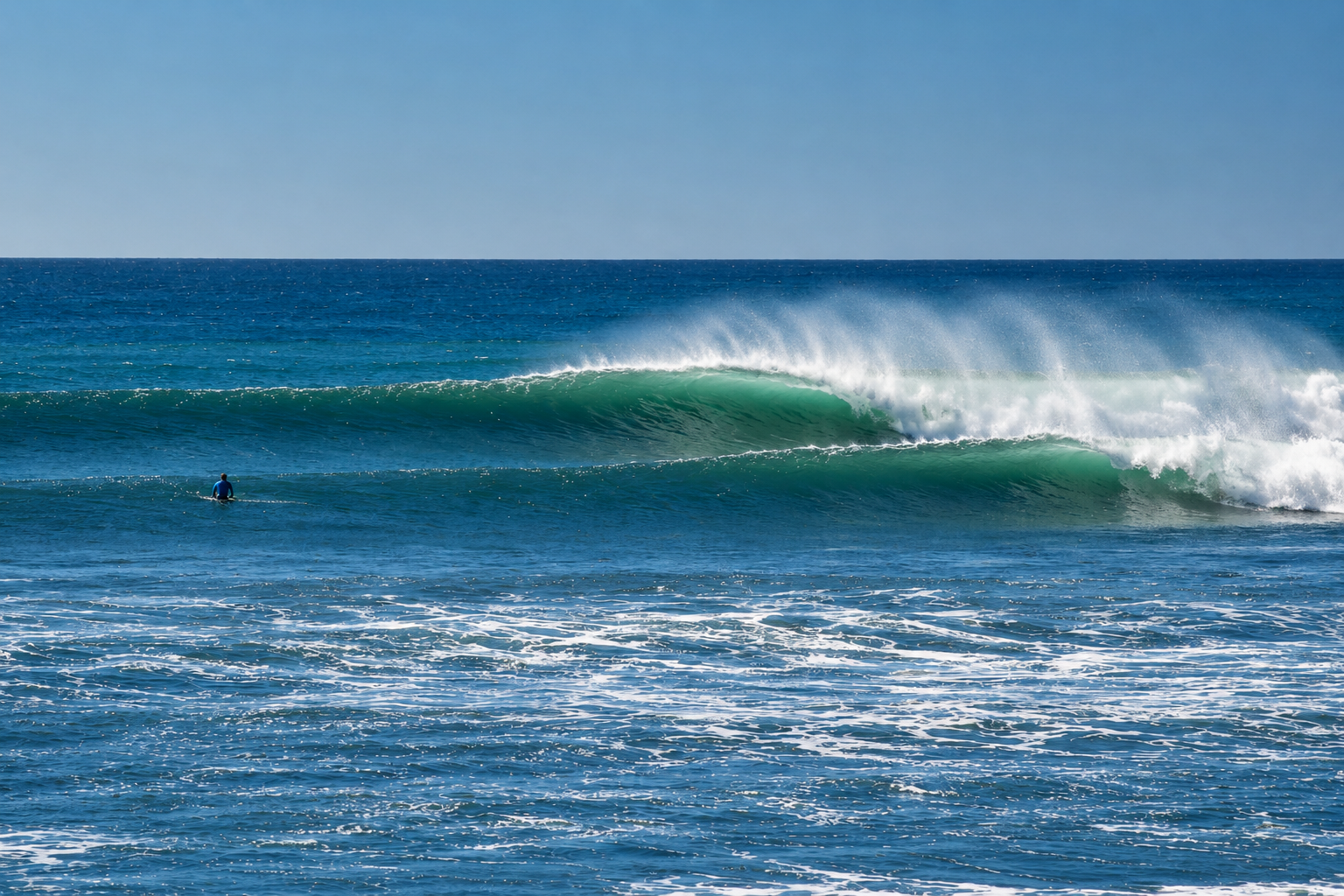
Panama is one of the easier places in Latin America for a foreigner to buy property. You can own land and homes in your own name, the economy runs on the US dollar, there is no citizenship test at the notary, and the country has two surf coasts that peak in opposite seasons. The Pacific side catches Southern Hemisphere swell from roughly April to October, and the Caribbean islands of Bocas del Toro come alive in the northern winter.
The catch is the land itself. Away from Panama City, a large share of coastal and island land has never been formally titled. Much of it changes hands as "rights of possession," a weaker right that does not appear in the national property registry the way a titled lot does. The beach strip in front of every oceanfront lot stays public. And the rules for islands, border areas and protected zones add their own layers.
This guide explains how Panama real estate works for a foreign surf buyer in 2026: what you can own, how titled and possession land differ, the coastal and island rules, the buying process, taxes, visas and banking. Then it walks through the surf regions buyers ask about most, from the Pacific beaches near Panama City to Santa Catalina, the Azuero Peninsula, the Gulf of Chiriquí and Bocas del Toro, with indicative prices and who each one suits.
Quick answer: Yes, foreigners can buy property in Panama and hold it in their own name or through a Panamanian company, with the same rights as citizens. The main exceptions are land within 10 km of the national borders, which foreigners can't own, and the public beach strip (22 meters from the high-tide line on the Pacific, 10 meters on the Caribbean), which nobody can own. The biggest risk for surf buyers is "rights of possession" (ROP) land that has no registered title. Buy titled property registered in the Registro Público whenever you can, use escrow, and hire your own lawyer.
Not legal or tax advice. This article is general information only. Panamanian property, tax and immigration rules change, and they apply differently to each buyer. Before you sign anything or send money, hire an independent Panamanian real estate attorney and a tax adviser, and confirm every figure here with them and with the relevant government office.
Table of contents
Why surfers buy in Panama
Panama has two coastlines and two surf seasons. On the Pacific side, long-period south and southwest swells arrive most consistently from about April to October. Mornings are often offshore, and evening glass-offs are common. On the Caribbean side, Bocas del Toro's reefs and beaches work best from about December to March, with a smaller secondary season in June, July and August, according to the Panama Tourism Authority. A buyer with a base on one coast can chase the other when their home break goes quiet.
The second draw is practical. Panama uses the US dollar as its everyday currency, so a US buyer carries no exchange-rate risk on the purchase price, the mortgage or the running costs. Panama City has a major international hub airport at Tocumen, and the drive from the capital to the nearest surf beaches is under two hours. The country also has some of the best-known residency programs in the region for retirees and investors.
The third draw is value. Outside the capital and the closest beach towns, Panama real estate for sale is often cheaper per square meter than comparable surf land in Costa Rica, though the gap closes quickly near the best-known waves. Lower prices usually come with longer drives, thinner services and more complicated land titles, which is why the rest of this guide spends so much time on paperwork.
If you are still comparing countries, our guide to the best surf towns to live and buy property puts Panama alongside Mexico, Costa Rica, Nicaragua and others, and our Costa Rica buying guide is a useful contrast for coastal law.
Panama is one of those rare places where you can chase completely different surf experiences in the same country—from powerful Pacific swells and long point breaks to the warm-water reefs and Caribbean energy of Bocas del Toro. For surfers looking to own property, having two coastlines with different surf seasons opens up a whole year of possibilities.
Jim Habig, Founder, International Surf Properties
Can foreigners buy property in Panama?
Yes. Panama's Constitution treats foreigners and citizens alike for most purposes, and in practice foreign individuals and foreign-owned companies buy, sell, mortgage and inherit Panamanian real estate the same way citizens do. The U.S. State Department's investment climate reporting notes that Panama has no specific regulations on land acquisition by foreign or non-resident investors. You do not need residency or a visa to buy, and you can hold the property in your own name, through a Panamanian corporation (sociedad anónima) or through a private interest foundation.
There are two important limits.
The 10 km border zone. Article 291 of the Constitution says foreign individuals and legal entities, and Panamanian companies whose capital is wholly or partly foreign, may not acquire national or private land less than 10 kilometers from the borders. That matters near the Costa Rican border on both coasts, including the far western end of Chiriquí and the mainland of Bocas del Toro province around Guabito and Changuinola, and near the Colombian border in Darién and Guna Yala. If a lot is anywhere near a border, have your lawyer and surveyor measure the distance before you go further.
Land that can't be privately owned at all. Beaches and the beach strip, mangroves, Indigenous territories (comarcas), protected areas, ports, estuaries and riverbanks are excluded from private titling under Law 80 of 2009. These limits apply to Panamanians and foreigners alike.
Islands used to be a separate category for foreign buyers. Under Law 80, island land can be transferred into private title when specific conditions are met (more on that below), and foreigners can hold that title unless the island is inside the 10 km border zone.
Titled property vs rights of possession
This is the single most important topic in Panama real estate for a surf buyer, because so much of the good coastal land is in the second category.
Titled property (título de propiedad) is land registered as a finca in the Registro Público, Panama's national Public Registry. The registry shows the current owner, the history of transfers, mortgages, liens, court attachments, easements and any restrictions on sale. Anyone can check a finca's registered information online through the registry's system, and your lawyer will order an official certificate before closing. Titled land can be mortgaged, insured and resold in the ordinary way.
Rights of possession (derechos posesorios, usually shortened to ROP) are rights to use and occupy land that still belongs to the nation. The U.S. State Department notes that much of Panama's land, especially outside Panama City, is not formally titled, and that the possession system faces frequent legal challenges. An ROP sale is usually documented by a private or notarized transfer of the possessory right, supported by municipal or local records and by physical occupation, not by an entry in the registry. Banks rarely lend on it.
Law 80 of 2009 created a route to convert possession into title in coastal zones and on islands. The nation recognizes possession held for more than five years, and a buyer can take over the previous possessor's time. Possession is proven by actual residential, tourism, agricultural, commercial or productive use of the land. Titling is handled by ANATI, the National Land Administration Authority created in 2010. Small parcels can be titled free in some cases, and larger areas are titled for a price set from a regional table of values.
The problem is time and certainty. The State Department reports that investors complain about ANATI's capabilities and long adjudication times, and that some titling cases have dragged on for years. Titling also fails if the land turns out to be in a protected area, mangrove, Indigenous territory or the beach strip, or if a neighbor or relative claims the same ground.
| Titled property | Rights of possession (ROP) | |
|---|---|---|
| What you own | The land itself, registered as a finca | A right to occupy and use state land |
| Where it's recorded | Registro Público | Private or notarized transfer documents, municipal and local records |
| Mortgage financing | Available | Rarely available |
| Resale | Ordinary sale through a public deed | Possible, but to a smaller pool of buyers |
| Can it become titled? | Already is | Possibly, through ANATI under Law 80, if the land qualifies |
| Main risks | Liens, survey errors, unpaid taxes (all checkable) | Competing claims, boundary disputes, land that can never be titled, long titling times |
ROP land is not automatically a scam, and plenty of people live happily on possession land in Bocas del Toro and on the Azuero coast. But it should be priced as a riskier asset, and your lawyer should investigate the chain of possession, the neighbors, the municipality and whether the land could ever be titled. If a seller tells you "the title is in process," ask to see the ANATI file and assume it could take years.
Beachfront rules: the 22-meter strip and the coastal zone
Panama beachfront property for sale is never truly "on the sand" in the ownership sense. Law 80 of 2009 sets out the key definitions:
The beach strip (ribera de playa). On the Pacific coast, the strip of land from the high-tide line to a parallel line 22 meters inland. On the Caribbean (Atlantic) coast, the strip is 10 meters. Both are subject to rights acquired before the law. The beach strip is excluded from private titling.
The coastal zone (zona costera). A 200-meter-wide band of land measured inland from the high-tide line.
The titleable coastal zone (zona costera adjudicable). On the Pacific, the land between the end of the 22-meter beach strip and a line 178 meters further inland. On the Caribbean, the 190 meters behind the 10-meter strip. This is the part of the coastal zone that can be titled under the law.
ANATI, working with the national mapping institute Tommy Guardia, fixes the technical high-tide line. That line is what your surveyor should be working from when they tell you where your usable land begins.
The law also protects public access. Government land grants on coasts and islands must keep easements that allow public access to the beach, and blocking public beach access is an administrative offense with fines starting at $1,000 and rising to $20,000 for repeat violations. If you are picturing a gated, private beach, that is not how Panama works.
Docks, piers and over-water structures are a separate matter. They usually sit on the seabed or shoreline, which is public domain, and need their own government concession. Local guides in Bocas del Toro describe these as time-limited rights, commonly 20 to 40 years and renewable. Ask your lawyer to confirm any concession and its term is current before you pay for a dock or an over-water deck.
Finally, the coast changes. Erosion, river mouths that move in the rainy season and storm surge can all shift the high-tide line over time. Our surf property evaluation guide covers how to read erosion, flood and setback risk on any beachfront lot.
Islands and Bocas del Toro
Panama has hundreds of islands, and for surfers the important ones are the Bocas del Toro archipelago on the Caribbean side and island breaks such as Morro Negrito and those near Boca Chica in the Gulf of Chiriquí.
Under Article 13 of Law 80, island land can only be transferred into private ownership if possession for more than five years has been proven, the land is put to uses tied to the country's development (residential and tourism uses count), the area is not reserved for government programs, and the grant does not affect public areas. The government can also declare special development zones where island land may be titled. In areas reserved as strategic, title is not granted, but existing possessors can ask for a 20-year renewable use concession instead.
In practice, Bocas del Toro is the clearest example of a mixed market. Local guides describe titled land as available mainly on Isla Colón, Isla Carenero, Isla Solarte and parts of the mainland, while the outer islands are dominated by possession land. That is why two oceanfront houses that look similar in photos can carry very different risk, financing options and resale value. If you are looking at island property anywhere in Panama, ask on day one whether it is titled, ROP or concession, and get the answer in writing from your own lawyer.
How to buy, step by step
A titled purchase in Panama is a fairly well-worn process. The steps below assume titled land or a titled home.
Hire an independent lawyer. Choose a Panamanian real estate attorney who represents only you, not the seller, the developer or the agent. Agree the scope and fee in writing.
Confirm the property type and the seller's authority. Titled, ROP or concession? If the seller is a company, who can sign for it? Are there spouses or heirs who must consent?
Sign a promise to purchase (promesa de compraventa). This contract fixes the price, the closing date, the due-diligence period and what happens to the deposit if either side walks away. Deposits of around 5% to 10% are common. Make the deposit refundable if due diligence fails.
Run due diligence. Your lawyer pulls the Registro Público certificate for the finca to check ownership, mortgages, liens and restrictions; confirms property taxes and other charges are paid; and, for land, works with a licensed surveyor to check boundaries, access and the high-tide line. See the checklist below.
Use escrow. Pay the balance into escrow with a bank or a regulated escrow provider, released only when the deed is registered in your name or clearly defined closing conditions are met. Do not pay the full price before registration just to speed things up.
Sign the public deed (escritura pública) before a Panamanian notary. The seller must show the tax clearance certificates and proof that the transfer tax and the capital gains advance have been paid through the DGI, the national tax authority.
Register the deed in the Registro Público. You become the legal owner on registration, not on signature. Your lawyer should give you the registered deed and an updated registry certificate showing you as owner.
A straightforward titled purchase often takes one to two months from signed promise to registration. Buying ROP land follows a different path, with more emphasis on investigating possession on the ground, and new construction from a developer adds its own checks on permits and the developer's ability to finish.
Taxes and closing costs
Panama splits transaction taxes so that most of the tax burden falls on the seller. Figures below are as of 2026.
| Item | Rate | Base | Who pays | Notes |
|---|---|---|---|---|
| Transfer tax (impuesto de transferencia) | 2% | The higher of the sale price or the registered cadastral value | Seller, by law | Paid through the DGI before the deed is registered. Who bears it can be negotiated |
| Capital gains tax | 10% of the taxable gain | Sale price minus adjusted cost | Seller | Collected through a 3% advance |
| Capital gains advance | 3% | The higher of the sale price or the cadastral value | Seller | The seller can treat the 3% as final or file to pay 10% on the actual gain and claim any excess |
| Notary and Public Registry fees | Varies with value | Usually buyer | Ask your lawyer for an estimate before signing the promise | |
| Legal fees | Varies; often quoted as a flat fee or percentage | Buyer | Pay for your own lawyer, always | |
| Survey and inspections | Varies | Buyer | Essential for land and older homes | |
| Escrow | Varies by provider | Negotiable | Worth it |
Two practical notes. First, because the transfer tax and the 3% advance are based on the higher of the price or the cadastral value, a property bought cheaply long ago can still trigger tax on its current value when it sells. Second, the seller must be up to date on property tax before the sale can close, so ask for the tax clearance early. Rental income from your property is taxable in Panama, and your home country may tax the income and any gain too.
Annual property tax (IBI)
Panama's annual property tax (impuesto de inmueble, often called IBI) is set by Law 66 of 2017 and has applied in its current form since January 1, 2019. The DGI administers it, and ANATI sets the cadastral value it is based on. The rates depend on whether the property is registered as your primary residence (or as "family tax patrimony").
| Registered value | Primary residence | Other property (second homes, rentals, land) |
|---|---|---|
| Up to $30,000 | 0% | 0% |
| $30,000 to $120,000 | 0% | 0.6% |
| $120,000 to $250,000 | 0.5% | 0.6% |
| $250,000 to $500,000 | 0.5% | 0.8% |
| $500,000 to $700,000 | 0.5% | 1.0% |
| Over $700,000 | 0.7% | 1.0% |
The rates are progressive, so each rate applies only to the slice of value in its band. A primary residence pays nothing on the first $120,000 of value. To get the primary-residence rates you must apply to register the home as such; it does not happen automatically. Many surf buyers who live abroad part of the year will be on the higher, non-primary schedule.
New construction can also be exempt from the tax on the value of the building (not the land) for a period after completion under Law 28 of 2012: 20 years for homes valued up to $120,000, 10 years from $120,000 to $300,000, and 5 years above $300,000, according to Kraemer & Kraemer. Check whether a home you are buying still has time left on its exemption. Property tax is payable in three installments a year.
Visas: Friendly Nations, Pensionado and Qualified Investor
You do not need residency to buy Panama property for sale, but owning property can help you qualify for it. Three programs matter most to surf buyers. Rules below are as of October 2026; confirm them with a Panamanian immigration lawyer and the Servicio Nacional de Migración before you apply.
Friendly Nations. Open to citizens of a list of countries that includes the United States and Canada. Under Executive Decrees 197 and 226 of 2021, applicants qualify through one of three routes: a job with a Panamanian company, a fixed-term deposit of at least $200,000 in a Panamanian bank, or an investment of at least $200,000 in titled real estate held in your name or through a Panamanian entity you ultimately own. The property can be financed through a Panamanian bank. The program first grants two years of provisional residency, after which you apply for permanent residency. Because the property must be shown through a Public Registry certificate, ROP land does not qualify.
Pensionado. Panama's retiree visa requires a lifetime pension of at least $1,000 a month. That drops to $750 a month if you have bought property in Panama in your own name for more than $100,000. Dependents need an extra $250 a month each. Pensionado residency is permanent, and it is widely known for the local discounts it gives retirees on services and entertainment.
Qualified Investor. Panama's fast-track investor residency was updated by Executive Decree 17 of September 8, 2026, published in the Official Gazette on September 16, 2026. The real estate route now requires at least $300,000 in a new, first-sale property or $500,000 in a resale property. Other routes include a $500,000 investment through the securities market, or fixed-term deposits of $500,000 at Banco Nacional de Panamá or Caja de Ahorros, or $750,000 through a qualifying private bank. The Ministry of Commerce and Industries (MICI) issues the investment certificate. Because the decree is brand new, expect implementation details to settle over the coming months.
Banking, the US dollar and Panama's compliance lists
Panama has used the US dollar as its paper currency for more than a century, alongside its own balboa coins. For a US buyer that removes currency risk, and for everyone it makes pricing simple.
Panama's banking sector is large, but it is also strict. Panama was on the Financial Action Task Force's "grey list" of jurisdictions under increased monitoring from 2019 and was removed in October 2023 after completing its action plan. The European Union removed Panama from its list of high-risk third countries for money laundering in July 2025. Panama was still on the EU's separate list of non-cooperative jurisdictions for tax purposes in the February 2026 update; Panamanian and international press reported that EU finance ministers were expected to take it off at their October 9, 2026 meeting, so check the current status.
What this means in practice is thorough know-your-customer checks. Expect banks, notaries, lawyers and escrow agents to ask for your passport, proof of address, bank and professional references, and documents showing where the purchase money came from. Opening a local bank account can take weeks. Have your source-of-funds paperwork ready before you start, and send money by traceable wire, never in cash.
Infrastructure, healthcare and getting around
Panama's infrastructure is excellent around the capital and gets thinner the further you drive. Before you buy, check the basics on the ground:
Roads. The Pan-American Highway runs west from Panama City through Coronado, Santiago and David. Surf towns sit at the end of side roads off it. Santa Catalina's access road is now paved, but rural lots on the Azuero coast and in Chiriquí may be reached by dirt tracks that turn to mud in the rainy season, which on the Pacific side overlaps with the best surf months. Visit in the wet season before you buy land.
Drive times. About 75 to 100 minutes from Panama City to Coronado; around five hours to Pedasí and up to six and a half to Playa Venao; around six hours to Santa Catalina, often longer with stops. Pedasí has an airport with scheduled flights from the capital, and Bocas del Toro is a 45-minute flight from Panama City's Albrook airport.
Healthcare. Specialist and hospital care is concentrated in Panama City. On the Azuero coast, Pedasí has a public hospital-clinic, Las Tablas has a public hospital about 30 minutes away, and Chitré, about an hour from Pedasí, has a larger public hospital and several private clinics. Santa Catalina relies on Soná and Santiago. Chiriquí buyers use David. Coronado has clinics and private doctors but sends serious cases to the capital.
Water, power and internet. Many rural surf properties rely on wells, rainwater or private water systems, and power cuts happen. Satellite internet has made remote work possible in places that had poor connections a few years ago. Ask neighbors, not just the seller, how reliable each service really is.
Towns like Las Tablas and Chitré also matter as service hubs: banks, hardware stores, supermarkets and government offices. Many Azuero buyers look at Las Tablas Panama real estate as a lower-cost base with easier services, then drive to the beach.
Due-diligence checklist
Registro Público certificate for the finca, showing the seller as owner, with no undisclosed mortgages, liens, attachments or sale restrictions
Property type confirmed in writing: titled, ROP, concession, or a mix
For ROP land: chain of possession, how long it has been held, municipal records, neighbors' boundaries, and whether the land could ever be titled under Law 80
Distance to the nearest international border (must be more than 10 km for a foreign buyer)
Survey by a licensed surveyor showing boundaries, legal road access and where the high-tide line and 22-meter (Pacific) or 10-meter (Caribbean) beach strip fall
No overlap with protected areas, mangroves, Indigenous comarcas or riverbanks
Island land: proof of how it was titled, or the terms of any concession
Dock or pier concessions current, with the term and renewal conditions
Property tax clearance and the current cadastral value
Building permits and occupancy permit for any house, and plans that match what was built
Water source, power supply, septic system and internet tested on site
Road access checked in the rainy season
HOA rules, fees and rental restrictions in gated communities and condos
For a visa: confirm the property type and price meet the program's current rules before you sign
Escrow agreement that releases funds only on registration
One of the biggest surprises when buying property in Panama can be finding that the title, boundaries or access don’t match what you expected. That’s why we always recommend having a qualified Panamanian attorney verify everything before money changes hands.
Jim Habig, Founder, International Surf Properties
Panama's surf regions and what property costs
Browse current Panama surf properties, or narrow your search to villas, lots and land or surf resorts and hotels. The prices below are asking prices from listing portals and local agencies, as of 2026. They move quickly and vary enormously with title type, ocean frontage and views, so treat them as a rough guide only.
Coronado and the Pacific Riviera near Panama City
The beaches west of Panama City, marketed by the Panama Tourism Authority as the Riviera Pacífica, are the closest surf to the capital. The authority lists more than a dozen breaks, including Playa Malibu, Playa Serena, Rocky Point, Playa Teta, Jeffreys, El Palmar, Punta Ratón and Río Mar. Playa Serena is a right-hand point inside Coronado that is mellow most days, and Río Mar near San Carlos has a beach break and a point that works on solid south swells. The best swells arrive from about April to June, with fewer waves from mid-November to April.
Coronado Panama real estate is the most developed beach market in the country, with gated communities, condos, supermarkets and clinics. A March 2026 market review by PanaComps put studios and one-bedroom condos near the beach at about $120,000 to $200,000, two- and three-bedroom beachfront condos at $200,000 to $500,000, and three- and four-bedroom houses in gated communities at about $250,000 to $400,000. The waves are not the best in Panama, but this is where you can surf before work and still reach the capital and its hospitals the same day.
Who it suits: families, retirees and weekenders who want convenience, beginner-to-intermediate waves and resale liquidity.
Santa Catalina (Veraguas)
Santa Catalina is the classic Panamanian surf town and the gateway to Coiba National Park. The main wave, La Punta, is a right-hand reef point that produces long, bowly walls on a south swell and works best on a pushing tide. Beginners use the beach at El Estero. It is a Pacific spot, at its best from April to October. You can read more about the break on our Santa Catalina surf break page.
The town is small and remote, about six hours by road from Panama City. In 2026, residential lots of around 1,000 square meters near town were commonly listed at roughly $80,000 to $130,000 on portals such as Encuentra24, with oceanfront parcels near the point listed at roughly $290,000 to $500,000. Titled land is available, but so is ROP land, so check every lot.
Who it suits: committed surfers, divers and anglers who want a real wave and a quiet life, and small hospitality businesses serving Coiba trips.
Playa Venao, Pedasí and Cambutal (Azuero Peninsula)
The southeast corner of the Azuero Peninsula in Los Santos province is Panama's most active surf real estate market outside the capital region. Azuero real estate here falls into three distinct pockets.
Playa Venao is a horseshoe bay with a sandbar wave that picks up most south swells. It is beginner- and intermediate-friendly, it has a surf community with hotels, surf schools and restaurants, and the Panama Tourism Authority calls it a famous destination known for its constant waves. See our Playa Venao surf break page. It is a tourism and rental market. An August 2026 comparison by Casa Solution Real Estate listed condos at around $505,000 and homes in the Hermitage Hills area at roughly $575,000 to more than $800,000, with upscale homes nearing $900,000. Projects marketed as Panama luxury homes are increasingly common here.
Pedasí is a small, established town about 30 to 45 minutes from Venao by paved road, with cafés, a public hospital-clinic, an airport and a mix of locals, retirees and expats. The same August 2026 comparison listed a townhome at $175,000, a three-bedroom home at $287,000 and a home with a pool and guest apartment at $385,000, with top coastal homes approaching $1 million. Pedasí Panama real estate suits buyers who want to live full time and drive to the waves.
Cambutal, past Tonosí to the southwest, is more rustic. The tourism authority describes world-class waves in a natural setting, and the beach offers peaks for learners plus reef rights that come alive on solid south swells. See our Playa Cambutal surf break page. Listings in 2026 ran from small residential lots in the tens of thousands of dollars to beachfront parcels above $1 million, and there is a lot of farmland, some of it titled, some not. Roads and services thin out here.
The whole area is a Pacific coast, at its best from April to October, which is also the rainy season. Turtle nesting from July to November at nearby refuges adds environmental rules close to some beaches.
Who it suits: Venao for rental investors and surf-business owners; Pedasí for full-time residents and retirees; Cambutal for buyers who want land, space and fewer people.
The Gulf of Chiriquí: Morro Negrito, Las Lajas and Boca Chica
The Gulf of Chiriquí in western Panama is a scattered region of islands, river mouths and long beaches between Santa Catalina and David. Morro Negrito, a pair of islands off the Tolé coast, has been home to a surf camp since 1998 and has around a dozen breaks shared by a small number of guests. Las Lajas is a beach town on the mainland coast, and Boca Chica is a fishing and boating hub near Isla Boca Brava.
Land here is often sold in large parcels. In 2026, listings ranged from development lots at around $22 per square meter, to a 7,000-square-meter parcel on Morro Negrito at $155,000, to nearly 2 hectares of beachfront at Punta Vittoria in Boca Chica at $799,000. Much of the island land in the gulf is possession land, and anything near the far western edge of Chiriquí needs a border-distance check. David, the provincial capital inland from Boca Chica, has the hospitals, banks and an airport with domestic flights.
Who it suits: buyers who want acreage or a surf-and-fishing lodge, and who are comfortable with boat access and more complex titles.
Bocas del Toro (Caribbean)
Bocas del Toro is a Caribbean archipelago with a busy town on Isla Colón, a laid-back island culture and reef waves that wake up when winter swells arrive from about December to March. Bluff Beach on Isla Colón is a heavy, pounding shorebreak for experienced surfers (see our Bluff surf break page). Carenero Point is a left reef that can peel for 100 to 150 meters. Silverbacks, off Isla Bastimentos, is a big-wave right over reef that only works on the largest swells and is strictly for experts. Most of the good waves break over sharp, shallow reef and many are reached by water taxi.
Bocas del Toro real estate is the most title-sensitive market in Panama. Titled land is concentrated on Isla Colón, Carenero, Solarte and parts of the mainland; the outer islands are mostly ROP; and overwater structures need concessions. In 2026, houses listed on Isla Colón ranged from about $230,000 to more than $1 million, with a titled three-bedroom house in Bluff listed at $245,000 by Bocas Real Estate Group. The mainland near the Costa Rican border falls inside the 10 km zone where foreigners can't own.
Who it suits: experienced reef surfers, island-lifestyle buyers and small hotel or rental operators who are willing to do serious title work.
Surf towns compared
| Area | Coast | Main waves | Best season | Skill level | From Panama City | Indicative 2026 asking prices | Title notes |
|---|---|---|---|---|---|---|---|
| Coronado / Pacific Riviera | Pacific | Playa Serena, Río Mar, Punta Ratón | Apr–Oct (best Apr–Jun) | Beginner–intermediate | 75–100 min drive | Condos ~$120k–$500k; houses ~$250k–$400k | Mostly titled |
| Santa Catalina | Pacific | La Punta (right reef point), El Estero | Apr–Oct | Intermediate–expert at the point | ~6 hr drive | Lots ~$80k–$130k; oceanfront much higher | Mix of titled and ROP |
| Playa Venao | Pacific | Bay sandbar peaks | Apr–Oct | Beginner–intermediate | ~5.5–6.5 hr drive, or fly to Pedasí | Condos ~$505k; homes ~$575k–$900k | Check each project |
| Pedasí | Pacific | Drive to Venao and nearby beaches | Apr–Oct | All | ~5 hr drive, or fly | Townhomes from ~$175k; homes ~$287k–$1M | Mostly titled in town |
| Cambutal | Pacific | Beach peaks and reef rights | Apr–Oct | All, reef for experienced | ~6+ hr drive | Lots from tens of thousands; beachfront $1M+ | Mix; lots of farmland |
| Gulf of Chiriquí | Pacific | Morro Negrito islands, beach breaks | Apr–Oct | Intermediate–advanced | Long drive, or fly to David | Land from ~$22/m²; island and beachfront parcels $155k–$800k+ | Much ROP on islands; border checks in the far west |
| Bocas del Toro | Caribbean | Bluff, Carenero, Paunch, Silverbacks | Dec–Mar (smaller Jun–Aug) | Intermediate–expert | 45-min flight | Isla Colón houses ~$230k–$1M+ | Titled mainly on Colón, Carenero, Solarte; much ROP; concessions for docks |
Drive times and prices are approximate and drawn from the Panama Tourism Authority, local guides and listings cited in the Sources section.
Frequently asked questions
Can foreigners buy property in Panama?
Yes. Foreigners have the same property rights as Panamanians and can own titled land and homes in their own name or through a Panamanian company or foundation. The main exception is land within 10 km of the national borders, which foreigners and foreign-owned companies can't acquire. Nobody can privately own the public beach strip, mangroves, protected areas or Indigenous territories.
What is the difference between titled land and ROP land?
Titled land is registered as a finca in the Registro Público, can be mortgaged and is the safest way to own property. Rights of possession (ROP) are rights to occupy land that still belongs to the state. ROP land is cheaper, but it is harder to finance and resell, and turning it into titled land through ANATI can take years or fail.
Can I own beachfront property in Panama?
You can own the land behind the beach, but not the beach. On the Pacific coast, the first 22 meters from the high-tide line are a public beach strip; on the Caribbean coast, it is 10 meters. Land in the coastal zone behind that strip can be titled, and the public must still be able to reach the beach.
What taxes do I pay when I buy property in Panama?
The main transaction taxes fall on the seller: a 2% transfer tax and a 3% capital gains advance, both based on the higher of the price or the cadastral value. Buyers usually pay notary, registry, legal and survey costs. After you buy, you owe annual property tax unless your value is under the exemption threshold or the building has a new-construction exemption.
Does buying property in Panama give me residency?
It can. The Friendly Nations visa accepts a titled property investment of at least $200,000. The Pensionado visa lowers the pension requirement from $1,000 to $750 a month if you own property worth more than $100,000. The Qualified Investor visa, updated in September 2026, requires $300,000 in a new property or $500,000 in a resale property. ROP land generally does not count.
Is Panama still on a money-laundering grey list?
No. The FATF removed Panama from its list of jurisdictions under increased monitoring in October 2023, and the EU removed it from its high-risk money-laundering list in July 2025. Banks still apply strict know-your-customer and source-of-funds checks, so prepare your documents early.
The bottom line
Panama gives foreign surf buyers more legal security than many of its neighbors: full ownership rights, a public registry, a dollar economy and residency options tied to property. The risks are concentrated in a few places, and they are predictable. Possession land without title, island and border rules, the public beach strip, and remote roads in the rainy season are where buyers get hurt. Buy titled land registered in the Registro Público when you can, price ROP land as the riskier asset it is, use escrow, and hire a lawyer who works only for you.
If Panama is on your list, browse Panama surf properties and all surf properties for sale, explore waves in our surf breaks directory, and look at surf vacation rentals to spend a season before you commit. If a hotel or surf camp is your goal, read our surf resorts for sale guide. If you own a surf home, lodge or land in Panama, you can list your property with us.
Sources
Law 80 of December 31, 2009, on titling in coastal zones and island territory, as amended by Law 59 of 2010 (consolidated text, Spanish): https://www.sijusa.com/wp-content/uploads/2023/08/l_80_2009_agrario.pdf
Official Gazette of Panama No. 26438-B, December 31, 2009 (Law 80 of 2009, Spanish): https://www.gacetaoficial.gob.pa/storage/gacetas/2009/12/26438_B/GacetaNo_26438b_20091231.pdf
Political Constitution of the Republic of Panama (Spanish): https://pdba.georgetown.edu/Parties/Panama/Leyes/constitucion.pdf
Jurídica Panamá, Article 291 of the Constitution (Spanish): https://www.juridicapanama.com/articles/552
U.S. Department of State, "2025 Investment Climate Statements: Panama": https://www.state.gov/reports/2025-investment-climate-statements/panama
ANATI, National Land Administration Authority, regulations: https://www.anati.gob.pa/index.php/normativas
Registro Público de Panamá, website guide (Spanish): https://registro-publico.gob.pa/images/PDF/transparencia/Instructivo_de_la_web.pdf
Kraemer & Kraemer, "Panama Property Taxes": https://kraemerlaw.com/en/panama-taxes/property-taxes/
Kraemer & Kraemer, "Panama taxes when selling real estate": https://kraemerlaw.com/en/panama-taxes/taxes-on-real-estate-sales-in-panama/
Kraemer & Kraemer, "Panama Retiree and Pensioner Visa": https://kraemerlaw.com/en/immigration/panama-retirees-pensioner-visa/
Global Property Guide, "Property-Related Taxes in Panama": https://www.globalpropertyguide.com/latin-america/panama/taxes-and-costs
Relocation Firm (Panama Relocation), "Panama Friendly Nations Visa 2026": https://www.relofirm.com/panama_friendly_nations_visa/
Relocation Firm, "Buying Property in Panama: Legal Guide for Foreigners & Expats (2026)": https://www.relofirm.com/buying-property-in-panama/
Ministry of Commerce and Industries (MICI), new Qualified Investor decree (September 2026, Spanish): https://mici.gob.pa/2026/09/28/panama-apuesta-por-mas-inversion-y-empleo-con-nuevo-decreto-de-inversionista-calificado/
Panama Home Realty, "Panama's Qualified Investor Residency Has New $300K/$500K Real Estate Rule": https://panamahomerealty.com/articles/it-s-official-panama-s-qualified-investor-residency-has-new-dollar300k-dollar500k-real-estate-rule
Insurance Journal, "Panama Removed From Gray List of Financial Crime Watchdog FATF" (October 2023): https://www.insurancejournal.com/news/international/2023/10/30/746098.htm
KPMG, "Panama: Removal from EU list of high-risk third countries" (July 2025): https://kpmg.com/us/en/taxnewsflash/news/2025/07/tnf-panama-removal-from-eu-list-of-high-risk-third-countries-extension-of-fatca-and-crs-filing-deadline.html
European Commission, EU list of non-cooperative jurisdictions, February 17, 2026 update: https://taxation-customs.ec.europa.eu/document/download/3ceac073-5184-46a0-864a-b3038e4d9a6b_en?filename=eu_list_update_17-02-2026.pdf
Newsroom Panama, "Panama Will Be Removed from the European Union's List of Tax Havens in October 2026": https://newsroompanama.com/2026/09/29/panama-will-be-removed-from-the-european-unions-list-of-tax-havens-in-october-2026/
Panama Tourism Authority, "Surfing in Bocas del Toro": https://www.tourismpanama.com/places-to-visit/bocas-del-toro/things-to-do/watersports-beaches/surfing/
Panama Tourism Authority, "Riviera Pacífica Surf Spots": https://www.tourismpanama.com/places-to-visit/pacific-riviera/things-to-do/watersports-and-beaches/surf/
Panama Tourism Authority, "Pedasí, Venao & Cambutal": https://www.tourismpanama.com/places-to-visit/pedasi-and-tonosi/
The Surf Atlas, "Panama Surf Guide": https://thesurfatlas.com/panama-surf/
The Surf Atlas, "Bocas del Toro Surf Guide": https://thesurfatlas.com/panama-surf/bocas-del-toro-surf/
Living in Bocas del Toro, "A Buyer's Guide to Property Ownership Types in Bocas del Toro": https://livinginbocasdeltoro.com/property-ownership-types/
Casa Solution Real Estate, "Pedasí and Playa Venao Are 30 Minutes Apart and Nothing Alike" (August 2026): https://casasolution.com/pedasi-and-playa-venao-are-30-minutes-apart-and-nothing-alike-two-investment-theses-on-the-azuero-coast/
PanaComps, "Coronado: Panama's Pacific Coast Expat Real Estate Market" (March 2026): https://www.panacomps.com/blog/coronado-panama-real-estate
Encuentra24, lots and land for sale in Playa Santa Catalina: https://www.encuentra24.com/panama-en/real-estate-for-sale-lots-land/prov-veraguas-sona-playa-santa-catalina
Encuentra24, lots and land for sale in Tonosí (Cambutal): https://www.encuentra24.com/panama-en/real-estate-for-sale-lots-land/prov-los-santos-tonosi
Premier Casa, land listing on Morro Negrito Island: https://www.premiercasa.com/en/property/panama/chiriqui-tole-morro-negrito-island/3489
Casa Solution Real Estate, beachfront listing in Punta Vittoria, Boca Chica: https://www.casasolution.com/2-hectare-beachfront-property-for-sale-in-punta-vittoria-boca-chica-with-two-casitas-terrace-and-stunning-ocean-views/
Bocas del Toro Real Estate Group, house listings: https://www.bocasrealestategroup.com/property-type/houses/
Morro Negrito Surf Camp: https://morronegrito.travel/
Panama Equity, "Health Insurance and Medical Care in Pedasí, Panama": https://www.panamaequity.com/exploring-living-in-panama/health-insurance-and-medical-care-pedasi-panama/
Coiba Dive Center, "How to Get to Santa Catalina": https://coibadivecenter.com/how-to-get-here
About the author
Jim Habig is the founder of International Surf Properties, a marketplace for surf-front and beachfront real estate around the world. A lifelong waterman and real estate professional, Jim started ISP to connect surfers and ocean lovers with homes and land near the waves they love, and to help them buy with clear, practical information. ISP is a listings marketplace, not a law firm; ISP works with independent local legal and tax professionals on any sale.
Tags
Keep Reading
More From the Blog
 Buying & OwnershipBaja California
How to Sell Property Abroad as a US Owner: Taxes, Process and Timelines in Costa Rica, Mexico, Panama, Nicaragua and El Salvador
October 14, 2026
 Buying & Ownership
Wave Pool Homes: The 2026 Guide to Buying Real Estate in a Surf Park Community
October 11, 2026
 Buying & Ownership
Rosarito Real Estate: The 2026 Guide to Buying a Surf Home in Rosarito, Ensenada and Northern Baja
October 11, 2026