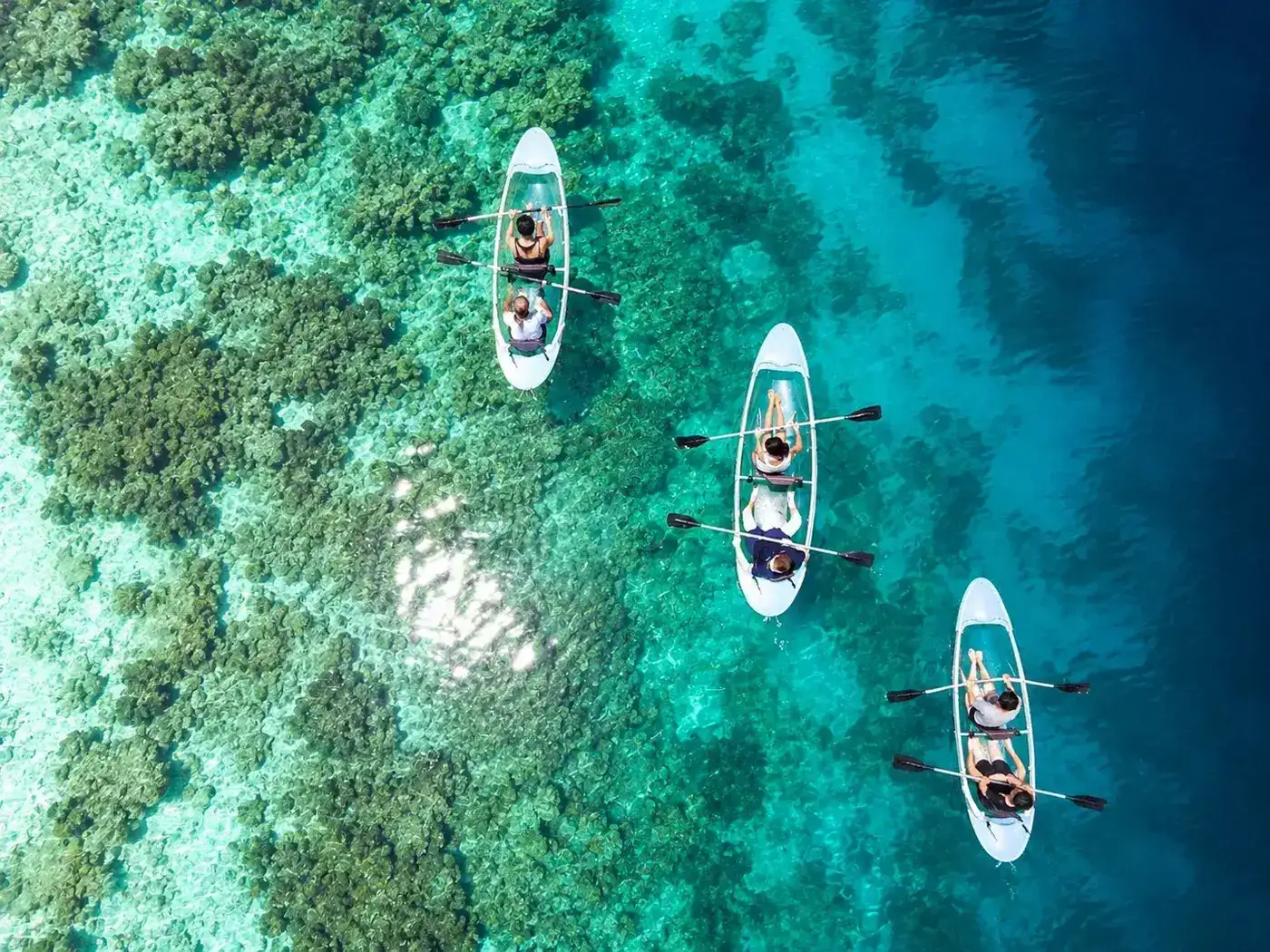
Private Islands for Sale: How to Buy an Island in 2026 (A Surf and Beach Buyer's Guide)
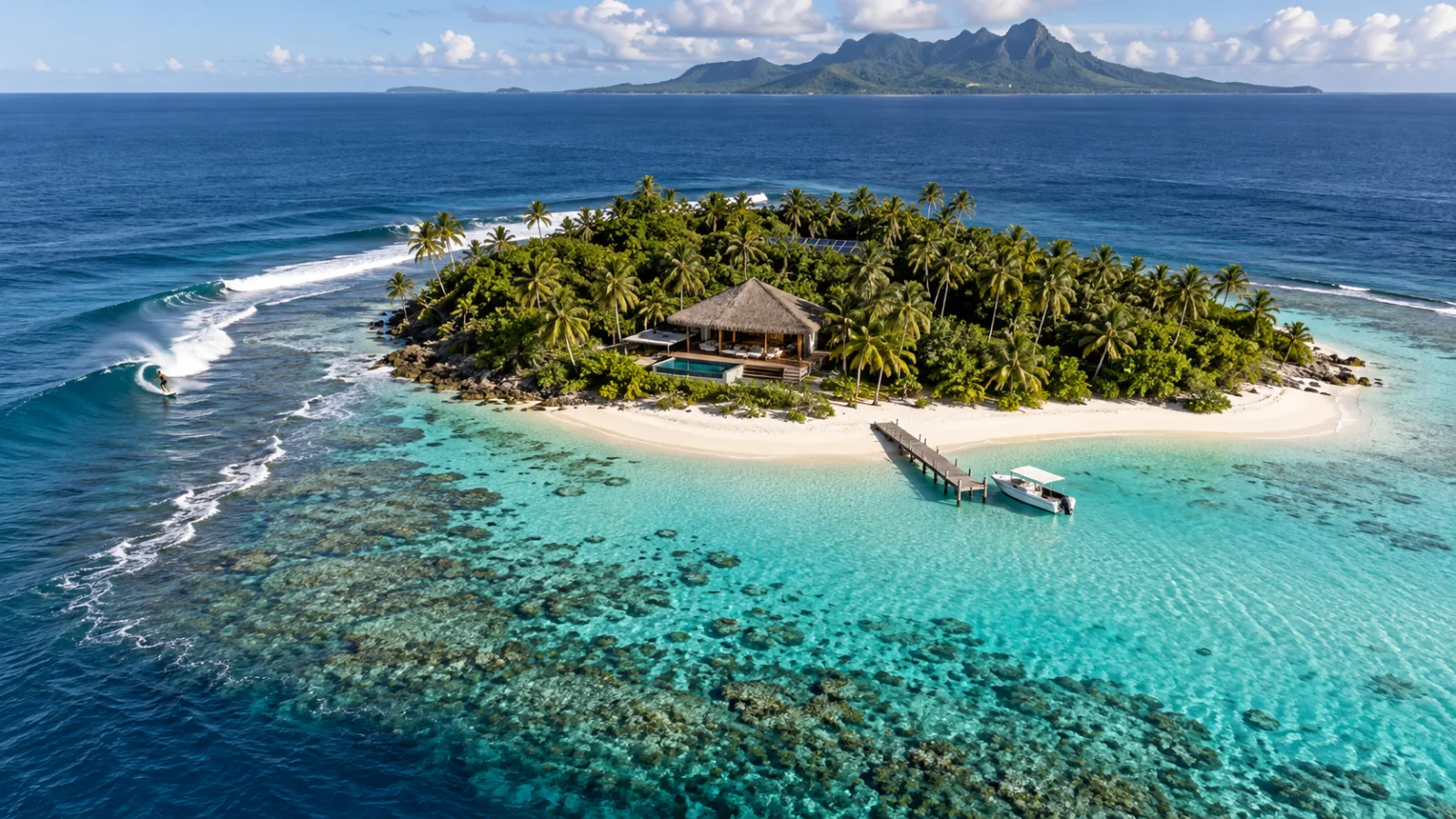
Private islands for sale show up on listing sites from Ontario lakes to the Exumas, at prices that run from under $50,000 to more than $50 million. The listings make it look simple: pick an island, wire the money, build a house. In practice, buying an island is a legal question first and a real estate question second. In some countries you get full freehold title. In others you get a 25-year lease, a government concession, or a right to occupy land that still belongs to the state. And the price on the listing is often the smallest number you will deal with once you add a dock, a boat, power, water and someone to look after it all.
This guide is written for surf and beach buyers. It explains whether you can own an island in the countries buyers ask about most, what islands actually cost in 2026, what it costs to run one, how to buy an island step by step, and what to check if you want waves on your doorstep. It uses dated asking prices from live listings and cites every law and figure in the Sources section at the end.
Quick answer: Yes, you can buy an island, but "own" means different things in different places. In the United States, Canada (outside the cities covered by its foreign-buyer ban), the Bahamas and Belize, foreigners can generally hold freehold title, sometimes with a permit. In Fiji, freehold is scarce and most land is customary land you lease. In the Philippines, Indonesia, Vanuatu and the Maldives, foreigners can't own land outright and buy long leases or use local companies. In Panama and Costa Rica, much island and coastal land is held as possession rights or concessions rather than title. Most island purchases are cash deals, and running costs (boats, power, water, staff, insurance) commonly add up to tens or hundreds of thousands of dollars a year.
Not legal or tax advice. This article is general information only. Island ownership rules, taxes and permits change, and they apply differently to each buyer and each island. Before you sign anything or send money, hire an independent local real estate attorney, a tax adviser and, for any building plans, a local engineer, and confirm every figure here with them and with the relevant government office.
Table of contents
Can you own an island?
Usually, yes, but the answer depends on which of four things you are actually buying.
Freehold (fee simple). You own the land outright, it is recorded in a public registry in your name, and you can sell it, mortgage it or leave it to your heirs. This is the norm in the United States and Canada and is available to foreigners in the Bahamas and Belize.
Leasehold. You hold a long lease from the landowner, often the state or a customary landowning group. Terms run from 25 years to 99 years depending on the country. Leases can be valuable and tradeable, but the clock is always running, and the lease can usually be terminated if you break its conditions. This is the norm for foreigners in the Philippines, Indonesia, Vanuatu, the Maldives and on most land in Fiji.
Concession. A government grants you the right to use public land or water for a set period and purpose. Costa Rica's coastal zone and Panama's docks and over-water structures work this way.
Rights of possession. In parts of Latin America, notably Panama, island land changes hands as a right to occupy and use land that still belongs to the nation. It can sometimes be converted to title, but not always, and it is harder to finance and resell.
Two more things apply almost everywhere. First, the beach itself is often public. Panama keeps a public beach strip, Costa Rica reserves the first 50 meters from the high-tide line, and Indonesia requires that part of every small island stays under state control. Second, the sea around your island is not yours. Reefs, surf breaks, moorings and docks generally sit on public seabed and are governed separately from the land.
So the first question about any island for sale is not "how much?" It is "what exactly is being sold, and who could take it away?"
Island ownership rules by country
The rules below are summaries as of October 2026. Each country section names the structure most foreign buyers use and the trap most likely to catch them.
United States: fee simple, with a few state limits
Islands for sale in the USA are ordinary real estate. You buy fee simple title, record a deed with the county, pay county property tax and get a title insurance policy like any other buyer. There is no general federal ban on foreigners buying land, but some states have added limits. Florida's SB 264, in force since July 1, 2023, bars people and entities tied to China from acquiring Florida real property (with a narrow exception for one residential property of two acres or less, more than five miles from a military installation), and bars principals from other "countries of concern," including Russia, Iran, North Korea, Cuba, Venezuela and Syria, from buying agricultural land or property within 10 miles of military installations or critical infrastructure. If you are a foreign buyer looking at islands for sale in Florida, have your attorney check you are not caught by it.
US island inventory is large. In October 2026 Private Islands Online showed roughly 145 US island listings, with the highest-priced being Pumpkin Key in Florida at $75 million. The real constraints are not legal but practical: wetlands and coastal permits, flood zones, septic rules on small islands, and hurricane insurance in the Southeast.
Canada: freehold, but check the foreign-buyer ban
Canada also sells islands in fee simple, and many of the most affordable islands for sale in North America are on Canadian lakes and rivers. Foreign buyers need to check one federal rule. The Prohibition on the Purchase of Residential Property by Non-Canadians Act bars most non-citizens and non-permanent residents from buying residential property (buildings with three or fewer dwelling units) until January 1, 2027. It does not apply to property located outside Census Metropolitan Areas and Census Agglomerations, which covers much of cottage country, but your lawyer should confirm where a specific island falls and whether the ban has been extended again by the time you buy.
Bahamas: freehold for foreigners, permits above five acres
The Bahamas is the market most people picture when they search for private islands for sale, and foreigners can own freehold land there. Under the International Persons Landholding Act, a non-Bahamian buying a home, condo or land to build a home generally registers the purchase with the Investments Board rather than seeking approval in advance. A permit is required for commercial property, development sites and undeveloped land that gives the buyer five or more contiguous acres. Most whole islands are bigger than five acres, so assume you need a permit.
Transaction tax is significant. Since July 1, 2023, transfers to foreign buyers have been charged value-added tax at a flat 10% of the price, customarily split between buyer and seller though contracts vary. Real property tax for foreign owners is charged annually on assessed value, and a 2026 amendment bill proposed new foreign-owner rates (for example, foreign-owned vacant land at $100 on the first $7,000 of value and 2% on the rest). Confirm with a Bahamian attorney whether it has been enacted and what your island would owe. Separately, economic permanent residence now requires an investment of at least $1 million in Bahamian real estate or approved bonds.
Belize: freehold, 8% stamp duty
Belize is one of the easiest places for a foreigner to buy an island, and Belize islands for sale range from tiny sand cayes to atoll-sized estates. Foreigners can buy and hold freehold land without a landholding licence or a local partner, with the same rights as citizens once the transfer is registered. The main difference is stamp duty: the first BZD 20,000 (about US$10,000) of value is exempt for everyone, after which Belizeans pay 5% and other foreign buyers pay 8% on the greater of the price or the land's value. Buying through a company does not avoid the higher rate if foreigners control it. Rural land pays an annual land tax, commonly published at about 1% of unimproved value.
Two Belize-specific checks matter for island buyers. Many cayes sit inside marine reserves, such as the Turneffe Atoll Marine Reserve, where development has to meet strict environmental standards. And sources disagree about whether buying a whole island needs separate ministry approval, so ask your attorney to confirm what approvals apply to the caye you want.
Panama: titled, possession or concession
Panama islands for sale are some of the cheapest in the Americas, and some of the most complicated. Foreigners can generally buy titled property, though Panama restricts private ownership of some land near its international borders. But much island land, especially away from the main towns, has never been titled. In Bocas del Toro, local guides describe titled land as available mainly on Isla Colón, Isla Carenero, Isla Solarte and parts of the mainland, with the outer islands dominated by rights-of-possession land, and docks and over-water structures held as concessions typically granted for 20 to 40 years. Our Panama surf real estate guide explains possession land, Law 80 island titling and the border zone in detail. If a Panama island is cheap, the title is usually why.
Costa Rica: the 200-meter coastal zone
Costa Rica's Maritime Terrestrial Zone law covers a 200-meter strip measured from the ordinary high-tide line. The first 50 meters are public and cannot be occupied under any title. The remaining 150 meters is a restricted zone where municipalities grant concessions, not ownership, and no concession can be granted to a foreigner who has not lived in Costa Rica for at least five years, or to a company more than half foreign-owned. On a small island almost every buildable meter can fall inside that strip, so for any Costa Rican island or island-like peninsula, your first question to the seller is whether there is registered title, a concession, or neither. Our Costa Rica buying guide covers the concession system.
Honduras: islands reserved, with exceptions
Article 107 of the Honduran Constitution reserves island land, and land within 40 km of the coasts and borders, for Hondurans by birth, Honduran-owned companies and the state. A contract that breaks the rule is void. Decree 90-90 of 1990 carves out an exception for urban land in declared urban or tourism zones: a foreign individual may buy one home for personal use on a plot of no more than 3,000 square meters, and must finish building on a vacant lot within 36 months or pay a 20% annual surtax on appraised value. Anything bigger, including a whole island, needs an approved tourism or investment project through the Honduran Tourism Institute. In practice, a foreigner buying a whole Honduran island is buying a project approval, not a house lot.
Fiji: scarce freehold, long leases
Fiji islands for sale are rare because most of Fiji's land isn't for sale at all. The iTaukei Land Trust Board says 91% of Fiji's land is iTaukei (customary) land, which the board leases out on behalf of its owners; freehold is a small minority, about 10% by the Fiji Times' estimate. Foreign buyers who want land on most islands therefore negotiate a lease through the board rather than buying. For freehold, the Land Sales (Amendment) Act 2014 bars non-residents from buying residential freehold or State land inside town and city boundaries, and requires non-residents who buy vacant land anywhere to finish a new residential dwelling costing at least F$250,000 within two years, with a penalty of 10% of the price for every six months of delay. Whole islands do come to market: Katafanga Island was listed at $17 million for 225 acres in October 2026.
Philippines: no land ownership, long investor leases
Philippines island for sale listings need careful reading because foreigners cannot own land in the Philippines. Only citizens and corporations at least 60% Filipino-owned can. What foreigners can do is lease. Republic Act 12252, signed in 2025, raised the maximum lease for foreign investors with an approved project to an aggregate of 99 years, up from the old 50 years plus one 25-year renewal. Foreigners leasing land without an approved investment remain limited to 25 years under Presidential Decree 471. A "private island for sale" in the Philippines is therefore usually a lease, a share in a Filipino-majority company, or a business sold with its land lease. Avoid nominee arrangements, where a Filipino holds title for you on paper; they can leave you with no enforceable rights.
Indonesia: no freehold, and a permit for every small island
Indonesia island for sale listings are the most misleading on the internet, because foreigners cannot hold freehold title (Hak Milik) to Indonesian land. Foreigners and foreign-owned companies use a right of use (Hak Pakai) or, through a foreign-investment company (PT PMA), a right to build (HGB), each extendable and renewable to a maximum of 80 years.
Small islands add another layer. Indonesian law defines a small island as 2,000 square kilometers or less, which covers almost every island a private buyer would consider. A PT PMA using a small island needs a small-island utilization permit (IPPK) from the Minister of Marine Affairs and Fisheries; a transition period under a 2024 regulation ended on May 20, 2026, and the administrative fine for operating without one is 5% of total investment value. Under Presidential Regulation 34 of 2019, a PT PMA holding an IPPK must transfer at least 20% of its shares to an Indonesian participant within ten years. Indonesia's marine affairs ministry also says no investor can control a whole small island: use is capped at 70% of the island, and at least 30% stays under state control for protection and public access. When an Indonesian listing says "freehold," it usually means an Indonesian citizen holds the title, and you need a lawyer to explain exactly what you would be buying.
Vanuatu and the Maldives: leases only
In Vanuatu, customary land, which is most of the country, can be leased by foreigners for a maximum of 75 years, and there is no freehold to buy. Urelapa Island, listed on ISP at $5 million in October 2026, is a 57-hectare island off Espiritu Santo held on a 75-year commercial tourism lease that began in November 2006, which leaves roughly 55 years on the term in 2026. Confirm the exact remaining term and renewal terms before pricing any lease.
In the Maldives, foreigners cannot own land. Resort islands are leased from the government, mostly through public tender, with a standard head lease of 50 years that can be extended, and the leasehold can be 100% foreign-owned. Extensions have been priced in the millions of dollars. A Maldives island is a resort development right, not a holiday home.
Countries compared
| Country | Can foreigners own land? | Typical structure for a foreign buyer | Indicative 2026 asking prices (examples) | Key risk |
|---|---|---|---|---|
| United States | Yes (some state limits, e.g. Florida SB 264) | Fee simple | Greer Island, Maine $350k; The Carolina Cays, NC $339k; Pumpkin Key, FL $75M | Wetland and coastal permits, flood insurance |
| Canada | Yes outside cities covered by the ban to Jan 1, 2027 | Fee simple | Butternut Island, ON CAD 114,900; Île aux Chênes, ON CAD 3.95M | Seasonal and ice access; check the ban |
| Bahamas | Yes; permit for 5+ contiguous undeveloped acres | Freehold | Hawks Nest Cay $4.5M; Terra Nova Cay $12.75M; Hummingbird Cay $50M | Hurricanes; 10% VAT on transfer |
| Belize | Yes | Freehold | Little Calabash Caye $125k (0.1 acre); Veridian Caye $2.75M; Deer Caye $14.9M | Marine reserve rules, low-lying cayes, 8% stamp duty |
| Panama | Yes, with limits near national borders | Titled, rights of possession or concession | Small island in Bocas $49,900; Eco Island Sanctuary, Darién $495k | Untitled possession land |
| Costa Rica | Not within the 200 m coastal zone without 5 years' residency | Concession, or title behind the zone | ISP: Golfo Dulce listings $175k–$750k | Coastal-zone and title status |
| Honduras | Islands reserved; narrow exceptions | One home ≤3,000 m² in declared zones, or approved project | Few whole islands openly marketed | Void contracts, project approvals |
| Fiji | Limited freehold; most land customary | Freehold outside towns, or iTaukei lease through the TLTB | Katafanga Island $17M | Build deadline, customary rights |
| Philippines | No | Lease (25 or up to 99 years) or 60/40 company | ISP: lagoon resort leasehold $314k | Typhoons, nominee risk |
| Indonesia | No freehold | Hak Pakai or PT PMA with HGB (to 80 years) plus small-island permit | Mostly price on request | Permits, 70/30 rule, nominee risk |
| Vanuatu | No | Lease up to 75 years | ISP: Urelapa Island $5M (lease) | Remaining lease term, customary owners |
| Maldives | No | Government tourism lease, 50 years extendable | Tender or lease purchase | Very high entry and extension costs |
Prices are asking prices from Private Islands Online and ISP listings as of October 2026, not sale prices. Islands sell for less than asking, often after long marketing periods.
How much does a private island cost?
How much is a private island? Anywhere from under $50,000 to well over $50 million. One broker survey from September 2024 put Caribbean islands at roughly $650,000 to $45 million and South Pacific islands at roughly $502,000 to $65 million. October 2026 listings show the same spread. The highest-priced Bahamas islands on Private Islands Online ran from $12.75 million (Terra Nova Cay, 160 acres) to $50 million (Hummingbird Cay, 236 acres), while the priced Belize listings on its first page ran from $2.75 million (Veridian Caye, 48 acres) to $14.9 million (Deer Caye, 603 acres), with cheaper cayes further down.
What drives the price is mostly predictable:
Tenure. Freehold in a stable legal system costs far more than a lease, possession right or concession on similar land.
Distance to an airport and marina. An island a short boat ride from an airstrip with customs, fuel and a hardware store is worth more than a more beautiful island four hours from the nearest town. Hawks Nest Cay in the Bahamas, for example, is marketed on being half a mile off Great Harbour Cay, which has a runway of more than 5,000 feet with customs and a deep-water marina.
Fresh water. A well, a freshwater lagoon or reliable rainfall saves a lifetime of desalination costs.
Beaches and anchorage. Sand beaches, a sheltered side for a dock, and deep water close to shore all add value. Mangrove-only islands are cheaper and harder to build on.
Elevation. Higher ground means less flood, storm-surge and sea-level risk, and cheaper insurance.
Existing structures and permits. Turnkey islands with houses, power, water and approvals sell for multiples of raw land, because building on an island is slow and expensive.
Reef and marine protection. A protected reef raises the appeal but adds rules. Little Calabash Caye in Belize, for instance, sits inside the Turneffe Atoll Marine Reserve.
Indicative price bands (October 2026 asking prices)
| Price band | What you typically get | Examples (asking prices, October 2026) |
|---|---|---|
| Under $150,000 | A tiny islet, a lake or river island, or a lot-sized caye with no utilities | Small island in Bocas del Toro, Panama, $49,900; Butternut Island, Ontario (about 23 acres), CAD 114,900; Little Calabash Caye, Belize (0.10 acre, freehold), $125,000 |
| $150,000 to $1 million | Raw islands in North America or Central America, or small developed islands with basic off-grid systems | The Carolina Cays, North Carolina (256 acres), $339,000; Greer Island, Maine (5 acres), $350,000; Eco Island Sanctuary, Darién, Panama (46 acres), $495,000; Isla Dulce, Golfito, Costa Rica (13 hectares, two small homes, solar and well), $750,000 |
| $1 million to $10 million | Larger raw tropical islands, or smaller islands with homes and infrastructure | Veridian Caye, Belize (48 acres), $2.75M; Hawks Nest Cay, Berry Islands, Bahamas, $4.5M; Urelapa Island, Vanuatu (57 ha, 75-year lease), $5M |
| $10 million and up | Large Bahamas, Fiji and French Polynesia estates, resort islands and Florida trophy islands | Terra Nova Cay, Exumas, $12.75M; Katafanga Island, Fiji (225 acres), $17M; Motu Tane, French Polynesia (10 acres), $37.5M; Pumpkin Key, Florida (26 acres), $75M |
Read listing details closely. On some listings the acreage in the text and the acreage in the data fields don't match, and "price upon request" often means the price is well above the band you are browsing.
Cheap islands for sale: what "cheap" really means
Searches for cheap islands for sale, affordable islands for sale and islands for sale under $100,000 are common, and there are real islands at those prices. In October 2026, Private Islands Online's "under $100K" collection held only three listings, and two of them were in Ontario at CAD 114,900, with the third a small island in Bocas del Toro, Panama, at $49,900. Its "under $500K" collection had 21 listings, mostly in Ontario, Quebec, Maine, North Carolina, Belize, Nicaragua and Panama.
What the cheapest islands have in common:
They are small, or they are in cold water. The most affordable islands for sale in North America are lake and river islands in Ontario, Quebec and Maine, many reachable only by boat in summer and over ice, or not at all, in winter.
They have no utilities. Expect no power, no water, no septic and no dock. Building them in can cost more than the island.
The title is weaker. In Central America, low prices often reflect possession rights or concessions rather than title, or a location near a border or inside a protected area.
They are harder to resell. The pool of buyers for a 0.1-acre caye or a mangrove island is tiny.
A cheap island can still be a great purchase, especially as a lake retreat or a raw tropical camp. Just budget for the island you will end up with, not the one in the photos.
Running costs: power, water, boats, staff and insurance
The cost of buying an island is a one-off. The cost of keeping one running never stops. Island brokers commonly estimate total ongoing costs at several percent of an island's value every year. One Indonesian island broker, Kepri Estates, publishes the following ranges; treat them as a rough guide from a seller, not independent data.
| Cost line | Indicative range (Kepri Estates) | What drives it |
|---|---|---|
| Solar power system | $50,000–$250,000 to install; 1–2% a year upkeep | House size, battery storage, generator backup |
| Generator fuel and service | $1,000–$5,000 a month | How much you rely on diesel |
| Desalination | $30,000–$100,000 to install; desalinated water about $3–$7 per cubic meter | Water demand, rainwater and well supply |
| Dock and marine access | $75,000–$500,000 to build; 3–7% a year upkeep | Exposure to swell, tide range, seabed |
| Boats | $50,000–$250,000 per vessel; about 10% of value a year for repairs, port fees and fuel | Distance, sea state, number of boats |
| Staff | About $250–$500 a month per person in Southeast Asia; $2,000–$3,500 in the Caribbean | Caretakers, boat captains, security |
| Property insurance | 0.5%–2.5% of insured value a year | Hurricane or typhoon exposure, construction, distance from help |
| Satellite internet | $5,000–$15,000 to set up | Remote work needs |
Some practical notes on the big items:
Construction. Every bag of cement, sheet of roofing and gallon of fuel is barged or boated in. The same broker says freight can make an island build two to three times as expensive as the mainland equivalent. Labor may need to be housed and fed on site, and weather windows can stop work for weeks.
Water. Rainwater catchment and storage is the cheapest water, then a well if the lens is fresh, then desalination. Reverse-osmosis plants need power, spare membranes and someone who knows how to service them. Ask to see water quality tests and the maintenance log for any existing system.
Power. Most remote islands run on solar with battery storage and a generator for cloudy spells. The Telo Islands property on ISP, between Nias and the Mentawai Islands, is a typical setup: two 5 kW solar systems with a backup generator and 30,000 liters of rainwater storage.
Boats and docks. You will need at least one reliable boat, often two, plus a sheltered mooring and a mainland landing. Docks and moorings usually sit on public seabed and need their own permit or concession.
Staff. An island left empty for months gets broken into, overgrown or salt-damaged. Most owners keep a resident caretaker, which means staff housing on the island.
Property tax. It varies widely: about 1% of unimproved value on rural land in Belize, assessed-value rates for foreign owners in the Bahamas, ordinary county taxes in the US and Canada, and lease rent rather than tax on leasehold islands.
Islands with waves: what surf buyers should check
Most private islands for sale have no surf at all. They sit in sheltered lagoons, behind barrier reefs or in lakes, which is exactly why they are calm enough to build on. Islands with good waves are rarer and come with their own questions.
Vawa Island is one of those rare properties that captures everything I love about the surf lifestyle—a private 75-acre island in Fiji’s Yasawa Islands, surrounded by beautiful beaches and vibrant reefs. With its own wave just offshore and visible from the main house, this is an extraordinary opportunity to enjoy the freedom of island living.
Jim Habig, Director, International Surf Properties
Where the surf islands are
Mentawai Islands, Indonesia. The classic island surf zone, with reef breaks such as Macaronis, Lances Right and the Playgrounds area facing open Indian Ocean swell. The dry season, roughly March or April to September or October, brings the bigger, more powerful waves. Land camps and resorts operate here, but the foreign-ownership limits and small-island permit rules above apply, and the Mentawai regency announced in May 2025 that it would manage surf spots directly and proposed a surf tax for foreign visitors of IDR 500,000 to IDR 2 million (about $30 to $121).
Fiji. Until 2010, local surfers were barred from Cloudbreak, near Tavarua, by an exclusivity deal with a nearby surf resort; that year the government opened access to surfing areas under what became the Regulation of Surfing Areas Act 2010. On August 19, 2026, Fiji's Parliament passed the Commercial Use of Marine Areas Bill 2025, which repeals the 2010 law and provides for commercially used marine areas to revert to customary owners; it takes effect only after presidential assent and a commencement notice. If you are buying in Fiji for the surf, have your lawyer explain how the new framework affects access to the breaks near your island.
Siargao, Philippines. Cloud 9 is a short, hollow reef break over shallow live coral, and the best months are generally August to November, when Western Pacific typhoons send swell. The same season brings the storm risk. ISP lists a leasehold lagoon resort on Bucas Grande near Siargao at $314,000, with 10 over-water cottages on a 10- to 25-year renewable island lease; it is not on a surf break, and Siargao's waves are a boat ride away.
Bocas del Toro, Panama. Caribbean reef waves peak from December to March, with a smaller season from June to August, and many breaks are reached by water taxi. Title type varies island by island.
The Maldives. World-class reef passes, but every island is a government tourism lease, so a Maldives surf island means a resort project.
What to check before you fall for a reef pass
Swell window. Which direction does the break face, and what swells reach it? A wave that works three months a year may be fine for you, but it matters for rentals.
Season and storms. In much of the tropics, the best surf season overlaps with cyclone, hurricane or typhoon season. Price the insurance before you price the island.
Access to the break. Can you paddle to it from your shore, or do you need a boat every session? How rough is the run on a big day?
Reef pass and boat channel. A reef pass that makes great waves can also be dangerous to navigate. Ask where boats get in and out at low tide and in a big swell.
Who controls the wave. Is the break inside a marine reserve, a customary fishing area or a regulated surf zone with permits, carrying limits or taxes?
Crowd and charter traffic. In the Mentawai and Maldives, charter boats arrive at the same breaks you can see from your deck. You don't own the wave.
Erosion and exposure. The side of the island that faces the swell also faces storm surge. Build on the sheltered side and higher ground.
Finding a surf island is like discovering a gem in the rough—a private surf island where the beauty of Fiji and the dream of riding your own wave come together.
Jim Habig, Director, International Surf Properties
Island rentals and private island vacation income
Many buyers plan to cover costs by renting the island out. Private island rental and private island vacation searches show real demand, and whole-island rentals in Belize, the Bahamas, Fiji and the Maldives are an established niche. But the numbers are hard.
Licensing. Short-term rentals and guesthouses usually need tourism or business licenses, and many countries charge VAT or room taxes on stays. Requirements vary by country and by island; ask your lawyer before you assume you can rent.
Structure. In leasehold countries, the right to run tourism is often what the lease is for. Philippine investor leases require an approved investment, Honduras requires an approved tourism project for anything beyond one home, and Maldives islands are leased specifically for resorts.
Occupancy. Weather, seasons and travel costs limit how many weeks you can rent. A surf island may only be in demand during its swell season.
Operations. Guests need transfers, meals, cleaning, laundry and safety cover. That means staff and boats on standby, whether or not you have bookings.
Insurance and liability. Commercial guests on boats and reefs raise your liability exposure and your premiums.
If income matters more to you than privacy, consider an operating surf lodge rather than raw land. Our guide to surf resorts for sale explains how to value an operating business.
The risks nobody puts in the listing
Hurricanes, cyclones and typhoons. The Atlantic hurricane season runs from June 1 to November 30, with a peak around September 10. Hurricane Dorian hit the Abaco Islands as a Category 5 storm on September 1, 2019, causing an estimated $3.4 billion in damage and severely damaging or destroying about 13,000 homes on the Abacos and Grand Bahama. Small islands have nowhere to evacuate to.
Sea-level rise. Sea level along the US coastline is projected to rise 10 to 12 inches over the next 30 years, and coastal flooding is expected to happen more than 10 times as often as it does today. Low cayes in the Caribbean and Pacific face similar pressures. Check elevation, not just the view.
Insurance. Cover can be expensive, carry large windstorm deductibles, or be unavailable for some structures. Get a quote before you sign the contract, not after.
Water and power failures. A broken desalination plant or a flooded battery bank can make an island uninhabitable until parts arrive by boat.
Boat logistics. Every trip for food, fuel, guests, doctors and building supplies depends on the weather. Medical emergencies are the hardest case.
Permits and environmental protection. Marine reserves, mangrove rules, coastal setbacks and turtle-nesting beaches can limit what you build and where. In Indonesia, building without a small-island permit can bring a 5% fine on total investment, and unauthorized use that changes an island's spatial function can bring prison terms.
Title and tenure. Possession rights, concessions, nominee arrangements and leases with short remaining terms are where foreign buyers lose the most money.
Resale liquidity. Islands take a long time to sell. The buyer pool is small, financing is scarce, and the next buyer will run the same due diligence you did.
Maintenance and staffing. Salt, sun and humidity destroy buildings, engines and electronics fast. An island without a caretaker deteriorates quickly.
How to buy an island, step by step
How can you buy an island without getting burned? The process looks like any property purchase, with more steps up front.
Decide what you need. Full-time home, seasonal retreat, surf camp or resort? Freehold only, or would you accept a lease? Budget for purchase, building and five years of running costs, not just the price.
Shortlist countries by tenure first. Use the comparison table above. If you need freehold and resale liquidity, start with the US, Canada, the Bahamas and Belize.
Hire an independent local lawyer before you make an offer. They should work only for you and have island or coastal experience. Ask them to confirm, in writing, what tenure is being sold and what permits you will need.
Visit, ideally twice. Go in the worst weather season as well as the best. Ride the boat run in rough conditions. Spend a night if you can.
Make an offer subject to due diligence. Use a contract with a refundable deposit, a clear due-diligence period and conditions for permits or approvals (for example, a Bahamas permit or an Indonesian IPPK).
Run due diligence. Title or lease search, survey, environmental and coastal constraints, utilities, access rights, existing permits. See the checklist below.
Apply for approvals. Foreign-buyer permits, company formation (a PT PMA in Indonesia, a 60/40 company in the Philippines), investment approvals for long leases, and any building permits you need before closing.
Close through escrow. Release funds only when title, lease registration or the transfer of company shares is completed. Pay transfer taxes such as Bahamas VAT or Belize stamp duty on time.
Register and insure. Make sure your title or lease is recorded in your name, and put insurance in place from day one.
Financing
Most private islands are bought for cash. Lenders are reluctant to lend on remote, hard-to-value property, and leases, concessions and possession rights are especially hard to finance. Buyers who borrow usually do it against other assets at home. Some sellers will carry part of the price, especially on slow-moving listings; if they do, make sure the security and default terms are reviewed by your lawyer.
Due-diligence checklist
Tenure confirmed in writing by your lawyer: freehold, lease (with remaining term and renewal terms), concession, or possession right
Registry search showing the seller's title or lease, with no undisclosed mortgages, liens, claims or court cases
Foreign-ownership rules checked for your nationality and your structure (company, trust or personal name)
Permits needed for the purchase itself (for example, Bahamas permit for 5+ undeveloped acres, Indonesia IPPK, Philippine investor lease approval)
Survey showing boundaries, high-tide line and any public beach or coastal zone
Protected areas, marine reserves, mangroves, customary fishing rights and turtle-nesting beaches identified
Distance to any national border checked where border-zone rules apply (for example, in Panama)
Dock, mooring and seabed permits or concessions, with their terms
Mainland landing, parking and boat storage you can legally use
Water source tested; desalination, well and rainwater systems inspected
Power system inspected, with battery age and generator hours
Septic or wastewater system and its permit
Building permits and as-built plans for every structure
Elevation, flood and storm-surge exposure; insurance quote obtained
Property tax, land tax or lease rent paid up to date
Rental and tourism licensing rules, if you plan to rent
Surf: swell window, season, reef pass navigation and any surf-zone rules
Escrow agreement that releases funds only on registration
The first question I encourage island buyers to ask is: ‘What exactly am I purchasing—a freehold title or a lease, and what rights come with it?’ I also recommend confirming how the island gets its power and fresh water, because the cost of maintaining or replacing those systems can make a significant difference to the purchase.
Jim Habig, Director, International Surf Properties
Frequently asked questions
Can you own an island?
Yes, in many countries. Foreigners can hold freehold title to islands in the United States, Canada (outside cities covered by the foreign-buyer ban until January 1, 2027), the Bahamas and Belize, and to freehold land in Fiji outside town boundaries. In the Philippines, Indonesia, Vanuatu and the Maldives, foreigners can't own land and instead buy long leases or use local companies. In Panama and Costa Rica, much island land is held as possession rights or concessions rather than title.
How much does a private island cost?
From under $50,000 for a tiny islet or lake island to more than $50 million for a large Bahamas or Florida estate. In October 2026, Private Islands Online listed a small island in Bocas del Toro at $49,900, Greer Island in Maine at $350,000, Veridian Caye in Belize at $2.75 million and Hummingbird Cay in the Bahamas at $50 million. Expect to spend as much again, or more, on building and running it.
What are the cheapest islands for sale?
The cheapest islands for sale are usually small lake or river islands in Canada and Maine, tiny cayes in Belize, and untitled or possession-right islands in Central America. In October 2026, Ontario islands were listed around CAD 114,900 and a small Panama island at $49,900. Cheap islands rarely have power, water or a dock, and they can be hard to resell.
Are there islands for sale in the USA?
Yes. In October 2026 Private Islands Online showed roughly 145 US island listings, from The Carolina Cays in North Carolina at $339,000 and Greer Island in Maine at $350,000 to Pumpkin Key in Florida at $75 million. US islands are bought in fee simple like any other property. Some states, including Florida, restrict buyers tied to certain countries.
Can a foreigner buy an island in the Bahamas?
Yes. Foreigners can own freehold land in the Bahamas. A home or homesite is registered under the International Persons Landholding Act, and a permit is required for undeveloped land of five or more contiguous acres, commercial property or development sites. Transfers to foreign buyers carry 10% VAT, usually shared between buyer and seller.
Can a foreigner buy an island in Belize?
Yes. Foreigners can hold freehold title in Belize with the same rights as citizens. Non-Belizean buyers pay 8% stamp duty above the first BZD 20,000 of value. Many cayes are inside marine reserves with strict development rules, and you should ask your attorney to confirm whether any additional approval applies to a whole-island purchase.
Can foreigners buy islands in the Philippines or Indonesia?
Not outright. In the Philippines, only citizens and companies at least 60% Filipino-owned can own land; foreign investors with approved projects can lease for up to 99 years in total, and other foreigners for 25 years. In Indonesia, foreigners can't hold freehold; they use Hak Pakai or a PT PMA company with HGB rights (up to 80 years), and a PT PMA needs a small-island permit, with at least 30% of any small island kept under state control.
Can I get a mortgage to buy an island?
Rarely. Most island purchases are cash. Lenders dislike remote property that is hard to insure and value, and they almost never lend on leases, concessions or possession rights abroad. Buyers who borrow usually use other assets as security.
Can I rent out my private island?
Often, but expect licensing, taxes and a serious operation. Whole-island rentals and private island vacations need transfers, staff, food and insurance, and in many countries tourism licenses or an approved tourism project. Check the rules for your island before you build your budget around rental income.
Which islands for sale have good surf?
Few do. The main surf island regions are the Mentawai Islands and Nias area in Indonesia, Fiji, Siargao in the Philippines, Bocas del Toro in Panama, and the Maldives, where islands are resort leases only. Check the swell window, season, reef pass access and any surf-zone rules before you buy.
The bottom line
Private islands for sale are real, and some are surprisingly affordable. But buying an island is mostly about tenure, logistics and running costs. Freehold in the US, Canada, the Bahamas and Belize is the simplest path for a foreign buyer. Leases in the Philippines, Indonesia, Vanuatu and the Maldives can work well if you understand the term, the permits and the company structure. Possession rights and concessions in Panama and Costa Rica need the most legal work. Wherever you buy, price in the boat, the dock, power, water, staff and insurance before you price in the sunset, and if you want waves, check the swell window and who controls the reef.
Browse current islands for sale on ISP, or set up a buyer search and tell us what you are looking for. If you are weighing an island against a mainland surf town, our guide to the best surf towns to live and buy property is a good next read. If you own an island or island lodge, you can list your property with us.
Sources
Private Islands Online, home page and featured listings (October 2026): https://www.privateislandsonline.com/
Private Islands Online, Islands Under $100K (October 2026): https://www.privateislandsonline.com/featured-category/islands-under-%24100k
Private Islands Online, Islands Under $500K (October 2026): https://www.privateislandsonline.com/featured-category/islands-under-%24500k
Private Islands Online, Belize islands (October 2026): https://www.privateislandsonline.com/region/central-america/belize/
Private Islands Online, Bahamas islands (October 2026): https://www.privateislandsonline.com/region/caribbean/bahamas/
Private Islands Online, United States islands for sale (October 2026): https://www.privateislandsonline.com/region/united-states?availability=sale
Private Islands Online, Little Calabash Caye listing: https://www.privateislandsonline.com/central-america/belize/little-calabash-caye
IYC, "The Price Of Paradise: The Cost Of Owning A Private Island" (September 2024): https://iyc.com/blog/the-cost-of-owning-a-private-island/
Kepri Estates, "Private Island Ongoing Ownership Costs": https://kepriestates.com/private-island-ongoing-ownership-costs
The Rio Times, "Buying Property in the Bahamas as a Foreigner (2026)": https://www.riotimesonline.com/buying-property-bahamas-foreigners-2026/
The Rio Times, "Investing in Belize as a Foreigner (2026)": https://www.riotimesonline.com/investing-belize-foreigners-2026/
Remitly, "Buying a Property in Belize: A Complete Guide for Expats" (updated October 2025): https://www.remitly.com/blog/immigration/buying-a-property-in-belize/
The Rio Times, "Buying Property in Honduras as a Foreigner (2026)": https://www.riotimesonline.com/buying-property-honduras-foreigners-2026/
The Rio Times, "Buying Property in Costa Rica as a Foreigner (2026)": https://www.riotimesonline.com/buying-property-costa-rica-foreigners-2026/
Relocation Firm, "Buying Property in Panama: Legal Guide for Foreigners": https://www.relofirm.com/buying-property-in-panama/
Living in Bocas del Toro, "A Buyer's Guide to Property Ownership Types in Bocas del Toro": https://livinginbocasdeltoro.com/property-ownership-types/
Munro Leys, "Land Sales (Amendment) Act 2014" legal alert (December 2014): https://www.munroleyslaw.com/?p=694
iTaukei Land Trust Board, Corporate Profile: https://tltb.com.fj/corporate-profile/
Fiji Times, "Freehold land and estates" (September 2016): https://www.fijitimes.com.fj/?p=160011
PINA, "Fiji Parliament passes Commercial Use of Marine Areas Bill" (August 2026): https://pina.com.fj/2026/08/21/fiji-parliament-passes-commercial-use-of-marine-areas-bill/
Philstar, "Foreigners can now lease land in the Philippines for up to 99 years" (September 2025): https://www.philstar.com/business/2025/09/05/2470698/foreigners-can-now-lease-land-philippines-99-years
XPND, "Small Island Utilization Permit (IPPK) in Indonesia" (May 2026): https://xpnd.co.id/regulatory/small-island-utilization-permit-indonesia/
Mondaq, "Buying/Renting a Land/Property in Bali Safely: The Dos and Don'ts" (2023, updated 2024): https://mondaq.com/landlord-tenant-leases/1436322/buyingrenting-a-landproperty-in-bali-safely-the-dos-and-donts
Kal Timber, "A Guide to Foreign Ownership of Property in Indonesia" (January 2024): https://www.kaltimber.com/blog/navigating-paradise-a-guide-to-foreign-ownership-of-property-in-indonesia
Okezone, "KKP tegaskan tidak ada pulau Indonesia yang dijual" (June 2025, Indonesian; small-island 70/30 rule under Permen KP 8/2019): https://economy.okezone.com/read/2025/06/20/470/3149054/kkp-tegaskan-tidak-ada-pulau-indonesia-yang-dijual
RRI, "Mentawai Islands Administration to Take Direct Control of Surfing Sites" (May 2025): https://rri.co.id/en/tourism/1511931/mentawai-islands-administration-to-take-direct-control-of-surfing-sites
The Surf Atlas, "Mentawai Surf Guide": https://thesurfatlas.com/indonesia-surf/mentawai-surf/
PINA (via The Guardian), "Fiji's best wave was once forbidden to locals, now the country has its first pro surfer" (August 2025): https://pina.com.fj/2025/08/01/fijis-best-wave-was-once-forbidden-to-locals-now-the-country-has-its-first-pro-surfer/
Perfect Wave Travel, "Philippines surf travel guide": https://www.perfectwavetravel.com/philippines-surf-guide/
Panama Tourism Authority, "Surfing in Bocas del Toro": https://www.tourismpanama.com/places-to-visit/bocas-del-toro/things-to-do/watersports-beaches/surfing/
CTL Strategies, "Invest in Maldives: Investing in Tourism": https://www.ctlstrategies.com/invest-in-maldives-investing-in-tourism/
Edition.mv, Tourism Act resort lease extension amendment (August 2024): https://edition.mv/news/35359
Vanuatu customary land leases (75-year maximum), ResortBrokers, "ResortBrokers Vanuatu": https://stg.resortbrokers.com.au/learn/blog/resortbrokers-vanuatu.html
CIC News, "Canada extends foreign home buyer ban until 2027" (February 2024): https://www.cicnews.com/2024/02/canada-extends-foreign-home-buyer-ban-until-2027-0242824.html
Bilzin Sumberg, "FL Restricts Foreign Ownership of Real Property" (July 2023): https://www.bilzin.com/insights/publications/2023/07/fl-restricts-foreign-ownership-of-real-property
NOAA National Hurricane Center, Tropical Cyclone Climatology: https://www.nhc.noaa.gov/climo/
Wikipedia, "Effects of Hurricane Dorian in the Bahamas": https://en.wikipedia.org/wiki/Effects_of_Hurricane_Dorian_in_the_Bahamas
U.S. federal interagency, "2022 Sea Level Rise Technical Report": https://earth.gov/sealevel/us/resources/2022-sea-level-rise-technical-report/
International Surf Properties listings (October 2026): Isla Dulce https://internationalsurfproperties.com/listing/isla-dulce ; Hawks Nest Cay https://internationalsurfproperties.com/listing/hawks-nest-cay-private-island ; Urelapa Island https://internationalsurfproperties.com/listing/urelapa-island-for-sale-vanuatu ; Private Island Lagoon Resort, Philippines https://internationalsurfproperties.com/listing/private-island-lagoon-resort-in-the-philippines-fire-sale ; Telo Islands https://internationalsurfproperties.com/listing/telo-islands-aquatic-playground ; Golfo Dulce island and peninsula https://internationalsurfproperties.com/listing/private-golfo-dulce-island-with-private-peninsula
About the author
Jim Habig is the founder of International Surf Properties, a marketplace for surf-front and beachfront real estate around the world. A lifelong waterman and real estate professional, Jim started ISP to connect surfers and ocean lovers with homes and land near the waves they love, and to help them buy with clear, practical information. ISP is a listings marketplace, not a law firm; always work with independent local legal and tax professionals on any purchase.
Tags
Keep Reading
More From the Blog
 Buying & OwnershipBaja California
How to Sell Property Abroad as a US Owner: Taxes, Process and Timelines in Costa Rica, Mexico, Panama, Nicaragua and El Salvador
October 14, 2026
 Buying & Ownership
Siargao Real Estate: The 2026 Guide to Buying Surf Property in Siargao and the Philippines as a Foreigner
October 12, 2026
 Buying & OwnershipCosta Rica
Costa Rica Surf Towns Real Estate: Nosara, Santa Teresa, Tamarindo, Playa Grande, Pavones and More (2026)
October 12, 2026