Cape Verde Real Estate for Foreign Buyers: How to Buy a House in Cape Verde in 2026 (Taxes, Prices by Island and Surf)
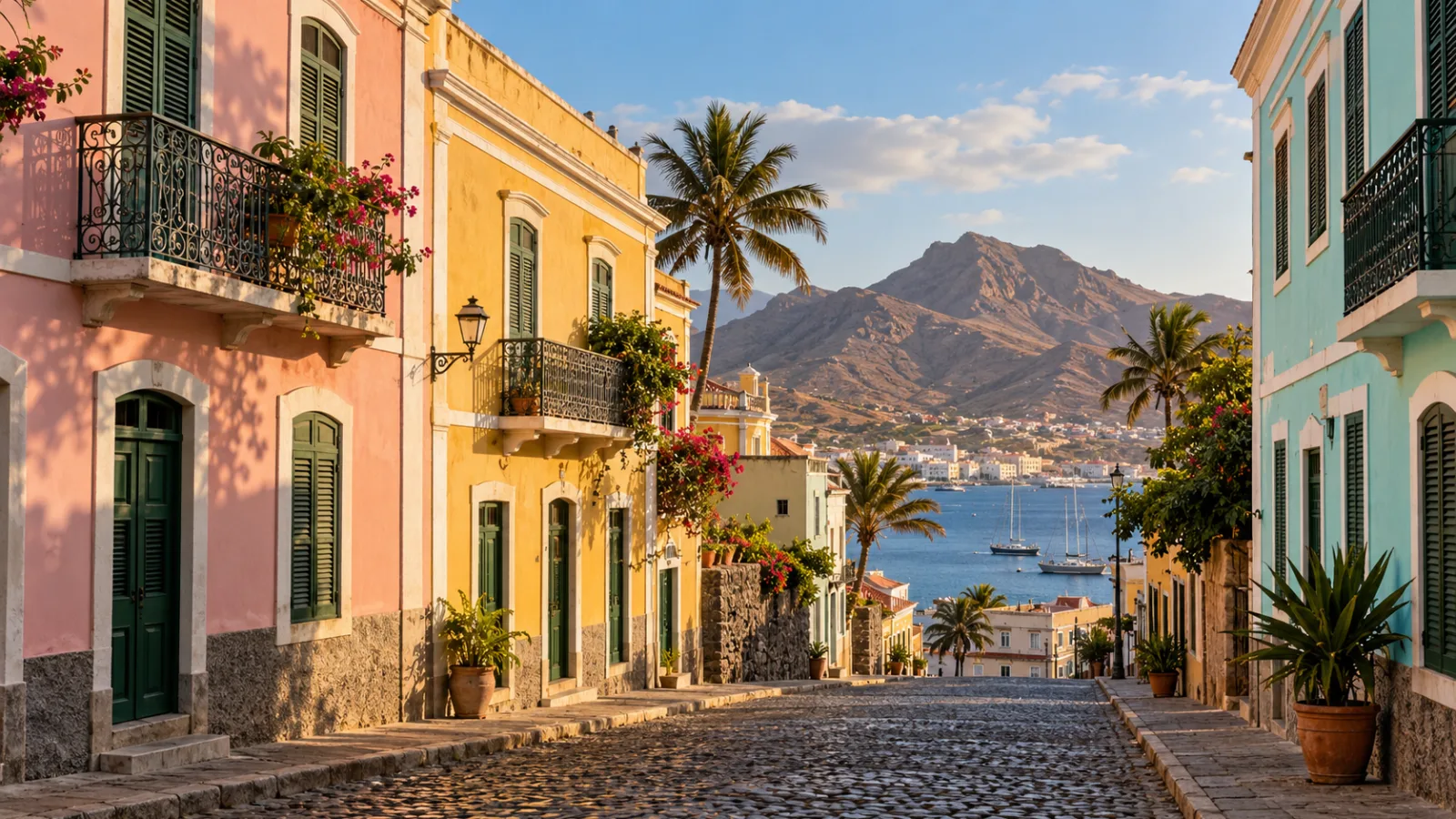
Cape Verde real estate has a simple appeal for buyers in Europe and North America. The islands sit in the Atlantic about 570 km off the coast of Senegal, the climate is dry and warm all year, the currency is pegged to the euro, and foreigners can own property outright. Sal and Boa Vista have direct charter and scheduled flights from the UK and mainland Europe, and the winter swell season lines up with the northern-hemisphere winter, when most of the buyers who look at the islands want to be somewhere warmer.
The history is less simple. Cape Verde had a foreign-buyer boom in the mid-2000s, sold heavily off-plan to British and Irish buyers, and then stalled when the 2008 credit crunch hit. Some resorts were finished late, some changed hands, and a few left buyers fighting over deposits for years. A separate wave of UK "hotel room" investments sold through pension schemes later produced thousands of compensation claims. Anyone searching "cape verde property crash" is usually looking for that story, and it is the main reason this guide spends time on how to protect a deposit.
This guide is for foreign buyers, mainly from the US, UK and Europe, who want a home, an apartment, a lot or a small rental property in Cape Verde. It covers who can buy, the buying process, the property tax reform that took effect on January 1, 2026, money and the euro peg, residency routes, off-plan risk, the rental market and short-term rental rules, infrastructure, an island-by-island guide with October 2026 asking prices, and the surf. Every law and figure is listed in the Sources section.
Quick answer: Yes, foreigners can buy property in Cape Verde, including houses, apartments and land, and hold it in their own name. The country's investment law gives foreign and local investors the same basic rights. A purchase normally runs through a promissory contract, a public deed signed before a notary, and registration at the Conservatória do Registo Predial (land registry). You will need a Cape Verde tax number (NIF). Since January 1, 2026, the old single property tax (IUP) has been replaced by two taxes: a transfer tax (ITI) of 1% paid by the buyer, and an annual property tax (IPI) of 0.1% (0.15% on land). The escudo is pegged at 110.265 CVE to the euro. Buying a home does not give you residency by itself, but a property-linked permanent residence program has been reported at €80,000 to €120,000 depending on the island. In October 2026, small apartments on Sal and Boa Vista are listed from roughly £35,000 to £50,000, two-bedroom units commonly from £100,000 to £300,000, and villas from about £300,000 to over £1 million.
Not legal or tax advice. This article is general information only, current as of October 2026. Cape Verde rewrote its property tax laws for 2026, regulated short-term rentals in late 2024, and changed its visa rules for many nationalities on January 1, 2026. Several residency programs are described mainly in secondary sources. Before you sign anything or pay a deposit, hire an independent Cape Verdean lawyer, a tax adviser in Cape Verde and in your home country, and confirm every figure here with them and with the relevant government office.
Table of contents
- Can foreigners buy property in Cape Verde?
- The islands at a glance
- How to buy a house in Cape Verde, step by step
- Taxes and buying costs after the 2026 reform
- Currency, the euro peg and moving money
- Cape Verde mortgage options
- Residency: green card, remote work and retirement
- The Cape Verde property crash: what happened to off-plan buyers
- How to protect an off-plan deposit
- Cape Verde rentals, Airbnb and the tourism market
- Water, power and infrastructure
- How much is a house in Cape Verde? Prices by island
- Island-by-island guide
- Surf, kite and windsurf in Cape Verde
- Due-diligence checklist
- Who this is not for
- Frequently asked questions
- The bottom line
- Sources
Can foreigners buy property in Cape Verde?
Yes. Cape Verde has no general ban on foreign ownership, no separate class of land reserved for citizens in the way that Fiji or Samoa have, and no rule that a foreigner must hold property through a local company or a bank trust. A foreign individual can buy a house, an apartment or a plot of land in their own name, register it at the land registry, mortgage it, rent it out (subject to the licensing rules below), leave it to heirs and sell it.
The legal basis most lawyers point to is the Investment Code, Law No. 13/VIII/2012 of July 11, 2012, which sets out general rules for investment in Cape Verde by nationals and foreigners alike. The government's investment agency summarizes it as giving investors the same rights and duties regardless of nationality, with protection against nationalization and expropriation except under the strict terms of the law, on a non-discriminatory basis and with fair compensation. A 2013 amendment moved registration of foreign investment with the central bank to an electronic process run through the investment agency, Cabo Verde TradeInvest.
What foreign ownership does not give you:
- A right to live there. Owning a home is not a residence permit. See the residency section below.
- A right to run a rental business without a license. Short-term rentals need registration and an inspection under a 2024 decree-law.
- Protection from bad paperwork. Cape Verde's registry and municipal systems are workable but not always complete, especially for older rural land and for plots sold before infrastructure was built. Most problems foreign buyers have had came from title, licensing and developer issues, not from discrimination against foreigners.
The islands at a glance
Cape Verde has ten main islands, nine of them inhabited, split into the windward (Barlavento) group in the north and the leeward (Sotavento) group in the south. The population was about 491,000 at the 2021 census. For property buyers, the islands fall into three rough groups:
- Resort islands: Sal and Boa Vista. Flat, dry, sandy, with long white beaches, all-inclusive hotels and most of the country's tourism. This is where most foreign buyers purchase and where most resale apartments are.
- Cities: Santiago (Praia) and São Vicente (Mindelo). Praia is the capital and largest city; Mindelo is the cultural center, with a deep-water harbor, colonial architecture and a music scene. Both are year-round working cities rather than resort towns.
- Quieter and greener islands: Maio, Santo Antão, Fogo, São Nicolau and Brava. Smaller markets with cheaper land and fewer services. Maio is a flat beach island close to Santiago; Santo Antão is mountainous, green and reached by ferry from Mindelo; Fogo is the active volcano.
International flights land on Sal (Amílcar Cabral), Boa Vista (Aristides Pereira), Santiago (Nelson Mandela, Praia) and São Vicente (Cesária Évora). Inter-island travel is by domestic flight or ferry, and schedules matter a lot more than distances suggest. If you are buying on a smaller island, check how you would actually get there from your home airport in winter.
How to buy a house in Cape Verde, step by step
Cape Verde's property system comes from Portuguese civil law, so the process will look familiar to anyone who has read our guide to buying surf property in Portugal, though fees, offices and timelines differ. The Cape Verdean consulate in the Netherlands publishes a short buyer's guide that lists the same core steps below.
- Hire an independent Cape Verdean lawyer. Not the developer's lawyer and not one recommended only by the agent. Many foreign buyers give their lawyer a power of attorney so that documents can be signed without flying in for each step. Get the scope of work and fee in writing.
- Get a tax number (NIF). You need a Número de Identificação Fiscal to sign the deed, pay transfer tax and register the property. Your lawyer can usually obtain it with a copy of your passport and a power of attorney.
- Pull the registry certificate. Ask the Conservatória do Registo Predial for a property registration certificate (certidão de registo predial). It shows who the registered owner is, the description of the property, and any mortgages, liens or other charges. If the seller is not the registered owner, stop until that is fixed.
- Check the municipality. At the Câmara Municipal, confirm that a building has a habitation license (licença de habitação), that the construction matches the approved plans, and the property's registered value for tax. For land, confirm the zoning, whether the plot is in an approved subdivision (loteamento), and whether roads, water and power are actually planned and paid for.
- Sign a promissory contract. The contrato-promessa de compra e venda fixes the price, deposit, completion date and conditions. Make it conditional on clean title, licenses and, if you are borrowing, finance. The deposit should go to a lawyer's client account or an escrow arrangement, not straight to a seller or developer.
- Sign the deed before a notary. The escritura pública is signed in front of a notary, who checks identities, powers of attorney and that the transfer tax has been paid. This is the moment ownership passes.
- Register the deed. Your lawyer files the deed at the Conservatória. Registration is what protects you against third parties, so do not treat it as an optional last step.
- Set up utilities, tax and insurance. Transfer the water and electricity contracts, register with the municipality for the annual property tax, and arrange property insurance.
For new-build and off-plan purchases there is an extra layer: the developer's own title to the land, the approved project, the building license, the habitation license on completion and, for apartments, the horizontal property (condominium) title for your unit. Ask for each one by name.
Taxes and buying costs after the 2026 reform
Most English-language guides to Cape Verde property taxes are out of date. Until December 31, 2025, the country used a single property tax, the Imposto Único sobre o Património (IUP), which taxed both ownership and transfers. On June 6, 2025, Parliament approved two new codes, and both took effect on January 1, 2026, repealing the IUP:
- Law No. 54/X/2025: Imposto sobre a Transmissão de Imóveis (ITI), a municipal transfer tax.
- Law No. 55/X/2025: Imposto sobre a Propriedade de Imóveis (IPI), a municipal annual property tax.
| Cost | Who pays | Amount (October 2026) |
|---|---|---|
| ITI transfer tax | Buyer | 1% of the taxable value; 3% if the buyer or seller benefits from a privileged tax regime (for example, a company in a listed tax haven) |
| IPI annual property tax | Owner | 0.1% of the assessed taxable value; 0.15% for land. Higher rates apply to buildings with unfinished main façades and to vacant, ruined or degraded buildings |
| Old IUP (for comparison) | n/a | Repealed January 1, 2026. Annual IUP was 1.5% on a taxable base of 25% of the assessed value; transfers were taxed at 3% |
| Stamp duty | Varies | Fixed CVE 1,000 on contracts; 0.5% on loans; 15% on notary emoluments and registration fees |
| Notary and registry fees | Buyer | Set by official tables; ask your lawyer for a written estimate before signing |
| Legal fees | Buyer | Negotiated; often a fixed fee or a percentage of the price |
| VAT | Buyer of new build, where applicable | Standard rate 15%; ask whether the developer's price includes it |
| Agent commission | Usually seller | Negotiated |
A few practical points on the reform:
- Valuation changes. Under both new codes the taxable value is set by a new valuation formula that weighs several factors, with specific rules for hotel units. PwC notes a five-year transitional safeguard that caps any annual IPI increase at 10% over the previous year. Expect your tax bill to be based on an assessed value, not necessarily on the price you paid.
- Do not build and leave the outside unfinished. Unfinished façades are common across the islands, and the new IPI code deliberately charges more for them. If you are buying land to build, budget to finish the exterior.
- Capital gains. Under the old IUP, gains on land were taxed if the sale price was more than double the purchase price, and gains on buildings if the sale price was more than 30% above the purchase price. How gains on property sold by non-residents are taxed under the 2026 framework should be confirmed with a Cape Verdean tax adviser before you buy, because it affects your exit.
- Your home country. US citizens are taxed on worldwide income and gains, and a Cape Verde sale or rental income must be reported on your US return. Our guide to selling property abroad as a US owner covers the foreign tax credit and reporting rules.
Currency, the euro peg and moving money
Cape Verde's currency is the escudo (CVE). It is pegged to the euro at 110.265 escudos per euro, a peg backed by a cooperation agreement with Portugal that includes a Portuguese credit facility. The escudo has been tied to the euro since the euro's launch, and before that to the Portuguese escudo. In practice:
- Most property listings aimed at foreigners are priced in euros, and many on UK portals are converted to pounds.
- For a buyer whose savings are in euros, there is effectively no currency risk while the peg holds. For US and UK buyers, the risk is the same as buying in the euro area: your cost moves with EUR/USD or EUR/GBP.
- Bring money in through the banking system and keep records. Your lawyer and the notary will want to see how the purchase was paid, and you will want proof of the original investment when you sell and transfer proceeds out.
Cape Verde mortgage options
Most foreign buyers pay cash. Cape Verdean banks such as Caixa Económica de Cabo Verde and Banco Comercial do Atlântico do offer housing loans, and in January 2026 the government published Decree-Law No. 6/2026 setting conditions for subsidized housing credit, including a youth version, but that program is aimed at residents. A UK broker once advertised a product with a Portuguese bank and a Cape Verdean partner bank lending non-residents up to 85% over 35 years, but we could not confirm that it still exists.
If you want leverage, the usual routes are borrowing against property you already own at home, or asking a Cape Verdean bank directly what it will lend to a non-resident with your income profile. Expect a large deposit, a slower process than at home, and loans in escudos or euros only.
Residency: green card, remote work and retirement
Buying a house in Cape Verde does not give you a right to stay. Short-stay rules and longer residency routes are separate.
Short stays. US, UK and EU citizens can visit without a visa for short stays (commonly cited as up to 30 days), but every traveler must pre-register online on the EASE platform before arrival and pay an airport security tax (TSA), reported at CVE 3,400, online or on arrival. On January 1, 2026, Cape Verde ended visa-on-arrival for nationals of 96 countries, who now need a visa before departure. Check the EASE portal or a Cape Verdean consulate for your passport before you fly.
Property-linked permanent residence ("green card"). Cape Verde passed a law in 2018 creating a permanent residence permit for foreigners who buy property, and Portuguese-language business media reported in 2022 that it had finally been regulated. The minimums reported then were €120,000 in real estate on the main islands (Santiago, São Vicente, Sal and Boa Vista) and €80,000 on smaller islands such as Brava, Maio and São Nicolau; another 2022 report describes the threshold as depending on the municipality's GDP per head. Secondary guides say the permit covers a spouse and dependent children and may be based on a property under construction bought with a promissory contract. We could not find an official 2026 source confirming the current amounts, processing times or renewal rules, so treat these figures as a starting point for your lawyer, not a promise.
Remote Working Cabo Verde. Launched in 2020, the remote work program lets employees and freelancers working for clients outside Cape Verde stay for about six months, renewable. Guides disagree on the financial requirement (figures range from an average bank balance of about €1,500 a month to roughly US$1,800 a month in income), and the government has since run a separate "Nómadas Digitais Cabo Verde" initiative. It is a good way to test a winter on Sal or in Mindelo before buying; it is not a long-term residency route.
Cape Verde retirement. There is no well-documented, standalone retiree visa equivalent to Portugal's D7. Retirees typically combine longer stays with a residence permit through a Cape Verdean consulate or the property-linked route above. If you plan to retire on the islands, check healthcare first: the main hospitals are in Praia and Mindelo, and serious cases are often sent abroad, so international health insurance with evacuation cover is a practical requirement rather than an extra.
The Cape Verde property crash: what happened to off-plan buyers
The phrase "cape verde real estate crisis" covers two different things, and it helps to separate them.
1. The off-plan boom and stall, roughly 2005 to 2012. In the mid-2000s, Sal and Boa Vista were marketed heavily at UK and Irish property shows, mostly off-plan, with reservation fees and stage payments before construction. When credit dried up in 2008, funding for many partly sold schemes stopped. Development "stuttered," in the words of A Place in the Sun, which later reported that off-plan deposits on the islands were typically as high as 45% of the price. Some developers went bust. In 2011 a UK firm, Assetz, ran a scheme letting buyers who had lost reservation deposits of about £5,000 to £15,000 on failed overseas projects transfer that value into its Santa Monica resort on Boa Vista. An undated owners' blog about the Vila Verde resort on Sal describes a finished resort where about 400 of roughly 1,200 reservations completed, while many of the remaining buyers were in legal dispute with the developer or had walked away because they could not finance completion. That account is from one side of the dispute and we could not verify its figures independently.
2. The UK "hotel room" investments, mid-2010s to 2021. A separate group of buyers, many investing through UK self-invested personal pensions (SIPPs), bought hotel rooms or fractional shares in resorts developed by The Resort Group, including Dunas Beach, Llana Beach and Tortuga on Sal and White Sands on Boa Vista. These were marketed with high projected returns, in some cases a fixed return during construction. By 2021, more than 2,400 investors had made claims through the UK Financial Services Compensation Scheme, mostly against the financial advisers who recommended the investments; the FSCS had paid out £5.9 million at that point. Investors reported difficulty selling their units, and rental payments stopped when resorts closed during COVID-19 while management charges continued.
Neither episode means Cape Verde property is a bad buy. The resorts on Sal and Boa Vista were largely built and operate today, and tourism has grown well past pre-pandemic levels. What both episodes show is where foreign buyers have lost money: paying large deposits before construction with no independent protection, and buying a hotel room as an "investment" with income that depended entirely on an operator. Buying a finished apartment or house with clean, registered title has a much better track record.
How to protect an off-plan deposit
If you do buy off-plan or a new build in Cape Verde:
- Verify the developer's title to the land and the building license before paying anything beyond a small, refundable reservation fee.
- Tie payments to verified construction stages, each confirmed by an independent engineer or your lawyer, not to calendar dates.
- Ask for a bank guarantee or escrow. Cape Verde does not have a well-known statutory deposit-protection scheme for off-plan buyers. If a developer will not hold deposits in escrow or provide a bank guarantee from a Cape Verdean or European bank, price that risk in or walk away.
- Register the promissory contract where possible. Ask your lawyer whether a provisional registration of the acquisition can be made at the Conservatória, which gives some protection against the developer selling or mortgaging the same unit.
- Keep the deposit small. Many of the losses after 2008 came from deposits of 30% to 45% paid years before completion.
- Read the rental-pool or hotel-management agreement as a separate investment. If the "return" depends on an operator, ask who guarantees it, for how long, and what happens if the operator leaves or the hotel closes.
- Check for completed units by the same developer. Visit a finished building, talk to owners and ask how long it took them to receive their habitation license and individual title.
For a broader method of judging a coastal property, see our guide on how to evaluate a surf property.
Cape Verde rentals, Airbnb and the tourism market
Tourism is the main engine of Cape Verde's economy, and almost all of it is on two islands. According to National Statistics Institute (INE) figures reported by Forbes África Lusófona in April 2026, Cape Verde's hotels and other establishments received about 1.25 million guests in 2025, up 6% on 2024, with more than 6.1 million overnight stays (up 8.3%), an average stay of 4.8 nights and hotel occupancy up from 60% to 72%. The UK is the largest source market, followed by Portugal, Germany, France, Belgium and the Netherlands. Sal and Boa Vista absorb most of the flow; in the first quarter of 2025, Sal took about 57% of arrivals and Boa Vista about 22%. Guest numbers kept growing in early 2026, up 16.8% in the first quarter, although overnight stays dipped slightly in the second quarter.
Airlift is the reason. TUI and other European carriers fly to Sal and Boa Vista from the UK, Belgium, the Netherlands, Germany, France and Luxembourg, and TAP connects the islands through Lisbon. For US buyers, connections typically run through Lisbon, and Cabo Verde Airlines has flown between Sal or Praia and Boston, home to a large Cape Verdean community, though schedules have changed several times since 2019. Check the current timetable before assuming a direct route.
Short-term rental rules. Decree-Law No. 56/2024 of November 13, 2024 regulates short-term rentals of villas, apartments and rooms, the type of property usually listed on Airbnb and Booking.com. According to Forbes África Lusófona, owners must register online with the competent authority and pass a prior inspection before receiving a definitive license; only registered accommodation may operate legally; stays are capped at 90 consecutive days; units inside traditional tourism developments cannot use this regime; and the rules apply to owners, agencies and platforms. Rental income is taxable in Cape Verde.
What this means for a buyer. A Cape Verde Airbnb on Sal or Boa Vista can work, but you are competing with large all-inclusive hotels, and many resort apartments are restricted to the resort's own rental program. Long-term rentals to local workers exist in Praia, Mindelo, Espargos and Sal Rei, at local rents. Run your numbers on realistic occupancy, management fees (often 20% or more of rental income), IPI, insurance, condominium fees and your own use, not on a developer's projection.
Water, power and infrastructure
The islands are dry. Sal, Boa Vista and Maio in particular rely almost entirely on desalinated seawater for drinking water, and on the other islands desalination supplements limited groundwater. That makes water and electricity linked: desalination runs on power, and most of Cape Verde's power still comes from imported diesel and fuel oil.
- Electricity is expensive. An April 2024 market report from Portugal's trade agency put the tariff at about US$0.34 per kWh, among the highest in sub-Saharan Africa, with technical and commercial losses above 24% of production. Fossil fuels still produce more than 80% of the electricity.
- Renewables are growing. The electricity master plan targets 54% renewable penetration by 2030 and 100% by 2040, and the prime minister said in 2025 that the country could reach 35% in 2026. Wind farms already operate on several islands, and solar-powered desalination pilots are underway.
- Practical upshot. Check the water and power connection on any property, ask for recent bills, and consider rooftop solar and a storage tank. A plot without confirmed water and power connections is worth much less than the asking price suggests.
Cape Verde is also in the Atlantic hurricane development region. Most storms form and move west without making landfall, but Hurricane Fred passed over the islands in 2015. Ask about building standards and insurance cover for wind and storm surge, especially for low beachfront plots.
How much is a house in Cape Verde? Prices by island
There is no official house price index for Cape Verde, so the table below uses asking prices from the international listings on Rightmove's overseas section, checked on October 27, 2026, when it showed 278 Cape Verde listings. Most were priced in pounds, converted from euros by the agents. Asking prices are not sale prices, and some listings are years old.
| Island / area | What you find | Indicative asking prices (October 2026) | Notes |
|---|---|---|---|
| Sal: Santa Maria | Studios and one-bedroom resort apartments, penthouses, townhouses, small apartment blocks | Studios from about £30,000–£40,000; one-bedrooms about £40,000–£50,000; two-bedroom penthouse about £364,000; three-bedroom villas about £300,000–£320,000; five-bedroom house about £495,000–£700,000 | The busiest resale market. Check resort rental restrictions and condominium fees |
| Sal: Murdeira and Palmeira | Villas on the quieter west coast, building plots | Plots from about £30,000; four-bedroom villas about £385,000–£400,000; high-end two-bedroom villa about £1.04 million | Murdeira Bay is a protected marine area; ask about building limits |
| Sal: development land | Large plots in and around Santa Maria | About £300,000 to £3.9 million | Commercial scale; heavy due diligence on zoning and infrastructure |
| Boa Vista: Sal Rei, Praia de Cabral, Estoril | Studios, one-bedrooms, penthouses, villas | Studios from about £35,000; one-bedrooms about £38,000–£50,000; two-bedroom penthouses about £120,000–£470,000; two-bedroom villas about £400,000–£550,000 | Urban plots in Sal Rei from about £30,000 (250 m²); garages from about £9,000 |
| Maio | Land, small houses | Land in Morro listed at about £39,000; few listings | Smallest and quietest market of the beach islands |
| Santiago: Praia | Apartments and houses for local and expat buyers, mostly sold locally | Few international listings; Africarrieres puts central residential property at about CVE 200,000–400,000 per m² (roughly €1,800–€3,600) and suburban at CVE 80,000–150,000 per m² | The capital; apartments for sale in Praia are mostly listed by local agencies in Portuguese |
| São Vicente: Mindelo and coast | Townhouses, villas, guesthouses, land | Four- and five-bedroom villas about £439,000–£1.3 million; land about £290,000–£970,000; a 22-room hotel at £1.9 million | City living plus bays such as Baía das Gatas and São Pedro |
| Santo Antão | Land, small hotels | Land in Ponta do Sol from about £30,000–£43,000 (120 m² and up); a 17-room hotel at £1.4 million | Ferry from Mindelo; hiking and green valleys |
| São Nicolau | Building plots | Up to 12 plots of about 400 m² offered from £50,000 | Very small market |
At the fixed peg, euro prices are easy to compare across islands. To compare with home, a rough guide in October 2026 was about €1.15 to the pound and about $1.15 to the euro, but use a live rate before you make an offer.
What moves price, in rough order: island and town, distance to the beach, whether a unit is inside a resort with its own rental program, completed habitation license and individual title, sea views, and whether the building is finished outside. For selling later, our guide on how to sell beachfront property to international buyers explains how buyer pools and marketing work across borders.
Island-by-island guide
Sal: Santa Maria, Murdeira and Espargos
Sal is the most developed tourist island and the one most buyers mean when they search "property for sale in Sal Cape Verde." Santa Maria, at the southern tip, has the pier, the long beach, hotels, restaurants, surf and kite schools, and most of the resale apartments. Espargos, the island's administrative town near the airport, has local housing at lower prices. Murdeira Bay on the west coast has villa developments and a quieter setting. Sal is flat and dry, the airport has the most international flights, and the island has the deepest pool of resale buyers. It is also the most crowded with all-inclusive hotels.
Boa Vista: Sal Rei and the south coast
Boa Vista property for sale is concentrated in and around Sal Rei, the main town, and the beaches at Praia de Cabral and Estoril. The large resorts are spread along the west and south coasts, some well outside town. Boa Vista has bigger dunes, longer empty beaches and fewer people than Sal. Resale is thinner, so price an apartment here assuming you may need to hold it longer.
Maio
Maio cape verde real estate is a small, early-stage market. The island is flat, with long beaches, a small population, and a short ferry or flight from Praia. Land is cheaper than on Sal or Boa Vista, and there is little resort development. It suits buyers who want quiet and are willing to wait on infrastructure. Confirm water and power connections on any plot.
Santiago: Praia and Tarrafal
Santiago is the largest island and Praia is the capital, with government offices, embassies, the main hospital and most of the country's business. Apartments for sale in Praia, Cape Verde, are aimed mostly at local and diaspora buyers, and listings are often in Portuguese ("casas a venda em Cabo Verde," "cabo verde imobiliária"). In the north of the island, Tarrafal has a sheltered beach and a slower pace. Santiago makes sense for buyers who want a city, services and year-round life rather than a resort.
São Vicente: Mindelo
Mindelo is Cape Verde's cultural capital: colonial streets, a working harbor, live music and the Carnival. Villas and townhouses in and around the city, and plots at bays such as Baía das Gatas, São Pedro and Calhau, appear on international portals at prices below comparable villas on Sal. Mindelo is also the gateway to Santo Antão, an hour away by ferry.
Santo Antão, Fogo, São Nicolau and Brava
These islands are green or volcanic, rugged, and far less developed. Santo Antão draws hikers and small guesthouse buyers, Fogo is known for its active volcano and wine, São Nicolau and Brava are small and remote. Prices are lower and resale is very thin. These are lifestyle purchases, not investments, and a lawyer's check of title on rural land is essential. If you are tempted by something even more remote, our guide to private islands for sale covers the logistics of very small markets.
Surf, kite and windsurf in Cape Verde
Cape Verde is better known among windsurfers and kitesurfers than surfers, but the islands catch North Atlantic swell from roughly November to March, the same months that northeast trade winds blow hardest. Water is warm, and most breaks are over lava reef, with sea urchins and rock.
- Ponta Preta, Sal. On the southwest coast west of Santa Maria, Ponta Preta is a reef and point break that is the island's best-known wave. Surf guides describe it as an advanced spot, at its best in winter (December is often cited), around low tide, with faces reported at up to 3 meters on big swells. It is also a famous wave-sailing spot that has hosted international windsurfing events.
- Monte Leão, Sal. Just north of Ponta Preta, below the headland known as Monte Leão (Lion Mountain), a break that picks up the same swells at a friendlier size.
- Kite Beach and Santa Maria, Sal. East of town, Kite Beach (Costa da Fragata) belongs mainly to kitesurfers riding the trade winds. Santa Maria Bay itself is small, sandy and sheltered, which is why the town's surf schools teach beginners there. If you are visiting before you buy, booking surf lessons or surf rentals for a week in Santa Maria is a sensible way to see how a winter would work.
- Boa Vista. Fewer surfers, more empty peaks, and reef and beach breaks reached by 4x4 along the north and west coasts. Surf travelers often say Sal is for convenience and variety, Boa Vista for solitude.
- São Vicente and Santo Antão. Breaks around São Vicente's bays and Santo Antão's north coast (including Ponta do Sol) see very few surfers. Access is harder and local knowledge matters.
- Santiago. Praia and the north coast near Tarrafal have reef breaks that work on winter swells, with a small local surf scene.
The best season for wave riding is northern-hemisphere winter, roughly November to March, with the strongest trade winds from about December to April; summer is generally flat to small. A buyer who wants a surf home should focus on Santa Maria and the southwest coast of Sal, with Boa Vista as the quieter alternative. If you are thinking about running a small surf or kite business rather than buying a home, see the surf camps and retreats section of ISP, and remember that a commercial operation needs its own licensing in Cape Verde.
Due-diligence checklist
- Registry certificate (certidão de registo predial) showing the seller as registered owner, with no undisclosed mortgages, liens or charges
- Municipal confirmation of zoning, building license and habitation license
- For apartments: the horizontal property title for your unit, condominium rules, fees and any rental-pool or hotel-management agreement
- For land: approved subdivision, roads, water and power confirmed in writing, and any building deadlines
- For off-plan: developer's title, project approval, building license, stage payments tied to construction, escrow or bank guarantee
- NIF obtained and power of attorney in place if you will not attend in person
- ITI, notary, registry and stamp duty costs estimated in writing
- IPI assessed value and any arrears, plus whether the building's façade is finished
- Short-term rental: whether the unit can be licensed under Decree-Law No. 56/2024, or whether it sits inside a tourism development with its own rules
- Water and electricity bills, connection status and any backup (tank, solar)
- Wind and storm insurance quote, especially for beachfront
- Proof of funds brought in through a bank, kept for the eventual sale
- Exit: the tax on a future sale and how long similar units have taken to sell
The first question to ask a Cape Verde seller or developer: "Can I see the registry certificate and the habitation license for this exact unit?" If the answer is that the individual title or license is "coming soon," you are not buying a finished property, whatever the brochure says, and you should treat the deal as off-plan.
Who this is not for
- Buyers who need guaranteed rental income. Projections from developers and hotel operators have failed before. If the purchase only works with a promised return, don't buy.
- Buyers who want easy resale. The resale market is small and dominated by UK and European buyers. Expect it to take time.
- People who need top-tier healthcare nearby. Medical services are limited, especially outside Praia and Mindelo.
- Surfers who want consistent summer waves. The surf season is winter. From June to September, Cape Verde is mostly flat.
- Anyone uncomfortable with paperwork in Portuguese. Deeds, registry certificates and municipal records are in Portuguese. You need a lawyer you trust.
Frequently asked questions
Can foreigners buy property in Cape Verde?
Yes. Foreigners can buy houses, apartments and land in Cape Verde and hold them in their own name. The Investment Code gives foreign and local investors the same basic rights. You will need a tax number (NIF), and the purchase is completed by a public deed before a notary and registered at the land registry.
How much is a house in Cape Verde?
In October 2026, international listings show studios and one-bedroom apartments on Sal and Boa Vista from about £30,000 to £50,000, two-bedroom penthouses from about £120,000 to £470,000, three- and four-bedroom villas from about £300,000 to £450,000, and high-end villas above £1 million. These are asking prices, and local prices in towns like Espargos or Praia can be lower.
What taxes do you pay when you buy property in Cape Verde?
Since January 1, 2026, the buyer pays a 1% transfer tax (ITI), plus notary, registry and stamp duty fees. Owners pay an annual property tax (IPI) of 0.1% of the assessed value, or 0.15% for land. The old IUP, which charged 3% on transfers, was repealed.
Does buying property in Cape Verde give you residency?
Not automatically. A property-linked permanent residence program has been reported at minimums of €120,000 on Sal, Boa Vista, Santiago and São Vicente and €80,000 on smaller islands, but confirm the current rules with a lawyer and a Cape Verdean consulate. Buying a home alone does not give you a right to live there.
Can I get a Cape Verde mortgage as a foreigner?
It is possible but not common. Most foreign buyers pay cash or borrow against property at home. Ask Cape Verdean banks directly about non-resident lending; expect a large deposit.
Was there a Cape Verde property crash?
There was a slowdown, not a collapse of prices across the islands. After the 2008 credit crunch, several off-plan developments on Sal and Boa Vista stalled or were finished late, and some buyers lost deposits or ended up in disputes. Separately, thousands of UK investors who bought hotel rooms through pension schemes later made compensation claims. The lesson is to buy finished property with registered title, or protect any off-plan deposit with escrow or a bank guarantee.
Can I rent my Cape Verde property on Airbnb?
Yes, if it is licensed. Under Decree-Law No. 56/2024, short-term rentals must be registered online and pass an inspection before receiving a license, stays are limited to 90 consecutive days, and units inside traditional tourism developments cannot use this regime. Check your resort's own rules too.
Which island is best to buy property on in Cape Verde?
For rental demand and resale, Sal (especially Santa Maria). For quieter beaches, Boa Vista or Maio. For city life and services, Praia on Santiago or Mindelo on São Vicente. For surf, the southwest coast of Sal around Ponta Preta.
When is the surf season in Cape Verde?
Roughly November to March, when North Atlantic winter swells arrive. Ponta Preta on Sal is the best-known wave. The trade winds that power kitesurfing and windsurfing are strongest from about December to April.
What currency is used in Cape Verde?
The Cape Verdean escudo (CVE), pegged to the euro at 110.265 escudos per euro. Property for foreign buyers is usually priced in euros.
The bottom line
Cape Verde is one of the most open places in the Atlantic for foreign property buyers: no ownership restrictions, a euro-pegged currency, a new and lower property tax regime since 2026, and direct flights from most of Western Europe. Its risks are practical rather than legal. Title and licensing need careful checking, off-plan deposits have been lost before, rental returns compete with large hotels, and water and electricity are expensive. A finished apartment or house in Santa Maria, Sal Rei or Mindelo, bought with a registered title through an independent lawyer, is the lowest-risk way in.
International Surf Properties is a marketplace for surf and beachfront real estate around the world. Browse current listings, including villas, condos and apartments and lots and land in other surf markets, to compare what the same budget buys elsewhere.
Sources
- PwC Tax Summaries, Cabo Verde, Corporate: Other taxes (IPI, ITI, IUP, stamp duty, VAT; reviewed 2026): https://taxsummaries.pwc.com/cabo-verde/corporate/other-taxes
- PwC Tax Summaries, Cabo Verde, Individual: Other taxes: https://taxsummaries.pwc.com/cabo-verde/individual/other-taxes
- PwC Tax Summaries, Cabo Verde, Individual: Significant developments: https://taxsummaries.pwc.com/Cabo-Verde/Individual/Significant-developments
- PwC Portugal, "Cabo Verde – Real Estate Taxes Reform: New Tax Codes come into force": https://www.pwc.pt/en/pwcinforfisco/flash/cabo-verde/real-estate-taxes-reform-new-tax-codes.html
- Boletim Oficial de Cabo Verde (Imprensa Nacional), Laws No. 54/X/2025 and 55/X/2025: https://boe.incv.cv/Bulletins/DownloadAct?id=85812 and https://boe.incv.cv/Bulletins/DownloadAct?id=85811
- Law No. 13/VIII/2012, Investment Code (UNCTAD Investment Laws Navigator): https://investmentpolicy.unctad.org/investment-laws/laws/316/cabo-verde-investment-law-
- Law No. 13/VIII/2012, full text (FAOLEX): https://faolex.fao.org/docs/pdf/cvi205502.pdf
- Consulate of Cabo Verde in the Netherlands, "Buying property": https://conscv.nl/pt/negocios/buying-property
- Wikipedia, "Cape Verdean escudo": https://en.wikipedia.org/wiki/Cape_Verdean_escudo
- Forbes África Lusófona, "Nova lei para regular alojamentos locais em Cabo Verde" (May 2, 2025): https://forbesafricalusofona.com/?p=155647
- Forbes África Lusófona, "Turismo em Cabo Verde cresce 6% e reforça peso na economia em 2025" (April 14, 2026): https://forbesafricalusofona.com/?p=170940
- Forbes África Lusófona, "Mais hóspedes em Cabo Verde no 1.º trimestre de 2025": https://forbesafricalusofona.com/?p=159462
- Forbes África Lusófona, "Número de hóspedes em Cabo Verde cresce 16,8% no primeiro trimestre de 2026": https://forbesafricalusofona.com/?p=173614
- Forbes África Lusófona, "Turismo cresce em hóspedes, mas dormidas e ocupação hoteleira recuam no segundo trimestre em Cabo Verde": https://forbesafricalusofona.com/?p=176120
- Forbes África Lusófona, "Green card será lançado em Cabo Verde" (2022): https://forbesafricalusofona.com/?p=48146
- Jornal Económico / Miranda Law Firm, green card article (2022): https://mirandalawfirm.com/download/2194/414ce1df692b87113ddda61d448b7efb/jeconomico_lur_60.pdf
- Macau Business, "Cabo Verde: Government wants to attract 4,000 digital nomads": https://macaubusiness.com/cabo-verde-government-wants-to-attract-4000-digital-nomads/
- World Economic Forum, "How digital nomads can transform tourism and the economy of small island developing states" (October 2024): https://www.weforum.org/stories/2024/10/how-digital-nomads-can-transform-tourism-and-the-economy-of-small-island-developing-states/
- EASE, Cabo Verde pre-registration portal: https://www.ease.gov.cv
- EIG Law, "Cape Verde Implements New Pre-Arrival Visa Requirement Effective January 1, 2026": https://eiglaw.com/cape-verde-implements-new-pre-arrival-visa-requirement-effective-january-1-2026/
- World Travel Guide, Cape Verde passport and visa: https://www.worldtravelguide.net/guides/africa/cape-verde/passport-visa/
- Boletim Oficial, Decree-Law No. 6/2026 (housing credit): https://boe.incv.cv/Bulletins/DownloadAct?id=89524
- Mortgage Professional (mpamag), "IMS introduces Cape Verde loans": https://mpamag.com/uk/news/general/ims-introduces-cape-verde-loans/352626
- A Place in the Sun, "Assetz to the rescue" (July 2011): https://www.aplaceinthesun.com/articles/2011/07/assetz-to-the-rescue
- A Place in the Sun, "Cape Verde grows up" (December 2014): https://www.aplaceinthesun.com/articles/2014/12/cape-verde-grows-up
- Cape Verde Investing blog, "Vila Verde": http://capeverdeinvesting.blogspot.com/p/vila-verde.html
- TLW Solicitors, "The Resort Group FSCS claims reach over 2,400" (November 8, 2021): https://www.tlwsolicitors.co.uk/2021/11/08/latest-news/the-resort-group-fscs-claims-reach-over-2400/
- Property Investor Today, "Boost for investors as holidaymakers snap up rooms in new Cape Verde resort" (August 2016): https://www.propertyinvestortoday.co.uk/breaking-news/2016/8/boost-for-investors-as-holidaymakers-snap-up-rooms-in-new-cape-verde-resort
- Portugal Global (AICEP), "Reforma do setor elétrico em Cabo Verde" (June 2025): https://portugalglobal.pt/noticias/2025/junho/reforma-do-setor-eletrico-em-cabo-verde-prospecao-de-mercado/
- Forbes África Lusófona, "Cabo Verde com meta de atingir 50% de produção de energias renováveis até 2030": https://forbesafricalusofona.com/?p=158329
- Forbes África Lusófona, "Cabo Verde investe 1,2 milhões de euros em central fotovoltaica para dessalinizar água do mar": https://forbesafricalusofona.com/?p=37576
- TUI Group, "TUI's Cape Verde expansion takes flight with inaugural flight from East Midlands to Boa Vista": https://www.tuigroup.com/en/newsroom/news/7043-tuis-cape-verde-expansion-takes-flight-with-inaugural-flight-from-east-midlands-to-boa-vista
- FlightsFrom, Boa Vista–Sal routes and carriers: https://www.flightsfrom.com/BVC-SID
- Forbes África Lusófona, "Cabo Verde Airlines retoma voos para Boston em 2023": https://forbesafricalusofona.com/?p=52239
- Rightmove, Overseas property for sale in Cape Verde (checked October 27, 2026): https://www.rightmove.co.uk/overseas-property-for-sale/Cape-Verde.html
- Africarrieres, Cape Verde cost of living guide: https://africarrieres.com/cape-verde/en/guide/decouvrir/cost-of-living
- Surf-Forecast, Ponta Preta surf guide: https://www.surf-forecast.com/breaks/Ponta-Preta
- The Trip Verdict, "Surfing Sal and Boa Vista": https://www.thetripverdict.com/surfing-sal-boa-vista
- Wikipedia, "Ponta Preta (Northern Sal)": https://en.wikipedia.org/wiki/Ponta_Preta_(Northern_Sal)
- Pound Sterling Live, EUR/USD history 2026: https://www.poundsterlinglive.com/history/EUR-USD-2026
About the author
Jim Habig is the founder of International Surf Properties, a marketplace for surf-front and beachfront real estate around the world. A lifelong waterman and real estate professional, Jim started ISP to connect surfers and ocean lovers with homes and land near the waves they love, and to help them buy with clear, practical information. ISP is a listings marketplace, not a law firm; always work with independent local legal and tax professionals on any purchase.
Tags
Keep Reading
More From the Blog
 Buying & Ownership
Todos Santos Surf Guide: San Pedrito, Los Cerritos, La Pastora and When to Go (2026)
November 9, 2026
 Buying & Ownership
Surfing in Ecuador: Montañita, Olón, Ayampe, Mompiche, Salinas and the Galápagos (2026 Guide)
November 9, 2026
 Buying & Ownership
Best Surfing in Central America: Country-by-Country Guide to Waves, Seasons and Surf Camps, From Guatemala to Panama (2026)
November 9, 2026