
How to Sell a Surf Resort or Boutique Hotel: Valuation, Preparation and Finding the Right Buyer
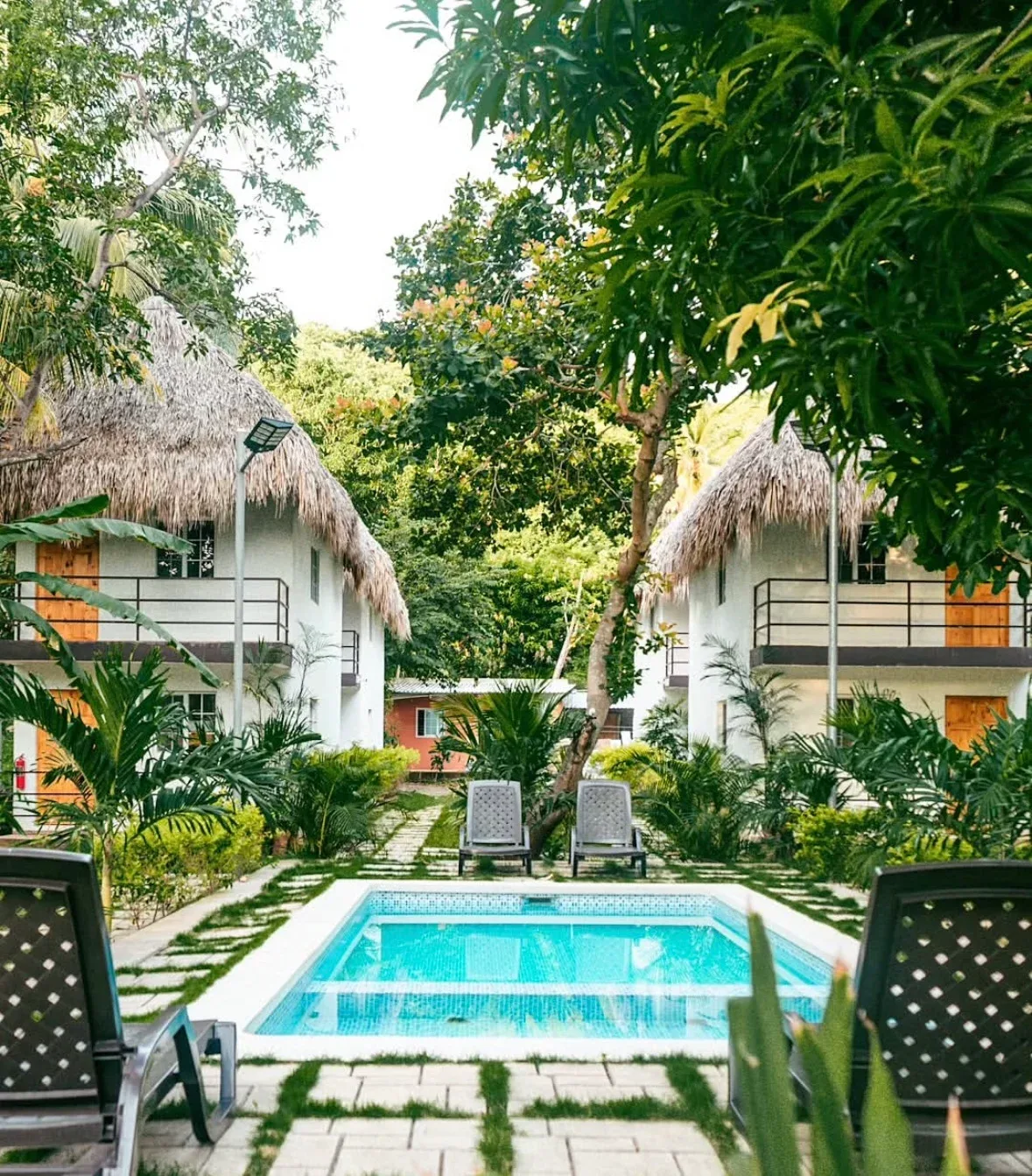
Most guides on how to sell a hotel are written for a franchised highway property in the United States or Britain: clean title, a brand, a bank that understands the asset and a deep pool of buyers. A surf lodge in Nicaragua, a surf camp in El Salvador or a boutique hotel on the Nicoya Peninsula is a different thing to sell. Part of the land may be a municipal concession. The business may sit in a local company that a foreign buyer can't legally own. Revenue swings with the swell season, and a good share of it may have come through Airbnb, Booking.com and cash at the bar rather than through tidy accounts. And the staff who make the place work are usually also the people you least want to hear about the sale too early.
This guide is for owner-operators who want to sell a hotel, surf resort, surf camp or small lodge in a surf town. It explains how buyers and appraisers will value it, with a fully worked example for a 10-room lodge, which sale structure fits your situation, how to build a data room, what to do about concession land, licences and staff, who the realistic buyers are and how long the process takes. If you are on the other side of the table, our guide to surf resorts for sale covers the buyer's view.
Quick answer: To sell a hotel or surf resort, first work out what you are actually selling (land, buildings, a business, a company or a concession), then value it the way a buyer will: verified net operating income divided by a capitalization rate, checked against price per room, a revenue multiple and the land-plus-replacement value. Clean up three years of financials and reconcile them to bank and booking-platform deposits, sort out titles, concessions, licences and staff liabilities, and build a data room before you go to market. Keep the sale confidential with a blind listing and NDAs. Expect 6 to 18 months from preparation to closing, and be ready to offer seller financing if you want the widest pool of buyers.
Not legal, tax or valuation advice. This article is general information only. Property, company, labour and tax rules differ by country and change often, and they apply differently to each seller. Before you list, sign an offer or move any money, hire an independent local lawyer, a tax adviser in each country involved and, where the price justifies it, a qualified hotel appraiser. Confirm every figure here with them.
Table of contents
What you are actually selling
Before you talk to a single buyer, write down in one paragraph what changes hands at closing. With a small hospitality property in a surf town it is usually some combination of five things:
Land and buildings. Titled land you or your company own outright, plus the rooms, restaurant, pool and staff housing on it.
Concession or leasehold land. In Costa Rica the strip behind the public beach is held under a municipal concession; in Mexico the 20-meter federal zone needs a federal concession; in Indonesia foreign-owned operations typically hold land under a time-limited right such as HGB. These are rights for a term, not ownership.
The operating business. The brand, website, booking-platform listings and reviews, guest database, surf school, boats and vehicles, supplier and agency relationships, and the team.
The company. Many owners hold everything through a local company (an S.A. or S.R.L. in Costa Rica, an S.A. de C.V. in Mexico, a PT PMA in Indonesia). Selling the shares transfers everything inside it, including its history.
Licences and permits. Operating permits, municipal business licences, health permits, liquor licences, tourism registrations and water rights, some of which are tied to the company and some to the property.
Getting this clear early drives everything else: the valuation method, the tax result, which buyers can legally buy, and how long the closing takes.
How buyers value a hotel or surf camp
Hotel appraisers consider three classic approaches. HVS, one of the largest hotel valuation firms, calls the income capitalization approach the "gold standard" for hotels because it values the property as a going concern rather than just its land and buildings. The sales comparison approach is useful for setting a broad range, but HVS notes that hotel sales data is often thin and hard to adjust. The cost approach (land plus the depreciated cost of rebuilding) is rarely decisive for an established hotel, but it matters a lot for small lodges where profit is thin or hard to prove.
For a small surf property, a serious buyer will usually look at four numbers side by side:
Net operating income (NOI) divided by a capitalization rate. NOI is total revenue minus all operating expenses, a market-rate manager's salary and a reserve for replacing furniture and equipment, before debt payments and income tax. The cap rate is the yield a buyer wants on that income. Value = NOI ÷ cap rate.
Price per key. The price divided by the number of lettable rooms. It is a quick way to compare your lodge with other sales in the same area.
Revenue multiples. Price divided by total revenue, or by rooms revenue (the "room revenue multiple"). HVS describes the room revenue multiple as a tool used mostly for mid-market and economy hotels in secondary and tertiary markets. For a surf lodge it is a sanity check, not a valuation.
Land and replacement value. What the land would sell for as land, plus what it would cost to rebuild the improvements, less wear. This sets a floor, and it links to a concept appraisers call highest and best use.
The terms you will hear in every conversation are occupancy (rooms sold ÷ rooms available), ADR or average daily rate (rooms revenue ÷ rooms sold) and RevPAR or revenue per available room (rooms revenue ÷ rooms available, which equals ADR × occupancy). STR, the hotel data company owned by CoStar, publishes these measures for larger markets, but most surf towns have no STR coverage, so your own records are the data.
Highest and best use
The Appraisal Institute defines highest and best use as the reasonably probable and legal use of a property that is physically possible, appropriately supported, financially feasible and results in the highest value. Appraisers test it in four steps: legally permissible, physically possible, financially feasible and maximally productive.
In plain terms, if your land would be worth more as house lots or a villa project than as a 10-room lodge, a highest and best use appraisal will say so, and some buyers will price your hotel as a teardown. That is not an insult; it is a second buyer pool. If your hotel's income value is well above land value, you want buyers who will pay for the business. If it is below, you may get more by marketing the site to developers or neighbours.
What cap rate applies?
There is no published cap rate index for 10-room surf lodges in Central America or Indonesia, and anyone who quotes you a single "market cap rate" for one is guessing. CBRE's US cap rate survey for the first half of 2026 reported that hotel cap rates were among those that compressed the most in the US, but that survey covers institutional hotels in US metro markets. A small, owner-operated, seasonal lodge in a foreign surf town carries more risk: thinner management, currency and political exposure, little or no bank finance, and often a title or concession issue. Buyers expect to be paid for that risk with a higher yield, which means a lower price for the same income.
Your best evidence is local: what similar lodges in your town or country have actually sold for, divided by their verified income. A local appraiser, an experienced hospitality broker or a lawyer who closes these deals can usually give you a realistic range. Our Costa Rica surf resorts and hotels guide walks through the same metrics from the buyer's side.
Worked example: valuing a 10-room surf lodge
The numbers below are an illustration built to show the method. They are not market data, and the cap rates are not a statement of what lodges trade at anywhere. Swap in your own figures.
The property. A 10-room surf lodge on 8,000 square meters of titled land about 300 meters from a consistent beach break. Open all year. Owned by a couple who run it themselves through a local company.
Step 1: revenue.
| Line | Calculation | Amount (USD) |
|---|---|---|
| Room-nights available | 10 rooms × 365 nights | 3,650 |
| Occupancy | Trailing 12 months | 60% |
| Room-nights sold | 3,650 × 60% | 2,190 |
| ADR | Rooms revenue ÷ rooms sold | $160 |
| RevPAR | $160 × 60% | $96 |
| Rooms revenue | 2,190 × $160 | $350,400 |
| Food, bar, surf lessons, board rental, transfers | From the books | $149,600 |
| Total revenue | $500,000 |
Step 2: from the owner's profit to NOI. The lodge's accounts show a profit of $150,000 before anything is paid to the owners. A buyer will rebuild that figure.
| Adjustment | Amount (USD) | Why |
|---|---|---|
| Reported profit before owner draws | 150,000 | From the profit and loss statement |
| Add back: owners' personal vehicle and phones run through the business | +9,000 | Personal, not needed to run the hotel |
| Add back: one-off roof replacement after a storm | +14,000 | Non-recurring, if the buyer accepts it (see below) |
| Add back: family flights booked as "marketing" | +6,000 | Personal |
| Seller's discretionary earnings (SDE) | 179,000 | What one full-time owner-operator takes home |
| Less: market-rate general manager, including social charges | −42,000 | The buyer must pay someone to do the owners' job |
| Less: reserve for furniture, fixtures and equipment (4% of revenue) | −20,000 | Salt air and humidity wear everything out |
| Adjusted NOI | 117,000 | The figure a cap rate is applied to |
Step 3: NOI ÷ cap rate (illustrative rates only).
| Cap rate | Value | Price per key |
|---|---|---|
| 9% | $1,300,000 | $130,000 |
| 11% | $1,064,000 | $106,400 |
| 13% | $900,000 | $90,000 |
A two-point change in the cap rate moves the price by roughly $200,000 to $240,000. That is why the argument in most negotiations is not about the formula but about which income figure is real and how risky it is.
Step 4: sanity checks.
Price per key. $90,000 to $130,000 a room. Compare that with actual sales of similar lodges nearby, adjusting for land size, distance to the wave and room quality. If comparable lodges have sold at half that, your income figure or cap rate needs another look.
Revenue multiples. At $1.06 million, the price is about 2.1 times total revenue and about 3.0 times rooms revenue. At $1.3 million, about 2.6 times and 3.7 times. These are not values in themselves, but a figure far outside what local deals show is a warning sign.
Land and replacement floor. Suppose comparable titled land sells for about $90 per square meter, so the land alone is worth about $720,000. Suppose roughly 600 square meters of rooms, restaurant and staff areas would cost about $1,200 per square meter to rebuild, or $720,000 new, and the buildings are about 35% worn, leaving about $468,000. Add $60,000 for furniture, boats and boards. The cost approach gives about $1.25 million, and the land alone sets a floor near $720,000.
What the example tells the seller. The income approach ($0.9 million to $1.3 million) and the cost approach (about $1.25 million) overlap, and both are comfortably above the land value. That points to marketing the property as a going hotel business to operators, not as a development site. If adjusted NOI had come out at $60,000, the income value at 11% would be about $545,000, below the land alone. In that case the highest and best use is probably the land, and you should price and market accordingly.
Owner-operator add-backs, and what buyers will reject
Add-backs are expenses in your accounts that a new owner would not have. Buyers accept some and reject others, and an inflated list damages your credibility for the rest of the deal.
Usually accepted, if documented:
Personal expenses run through the company: family cars, phones, school fees, personal travel.
Truly one-off costs: storm damage, a lawsuit that is closed, a one-time rebrand.
Interest and depreciation (they belong below NOI, not in it).
Above-market salaries paid to family members who will leave with you.
Usually rejected or discounted:
"Recurring one-offs." If the roof, the generator or the boat engine needed major work in each of the last three years, that is a running cost of a beach hotel, not an add-back.
Unpaid labour. If you and your partner work 70 hours a week, the buyer will deduct the cost of replacing you, as in the example above.
Revenue you say you earned but did not record. Buyers will not pay for income they cannot see, and showing it to them can create tax exposure for you. Speak to your tax adviser before discussing anything outside the accounts.
"Upside" that depends on the buyer doing the work, such as adding rooms you have no permit for.
An HVS guide on preparing a hotel listing, republished on Hospitality Net, makes the same point from the broker's side: normalizing one-time expenses gives buyers a more accurate picture of profit, and having current financial statements ready speeds up due diligence.
Proving your revenue: books, banks and booking platforms
In small surf-town hotels, the most common reason a sale stalls is that the accounts, the bank and the booking platforms tell three different stories. Fix that before you list.
Pull platform reports. Download 36 months of payout reports from Airbnb, Booking.com, Expedia and any surf travel agencies, plus your channel manager or property-management system reports. They show booked nights, gross rates, commissions and payouts by month.
Pull bank and card statements. Every account the business has used, including any personal or foreign accounts that received hotel money. Include card processor and PayPal or Stripe statements.
Reconcile. Build a simple monthly table: platform payouts plus direct bookings plus on-site sales should match deposits, less timing differences. Explain every gap in writing.
Tie to tax filings. Buyers will compare your profit and loss statements with the returns, VAT or sales tax filings and tourism tax filings you have made locally. Big differences need an explanation, and your lawyer should see them first.
Separate channels. Show what share of revenue is direct, OTA, agency and repeat guests. A lodge that relies on one surf travel agency's allotment is riskier than one with strong direct bookings, because the allotment may not survive the change of owner.
Show forward bookings and deposits held. Guest deposits for future stays belong to the guests. Agree in the contract who keeps or credits them at closing.
A buyer who can trace your numbers from the platform to the bank to the tax return will usually move faster and argue less about the cap rate.
Seasonality and swell windows
Surf hotels have a rhythm that generic hotel guides ignore. Occupancy follows the swell season, school holidays in your main source markets and, in the tropics, the rainy season. Pacific Central America sees its most consistent south swells in roughly the northern summer, which is also the wet season; the Caribbean side and many North Atlantic and Mexican Pacific breaks work best in the northern winter. Indonesia's main surf season lines up with the dry season in the middle of the year.
For a seller this means three things:
Show trailing twelve months by month, not just annual totals. A buyer needs to see the shoulder months and the dead weeks, and whether you close for maintenance.
Normalize unusual years. A flat swell season, a road washout, a currency shock or a regional travel warning can depress a year. Explain it with evidence rather than asking buyers to ignore it.
Time the listing. Hospitality Net's guide to the hotel sale process advises launching while seasonal hotels are open, so buyers can visit a working business. For a surf lodge, the ideal is to have buyers on site during a good swell with full rooms.
Choosing a sale structure
How you sell can matter as much as the price. The right structure depends on who the buyer is, what the land is, local tax and the company's history.
| Structure | What changes hands | Works well when | Main risks for the seller | Main risks for the buyer |
|---|---|---|---|---|
| Asset sale | Land, buildings, equipment and business assets, sold out of your company | The company has a messy history; the buyer wants a clean start; titled land | Possible double tax (company on the gain, you on the payout); permits and licences may need reissuing; staff termination or transfer costs | New registrations and permits take time; transfer taxes on the land |
| Share sale of the local company | The shares of the company that owns everything | Concession or licences sit in the company and are hard to reissue; clean company history | You give warranties on the company's past tax and labour record; foreign-ownership limits on who can buy | Inherits every hidden liability; needs deep due diligence; can't fix a bad history |
| Sell the business, lease the land | The operating business and equipment; you keep the land and lease it to the buyer | You want income and to keep the land; the buyer has less capital | Tenant risk; your land is tied up for the lease term | Lease term must be long enough to recover the investment and finance it |
| Seller financing (add-on) | You lend part of the price, repaid over several years | Banks won't lend; you want a larger buyer pool or a higher price | Buyer default; recovering security in a foreign court | Must service debt from seasonal income |
| Earn-out (add-on) | Part of the price depends on future performance | Revenue is new or hard to verify; buyer and seller disagree on value | You lose control of the results that set your payout; disputes over accounting | Overpays if the targets are set too low |
Two points from international practice are worth knowing. Law firm Gowling WLG, writing on hotel sales, notes that a share sale triggers change-of-control clauses in contracts while an asset sale triggers assignment restrictions, so check your management, franchise, supplier and agency contracts for both. It also notes that warranty and indemnity insurance is now common on sizeable hotel deals; on a small lodge it may not be available, so the warranties you give will be backed by your own money, often through a holdback or escrow.
On seller financing: it is common in surf-resort deals precisely because local banks rarely lend to foreign buyers on this kind of asset. If you offer it, ask your lawyer to secure the loan with a registered mortgage or pledge where local law allows, require a meaningful down payment, keep the payment schedule in line with the high season and set clear default terms. An earn-out works best when it is short (one to three seasons), tied to a simple measure such as gross revenue that you can verify from platform reports, and when you stay involved in the handover.
If you are a US owner, the tax side of each structure is covered in our sister guide on selling property abroad as a US owner.
Concession land, foreign ownership and licences
Costa Rica: selling a hotel on maritime zone concession land
Costa Rica's Maritime Terrestrial Zone Law (Law 6043) makes the first 50 meters from high tide public and allows the next 150 meters to be held only under a municipal concession. Concessions run for no less than five and no more than 20 years, and the concessionaire pays an annual fee (canon) instead of property tax (Article 48).
For a seller, three articles matter most:
Article 45 prohibits assigning, transferring or encumbering a concession, in whole or in part, without the express authorization of the municipality and the Costa Rican Tourism Institute (ICT) or the land agency, as the case may be. Transfers made without it have no validity. Build that approval into your timeline and make closing conditional on it.
Article 47 bars concessions to foreigners who have not resided in Costa Rica for at least five years, to companies domiciled abroad, to companies set up in Costa Rica by foreigners and to companies more than 50% owned by foreigners. It also says companies holding concessions can't transfer shares to foreigners, and transfers that break the rule have no validity.
Selling shares instead. An ICT legal opinion from June 2024 (AL-A-0767-2024) says that transferring shares in a company that holds a concession does not by itself need prior approval from the municipality or the ICT, but the company must inform the municipality and file an updated certificate of its share ownership so the municipality can check the Article 47 limits. A share sale is not a way around the foreign-ownership rule.
In practice, this narrows your buyer pool for the concession part of the property to Costa Ricans, long-term residents and companies that meet the 50% test. Many beachfront hotels sit partly on titled land and partly on concession land; separating the two clearly in your data room, with the concession contract, its expiry date, payment record and approved zoning plan, makes the property far easier to sell. Our Costa Rica buying guide explains the zone in more depth.
Other surf countries
Mexico. The federal maritime land zone (ZOFEMAT) is generally a 20-meter strip from the high-tide line, used under concessions granted by SEMARNAT, the environment ministry. Concessions can be revoked; SEMARNAT announced in July 2026 that it was revoking a beach concession at Punta Mita after a review found unauthorized works. A hotel in the restricted coastal zone is usually held through a Mexican company or a bank trust; check what your buyer can legally hold. See Can Americans buy property in Mexico?.
Nicaragua. Law 690 on the development of coastal zones sets out public-use coastal areas and a concession regime for tourism activities, administered through national coastal authorities. Have a Nicaraguan lawyer confirm where your structures sit relative to the public zone and what any concession allows. See our Nicaragua beachfront real estate guide.
Panama. Much coastal and island land is held as rights of possession rather than registered title, and the beach strip is public. A titled hotel is easier to sell than one on possession land. See our Panama surf real estate guide.
Indonesia. Foreign-owned hotels usually operate through a PT PMA holding a time-limited land right such as HGB, or through leases. The remaining term and the renewal position drive value. See buying surf property in Indonesia.
Portugal and other freehold markets. Title is usually straightforward, but tourism registrations and local licensing rules for short-term accommodation can change and can be tied to the operator. See buying surf property in Portugal.
Tourism licences and permits
Make a list of every permit the hotel runs on, who holds it (you, the company or the property), its expiry date and whether it transfers automatically, needs an update or must be reissued to a new owner. In Costa Rica, for example, the ICT's tourism declaration (declaratoria turística) is a voluntary recognition granted to tourism businesses that request it, and the ICT publishes separate forms for registering a change of owners and a change of company name. A buyer of a declared hotel will want to know which of those filings will be needed after closing. The same exercise applies to municipal business licences, health permits, liquor licences and water rights in every country.
Staff and labour liabilities
In many Latin American labour codes, a change of owner does not end employment contracts. The staff come with the business, and so do their accrued rights.
Costa Rica. The Labour Code's employer-substitution rule (Article 37) is generally described as keeping workers' rights intact on a change of employer, with the old and new employer jointly liable for earlier obligations for six months. Severance (cesantía) is calculated per year of service under Article 29 and is generally described as capped at eight years. Employees also accrue a thirteenth-month bonus (aguinaldo) and paid vacation.
Mexico. Article 41 of the Federal Labour Law makes the previous employer jointly liable with the new one for obligations that arose before the substitution, for six months from the date the union or workers are notified.
El Salvador. The Labour Code says a change of employer does not end employment contracts, and the old and new employers are jointly liable for earlier obligations during the relevant limitation period.
What buyers will ask for is a per-employee schedule: start date, salary, accrued vacation, accrued bonus, potential severance, social security status and any open claims. In Costa Rica they will also ask for a CCSS (social security) certificate showing the employer is up to date. Agree in the contract whether the price is adjusted for accrued liabilities, whether you settle them at closing, or whether staff are terminated and rehired, which crystallizes severance. Have a local labour lawyer check the current rules before you decide; this is one of the areas where informal practice and the law most often differ.
The data-room checklist
A data room is a shared, access-controlled folder that holds everything a serious buyer needs. Build it before you market the property, and release it in stages: summary information after an NDA, full detail after a signed letter of intent.
Financial
Three years of profit and loss statements and balance sheets, plus trailing twelve months by month
Tax returns, VAT or sales tax filings and tourism tax filings for the same period
Bank and card-processor statements, with the monthly reconciliation to platform payouts
Booking-platform and channel-manager reports: room-nights, ADR, occupancy and RevPAR by month, and revenue by channel
Add-back schedule with receipts
Forward bookings and guest deposits held
Capital expenditure history and a list of deferred maintenance
Legal and property
Title reports or registry certificates for every titled parcel
Concession contracts, leases or land-right certificates with terms, expiry dates and payment records
Survey plans showing boundaries, access and the high-tide or public-zone line
Building permits, occupancy permits and plans that match what was built
Environmental approvals and any notices or fines
Company documents: incorporation, share register, powers of attorney, minutes, and any liens or guarantees
Operations and licences
Operating permits, business licences, health permits, liquor licence, tourism registrations, water rights
Supplier, agency, OTA and management contracts, with change-of-control or assignment clauses flagged
Insurance policies and claims history
Inventory of furniture, equipment, vehicles, boats and surfboards, with ownership documents
Website, domain names, social media accounts, booking-engine accounts and trademark registrations, and how they will transfer
People
Anonymized staff schedule with accrued liabilities
Social security and work-insurance certificates
Any labour claims, past or pending
Organization chart showing who does what without the owner
A Gowling WLG note on hotel sales points out the trade-off: a full data room lets buyers complete their checks faster, but it can also show more risk than needed to bidders who never make an offer. Staging access solves most of that.
Who buys surf resorts and boutique hotels
The buyer pool for a surf lodge is narrower than for a city hotel, and each type of buyer values different things.
Lifestyle buyer-operators. Surfers, often from the US, Canada, Europe or Australia, who want to live at the wave and run a business. They care about the break, the house and the lifestyle, and usually have cash or home equity but no local bank finance. Seller financing helps them most. They need the most hand-holding on legal structure.
Surf brands and surf travel operators. Companies that already sell surf trips and want their own inventory. They value guest data, reviews and agency relationships, and they look hard at whether the revenue survives a rebrand.
Small funds and hospitality groups. Groups assembling several boutique properties. They want clean books, a manager who is not the owner, scalable land and clear title. They tend to pay closer to a strict income valuation.
Neighbours and developers. Adjacent owners and developers who want the land. They price on highest and best use and may not value the business at all. They can be your fastest buyer if the land is the main asset.
Your own manager or staff. A management buyout, usually with seller financing and an earn-out, can keep the business running smoothly and is worth considering if you have a strong long-term manager.
If you are also selling land or a home separately, our guide to selling beachfront property to international buyers covers how to reach buyers abroad.
Keeping the sale confidential
Word that a hotel is for sale travels fast in a small surf town. Staff worry about their jobs, guests wonder about their bookings, and competitors talk to your agencies. Some practical steps:
Market it blind. Describe the property by region, size and performance without the name, photos of identifiable buildings or the exact beach. Release the name only after an NDA.
Use NDAs and check buyers. Ask for proof of funds or a short background before you share financials or arrange a visit.
Use a code name for the project in emails and file names.
Stage site visits. Present buyers as guests, consultants or friends until a deal is close, and keep tours away from busy times.
Plan the staff conversation. Tell your key manager early, ideally with a retention or completion bonus, and the wider team when a deal is signed and you can answer their questions about jobs and accrued benefits.
Protect guests. Decide how future bookings will be honoured, and agree the guest communication with the buyer before closing.
Hospitality Net's guide to the hotel sale process warns that too much secrecy shrinks the buyer pool and can lower the price, while staff and customers get nervous if they hear about a sale second-hand. Aim for controlled disclosure, not total silence.
Brokers, selling by owner and selling online
You can sell a hotel with a broker, by yourself, or a mix of both.
With a broker. A good hospitality or business broker who knows your country brings a buyer list, prepares the marketing package, screens buyers, runs the process and keeps you from negotiating against yourself. ISP recommends agreeing the broker's terms in writing at the start, including whether it is a sole or multiple agency, whether it is off-market or fully marketed and whether any buyers you already know are excluded. There is no published benchmark for broker fees on small foreign hotel sales. One guide to US business-broker fees puts typical commissions for $100,000 to $1 million business sales at 10% to 15%, often with a minimum fee, while real estate commissions on the property itself are usually lower. Everything is negotiable: ask for the percentage, any minimum, whether it applies to the land, the business or both, the length of the exclusive period and the "tail" period after it ends.
By owner. A surf camp for sale by owner can work when the buyer is likely to come from your own network: repeat guests, a neighbour, a surf brand you already work with or your manager. You save the commission but take on the marketing, buyer screening and negotiation, and you still need your own lawyer and, ideally, an independent valuation.
International Surf Properties offers a complete sales package at 6% commission. ISP also works to keep sales fees low, netting the seller a premium return on the transaction.
Jim Habig, Director of International Surf Properties
Selling a hotel online. Most buyers for surf properties start their search online, because they live far from the property. Useful channels include specialist marketplaces, broker networks and your own guest list (carefully, and only once you are ready for the news to spread). A specialist marketplace puts your listing in front of buyers who are already searching for surf-front property, which a general business-for-sale site does not. Whatever channel you use, lead with the information buyers screen on first: number of rooms, land size and title type, distance to the wave, trailing-twelve-month revenue and NOI, and what the price includes.
A realistic 6 to 18 month timeline
Selling a small hotel abroad is slower than selling a house. The ranges below assume a reasonably clean property and a willing buyer.
| Phase | Typical time | What happens |
|---|---|---|
| 1. Preparation | 2 to 6 months | Reconcile three years of financials, fix title and permit gaps, list add-backs, staff schedule, valuation, choose a broker or plan, build the data room, fix visible deferred maintenance |
| 2. Marketing | 2 to 9 months | Blind listing, NDAs, information packages, site visits in season, offers |
| 3. Letter of intent | 2 to 6 weeks | Agree price, structure, deposit, exclusivity period, financing and conditions |
| 4. Due diligence | 1 to 4 months | Buyer's lawyers, accountants and surveyors review the data room and visit; concession and permit approvals requested |
| 5. Contract and closing | 1 to 3 months | Final purchase agreement, approvals (municipal, ICT or others), notary, registration, escrow release, handover |
| 6. Handover | 1 to 6 months | Seller training, introductions to agencies and suppliers, earn-out or seller-financing period begins |
Typical due diligence and escrow period area 60 to 120 days for a typical hotel sale, shortened by clean financials and organized records. Concession approvals, foreign-ownership checks and staff settlements in surf countries can add to that. New hotels often take three to five years after opening to reach stable trading, which is often the best time to sell; if your lodge is younger than that, expect buyers to discount the early years or ask for an earn-out.
If you need to sell fast
Sometimes owners need to sell quickly because of health, family, a partnership dispute or money. The usual advice on how to sell commercial real estate fast applies, with surf-town adjustments:
Price to the evidence. Use the lower end of a credible valuation range rather than waiting for a premium buyer.
Offer seller financing. It is the single biggest way to widen the buyer pool for a small foreign hotel.
Prepare the data room anyway. Speed comes from answers being ready, not from skipping due diligence.
Offer a simple structure. A titled asset sale, or a share sale of a company with a clean, documented history, closes faster than anything involving concessions or new permits.
Talk to the obvious buyers first. Neighbours, your manager, local operators and surf travel companies already know the property.
Consider selling the land and business separately. A developer may buy the land quickly while you sell or wind down the business.
Each of these trades some price for speed. Decide which matters more before you start.
Frequently asked questions
How do you value a small hotel or surf camp?
Divide verified net operating income (after a market-rate manager and a furniture and equipment reserve) by a capitalization rate that reflects the property's risk. Then check the result against local price per room, a revenue multiple and land-plus-replacement value. If the income value is below the land value, the site may be worth more to a developer than to an operator.
What cap rate do boutique hotels in Central America trade at?
No reliable published index covers small boutique hotels or surf lodges in Central America. Surveys such as CBRE's cover institutional US hotels. Small owner-operated lodges abroad usually need higher yields because of management, title, currency and financing risk, so get a range from recent local sales or a local appraiser.
Should I sell the business, the land or the company shares?
An asset sale gives the buyer a clean start but may cost you more tax and require new permits. A share sale keeps licences and concessions in place but passes on the company's history and does not get around foreign-ownership limits. Keeping the land and leasing it to the buyer of the business suits owners who want income. Take legal and tax advice in each country first.
What financials do buyers want?
Three years of profit and loss statements and balance sheets, the trailing twelve months by month, tax filings, bank statements, booking-platform reports, occupancy, ADR and RevPAR by month, revenue by channel, an add-back schedule, forward bookings and a staff liabilities schedule, all reconciling from platforms to bank to tax returns.
How long does it take to sell a hotel?
Plan on 6 to 18 months from the start of preparation to closing for a small hotel or surf resort abroad. Concession approvals and permit transfers can add time.
Do I need a hotel broker, and what commission is normal?
You don't have to use one, but a broker who knows hospitality in your country can bring buyers and run a confidential process. There is no standard commission for small foreign hotel sales; negotiate the rate, what it applies to, any minimum, the exclusive period and the tail period, in writing.
How do I sell a resort on concession land in Costa Rica?
Transferring a maritime zone concession needs the express authorization of the municipality and the ICT under Article 45 of Law 6043, so make closing conditional on it. Article 47 bars foreigners with under five years' residency and companies more than 50% foreign-owned. A share sale of the concession company does not need prior approval in itself, per a 2024 ICT legal opinion, but the municipality must be informed and the same limits apply.
Can I offer seller financing?
Yes, and it is common because banks rarely lend to foreign buyers on these properties. Ask for a solid down payment, secure the loan with a registered mortgage or pledge where local law allows, schedule payments around the high season and agree clear default terms.
ISP has negotiated and closed mulitple surf resort / boutique hotel properties with owner financing in place. One successful owner financed purchase is the La Jolla de Guasacate in Popoyo, Nicaragua.
How do I keep the sale confidential?
Market the property blind, share details only after an NDA and a basic buyer check, and present visiting buyers discreetly. Tell your key manager early with a retention bonus, and the rest of the team once a deal is signed.
The bottom line
Selling a surf resort or boutique hotel is mostly preparation. Buyers will pay for income they can verify, a structure they can legally own, land rights with enough term left, permits that transfer and a team that can run the place without you. Work out exactly what you are selling, value it the way a buyer will, reconcile your numbers to the bank and the booking platforms, deal with concessions, licences and staff liabilities before they surface in due diligence, and give yourself six months to a year and a half.
When you are ready to market the property, you can list your property on International Surf Properties, where buyers come specifically to look for surf-front real estate, hotels and lodges. Our pricing page explains the monthly and yearly plans, which cover both For Sale and Vacation Rental listings, so you can keep the lodge's rental listing live while it is on the market. If you are a broker representing hotels or surf properties, see list with us. For buyers' perspectives, see our guides to surf resorts for sale, top surf resorts for sale and how to evaluate surf property.
Sources
HVS, "Monday Musings: Income Capitalization Approach, the Gold Standard for Valuing Hotels" (August 2022): https://www.hvs.com/article/9423-hvs-monday-musings-income-capitalization-approach-the-gold-standard-for-valuing-hotels
HVS, "Hotel Valuation Techniques" (March 2011): https://hvs.com/article/5119-hotel-valuation-techniques
HVS, "Hotel Valuation Techniques" (publication PDF): https://publications.hvs.com/content/Bookstore/HotelValuationTechniques.pdf
Hospitality Net, "Hotel Valuation Techniques" (HVS reprint): https://www.hospitalitynet.org/opinion/4050645/hotel-valuation-techniques
Hospitality Net / HVS, "A Brief Guide to Maximizing the Marketing and Buyer Activity of Your Hotel Listing": https://www.hospitalitynet.org/opinion/4123889/a-brief-guide-to-maximizing-the-marketing-and-buyer-activity-of-your-hotel-listing
Hospitality Net, David Harper, "The Process of Selling a Hotel" (October 2016): https://www.hospitalitynet.org/opinion/4078868/the-process-of-selling-a-hotel
Hospitality Net, "HVS 2025 Asia Pacific Hotel Valuation Index": https://www.hospitalitynet.org/news/4125994/hvs-2025-asia-pacific-hotel-valuation-index
CBRE, "U.S. Cap Rate Survey H1 2026": https://www.cbre.com/insights/reports/cap-rate-survey-h1-2026
CRE Daily, "CBRE H1 2026 Cap Rate Survey Finds Sentiment Split": https://www.credaily.com/briefs/cbre-h1-2026-cap-rate-survey-finds-sentiment-split/
JLL, "Investment market dynamics for the hotel sector are looking up in 2026" (Global Hotel Investment Outlook): https://www.jll.com/en-us/newsroom/2026-global-hotel-investment-outlook-report
Gowling WLG, "How to sell a hotel" (June 2021): https://gowlingwlg.com/en/insights-resources/articles/2021/how-to-sell-a-hotel
Mews, "How to sell a hotel property successfully": https://www.mews.com/en/blog/how-to-sell-a-hotel
Hotel-Online, "What Is Average Daily Rate (ADR)? And How to Calculate It": https://www.hotel-online.com/news/what-is-average-daily-rate-adr-and-how-to-calculate-it
Elliott Davis, "Valuation matters: appraisers apply four tests to determine highest and best use": https://www.elliottdavis.com/valuation-matters-appraisers-apply-four-tests-determine-highest-best-use/
Altus Group, "Highest and best use in real estate appraisal": https://altusgroup.com/insights/highest-and-best-use-real-estate-appraisal
City of Winnipeg, hotel assessment methodology (management fee and FF&E reserve as a share of revenue): https://www.winnipeg.ca/media/6974
Ley 6043, Ley sobre la Zona Marítimo Terrestre, Costa Rica (SNIT, Spanish): https://www.snitcr.go.cr/pdfs/leyes/Ley-6043.pdf
Instituto Costarricense de Turismo, Asesoría Legal, opinion AL-A-0767-2024 on transferring shares of concession companies (June 21, 2024, Spanish): https://www.ict.go.cr/en/documents/asesoria-legal-1/tesauros/3118-al-a-0767-2024/file.html
Instituto Costarricense de Turismo, "Declaratoria turística" (Spanish): https://www.ict.go.cr/es/servicios-institucionales/declaratoria-turistica.html
AG Legal, "Costa Rica Labor Laws and Employment Regulations": https://aglegal.com/?p=1858
Sistema Costarricense de Información Jurídica (SCIJ), Código de Trabajo: https://pgrweb.go.cr/scij
IDC Online, "¿Por qué entregar el aviso de sustitución?" (Mexico, Federal Labour Law Article 41, Spanish): https://idconline.mx/laboral/2020/08/11/por-que-entregar-el-aviso-de-sustitucion
Código de Trabajo de El Salvador (Universidad de El Salvador, Spanish): https://www.jurisprudencia.ues.edu.sv/oajc/leyes/LegislacionLaboral/codigo%20de%20trabajo.pdf
Legal Clarity, "ZOFEMAT: Mexico's Federal Maritime Zone and Concessions": https://legalclarity.org/zofemat-mexicos-federal-maritime-zone-and-concessions/
La Razón, "Semarnat revoca la concesión en Playa Las Cocinas" (July 2026, Spanish): https://www.razon.com.mx/estados/2026/07/21/semarnat-revoca-la-concesion-en-playa-las-cocinas/
INTUR Nicaragua, Ley 690, Ley para el Desarrollo de las Zonas Costeras (Spanish): https://www.intur.gob.ni/wp-content/uploads/2017/05/LEY-690-LEY-PARA-EL-DESARROLLO-DE-LAS-ZONAS-COSTERAS.pdf
Investors Club, "Business Broker Fees in 2026: Typical Rates, Minimums & Hidden Costs": https://investors.club/how-much-do-business-brokers-charge/
About the author
Jim Habig is the founder of International Surf Properties, a marketplace for surf-front and beachfront real estate around the world. A lifelong waterman and real estate professional, Jim started ISP to connect surfers and ocean lovers with homes, land and hospitality properties near the waves they love, and to help owners and buyers deal with clear, practical information. ISP is a listings marketplace, not a law firm, brokerage or appraiser; always work with independent local legal, tax and valuation professionals on any sale.
Tags
Keep Reading
More From the Blog
 Surf TravelNicaragua
Nicaragua Surf Camps: The Best Camps in San Juan del Sur, Popoyo, El Transito and the North (2026)
November 5, 2026
 Buying & OwnershipMarket Reports
Bali Homes for Sale: Where to Buy and What It Costs in 2026, Area by Area
October 23, 2026
 Sri LankaSurf Resorts & Camps
Milestone Moment: A Legacy Surf Resort Joins Our Portfolio in Sri Lanka
October 15, 2026